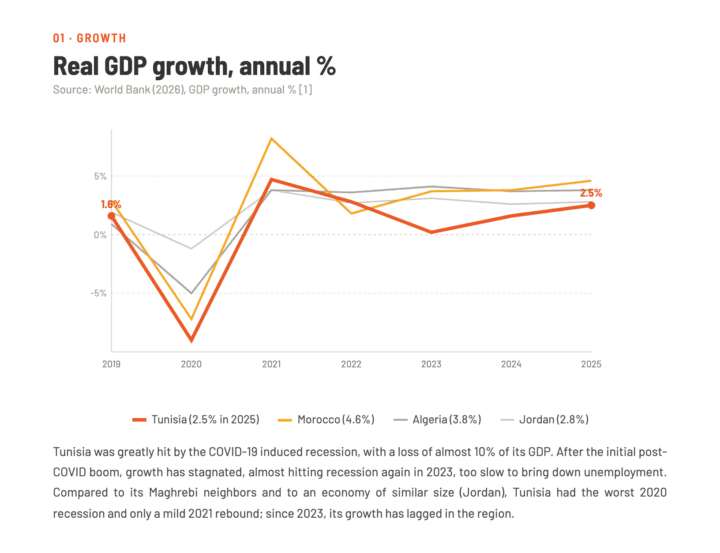
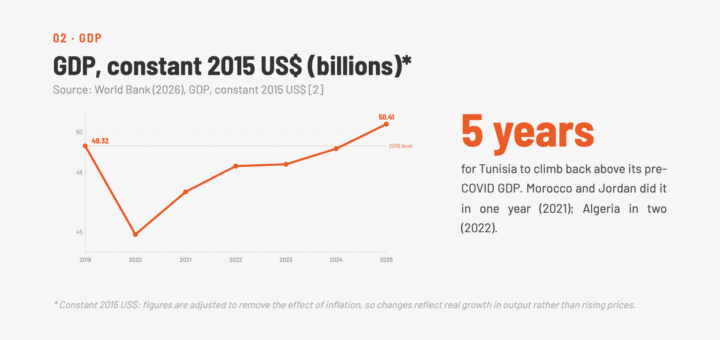
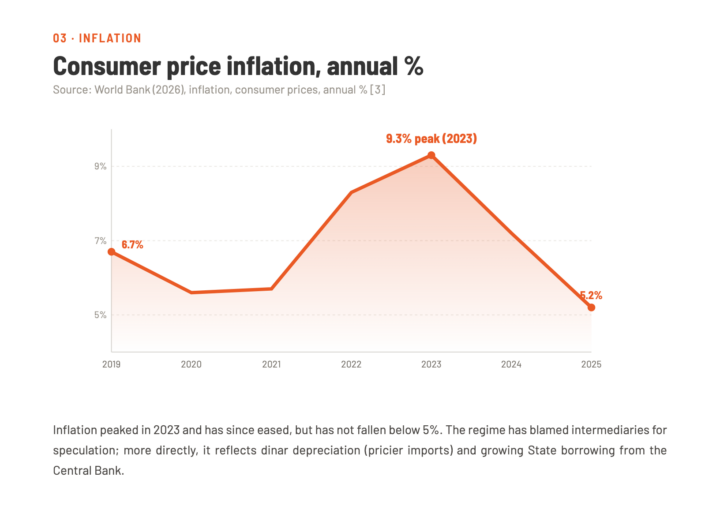
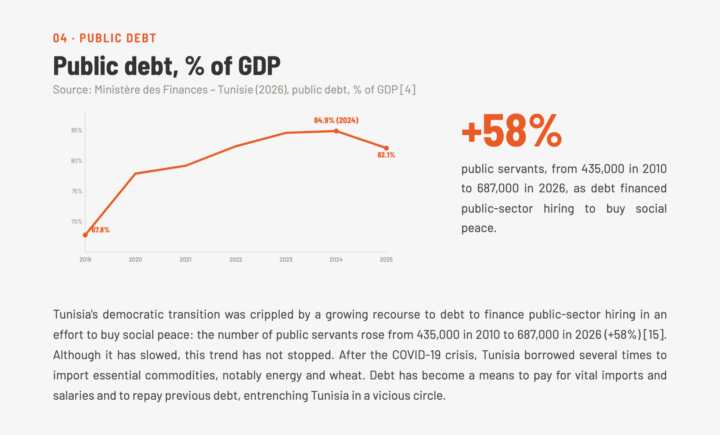
It's been five years since Kais Saied's auto-golpe or self-coup in the middle of the COVID-19 crisis. The country saw its democratic institutions dismantled to be replaced by a hyper-presidentalist regime. One of Saied's promises, and popular hopes at the time, was that such a regime would adopt a "new model" which would bring prosperity back to the country after a very unstable decade. Yet there were not many indications of what this new economic model would entail other than "ending" corruption and relying on national resources. Five years later, the numbers tell a different, yet familiar story: new constitutions and political institutions, along with the silencing of political opposition, do not by themselves bring human development and economic prosperity. Even the few economic novelties Saied has introduced, such as the "communitarian businesses," are yet to show a benefit, despite being heavily sponsored by the State to foster development. The "classical" authoritarian bargain, political silence in return for relative development and prosperity, which for decades was the trademark of Ben Ali's regime, could be neither reproduced nor revamped.
The views represented in this paper are those of the author(s) and do not necessarily reflect the views of the Arab Reform Initiative, its staff, or its board.