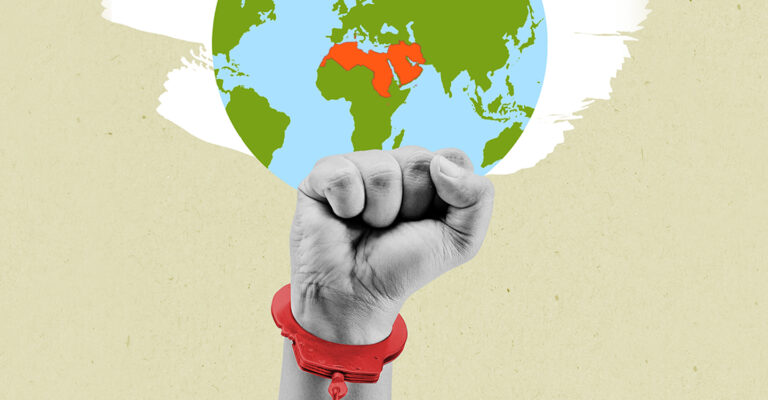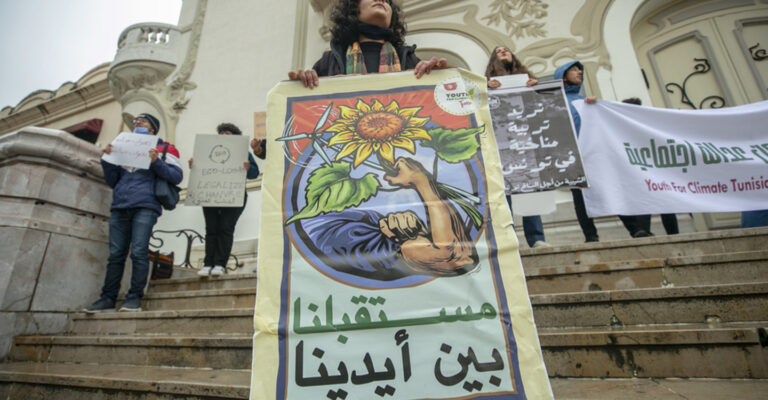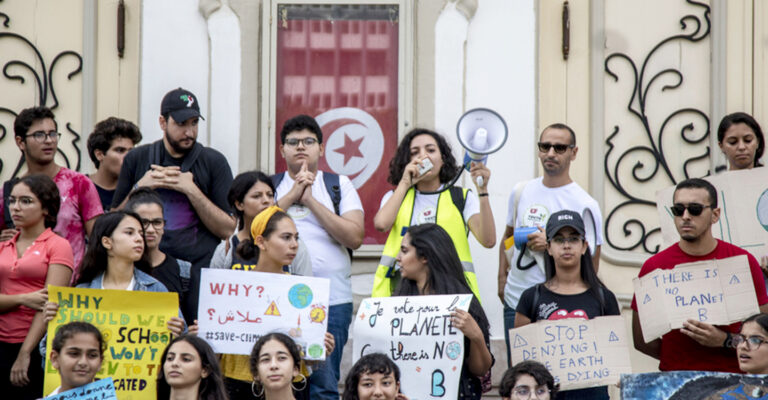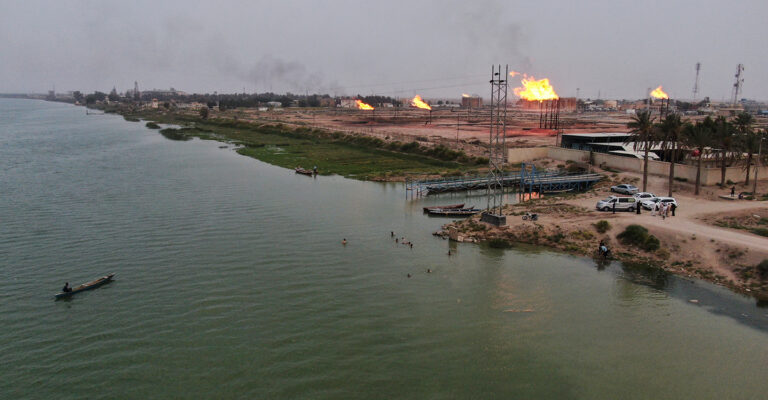
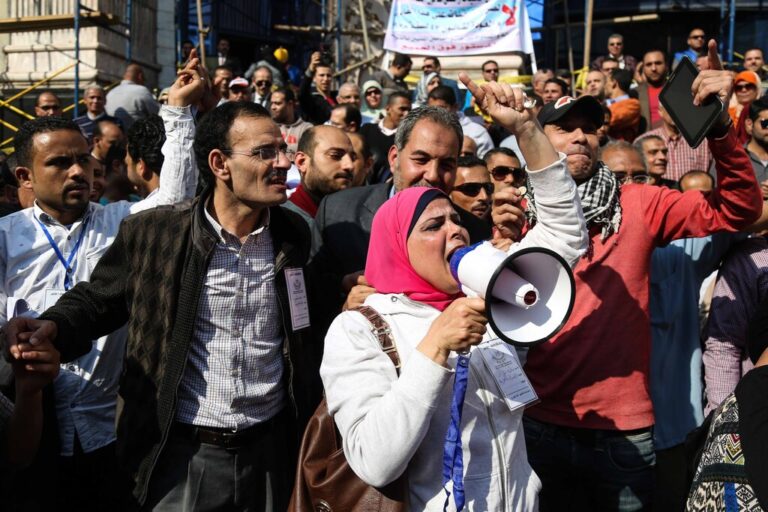





Environmental movements have emerged as critical actors in advocating for equitable resource governance, protesting extractivism and environmental harms, and even modeling a different relationship of humans to nature.
The Arab Reform Initiative has been working to generate knowledge on the various forms, demands, and expressions of environmental struggle and activism, understand its modes of organization, document state responses, and explore how actors find spaces for action in severely asymmetrical power relations.
This dossier presents the results of our cross-country research on the following questions: What non-state approaches have proven most effective in advocating for environmental protection, climate justice, or prefiguring a different relationship to nature? What innovative strategies are environmental activists, movements, and community-driven initiatives employing to navigate systemic barriers? Amid entrenched political and corporate interests, can activists find some leverage? What types of solidarities are needed to sustain these movements going forward?
This research is made possible with the support of the International Development Research Centre (IDRC). The three articles on climate actors in Jordan, Lebanon, and Tunisia were supported by Hivos through the Sharaka – for Inclusive Climate Action program.