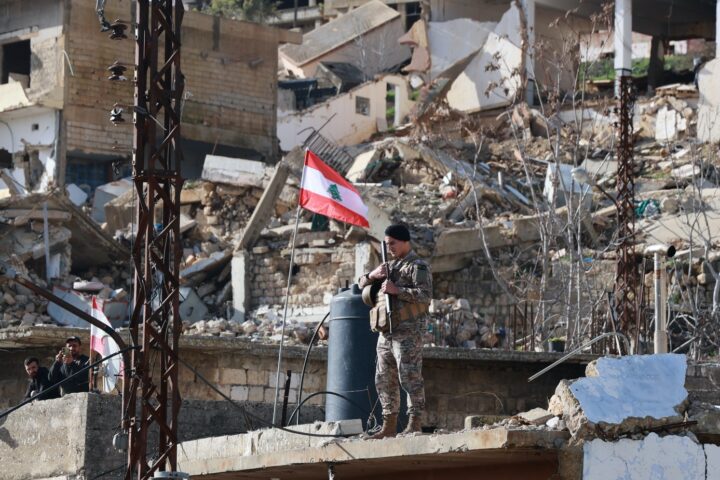
In August 2025, the Lebanese government resolved to restore the state’s authority and reassert its monopoly over the legitimate use of force. This decision was primarily directed at Hezbollah. The Cabinet consequently tasked the Lebanese Armed Forces (LAF) with developing a plan for its implementation. It brought renewed urgency to a question that has vexed Lebanon since the 1970s and remained unresolved with the end of the civil war in 1990: how can the state establish exclusive authority over weapons without destabilizing the country or fracturing its institutions?
The decision emerged in the aftermath of the 2024 conflict with Israel, amid sustained international – particularly American – pressure and growing domestic opposition to Hezbollah’s military interventions. It marked the end of an era defined by the formula al-jaych, al-shaʿb, al-muqāwama ("the army, the people, the resistance"), which had shaped Lebanon’s security landscape since the 1990s.
For the army, however, the government’s decision created a profound institutional dilemma. General Rodolphe Haykal, the Commander of the LAF, has approached this political mandate with considerable caution, attracting criticism both personally and institutionally. His overriding concern remains the preservation of the army’s unity and cohesion, as Lebanon’s history has repeatedly demonstrated that the fragmentation of the armed forces is not merely a hypothetical possibility but a catalyst for further instability and chaos.
The composition and internal dynamics of the institution, together with the external constraints under which it operates, profoundly shape its operational priorities and capacity for action. In the absence of a broad consensus regarding the army’s role and, more fundamentally, in the absence of an agreed national defense strategy, the institution has often been compelled to pursue its objectives through negotiation rather than coercion. Its five-stage plan for implementing the government’s decision to disarm Hezbollah illustrates this approach.
This paper argues that while the LAF’s cautious posture is rooted in sound institutional logic and shaped by historical experience, it also entails significant costs in the current context. Although the government’s mandate to the army has never been clearer following its August 2025 decision to restore the state’s monopoly over the use of force, the implementation of this policy continues to depend on the emergence of a broader political consensus, including Hezbollah’s acquiescence. Yet the regional environment has evolved in ways that make such a consensus increasingly elusive. The limited opening that followed Hezbollah’s losses in the 2024 conflict has narrowed as renewed regional confrontation, Iran’s resilience and Israel’s continuing military occupation of Lebanon have restored some of Hezbollah’s political confidence and sense of legitimacy. Reflecting this shift, the movement’s leadership has firmly rejected any prospect of disarmament.
The central question, therefore, is not simply whether the LAF possesses the military capacity to disarm Hezbollah, but under what political, institutional and regional conditions it could implement the state’s monopoly over arms without jeopardizing its own cohesion. This paper approaches that question by examining the army’s fragmentation during the civil war and the incomplete post-war disarmament process; the financial, demographic and organizational pressures currently affecting the institution; the continuing absence of an agreed national defense strategy; the operational dilemmas surrounding the army’s deployment in the South; and its dependence on foreign assistance.
The paper concludes that preserving the LAF’s unity is a legitimate and necessary concern, but that institutional cohesion cannot be sustained through indefinite caution or disengagement from difficult missions. Nor can the army substitute for the political settlement that its mission requires. Unless its mandate is embedded in a broader national strategy – linking arms control to Israeli withdrawal and an end to Israeli attacks, a negotiated transition for Hezbollah’s armed structures, institutional reform, and credible guarantees for the communities most directly affected – the LAF will remain caught between a mission it cannot fully implement and expectations it cannot meet.
Lessons from History: Fragmentation During the Civil War and an Incomplete DDR Process
The current talks about disarming Hezbollah revive the ghosts of the past. Throughout the civil war (1975-1990), the army experienced repeated divisions. Understanding why the LAF’s leadership is so wary of confrontation requires understanding what happens when the Lebanese military institution fractures and why the post-war Disarmament, Demobilization, and Reintegration process (DDR) failed to provide the clean institutional reset that might have prevented today’s impasse.
Fragmentation During the Civil War
Divisions in the ranks of the army began as of January 1976, when a young Sunni second lieutenant, Ahmad al-Khatib, together with several officers, triggered a split within the military institution and created the Arab Lebanon Army. Around 3,000 soldiers joined this army. This movement reflected discontent among Muslim officers that had already emerged at the outset of the clashes with Palestinian fighters as of the late 1960s amidst a lack of political consensus regarding the Lebanese army’s role in confronting Palestinian fighters. On 23 April 1969, left-wing parties supporting the Palestinian armed struggle launched organized demonstrations across the country. Clashes erupted between protesters and the security forces, including the Lebanese army. Eleven people were killed and eighty-two others wounded in the ensuing violence.
The army’s intervention drew sharp criticism from numerous political leaders, leading the Prime Minister Rachid Karami to resign and triggering a major political crisis. The episode exposed deep divisions at the highest levels of the state between President Charles Helou, who rejected the fait accompli of an armed Palestinian presence in Lebanon, and Prime Minister Rachid Karami, who supported it and enjoyed the backing of much of the country’s Muslim public.
In this context, the army was deprived of a clear political mandate. It was sidelined from the unfolding events and gradually disintegrated when the war started in 1975. The army could not remain insulated from the upheavals affecting the country, although the desertion rate remained low at first: 5% after eight months of conflict, compared with 24% within the Internal Security Forces. However, throughout the various phases of the conflict, instances of defection occurred when soldiers were ordered to confront armed groups affiliated with their own sectarian community. This was notably the case during the War of the Mountain (September 1983), when Druze soldiers deserted as the 8th Brigade engaged Druze militias. In other instances, rather than formally defecting, soldiers simply failed to report for duty. This was particularly common when Christian soldiers were assigned to units deployed in predominantly Muslim neighborhoods, and conversely, when Muslim soldiers were stationed in predominantly Christian areas.
This fragmentation continued throughout the civil war in the 1980s despite several attempts by the Army Command to try to rebuild the army. The period between February 1984 and June 1984 was marked by the “February 6 Movement”. The leader of the Amal militia, Nabih Berri, called on Shiite soldiers to disobey the orders of the military command to bomb areas in West Beirut and in the Southern suburb of Beirut that were under Amal control, abandon their positions, and join Amal’s ranks. Many responded to this appeal, creating confusion within the army and prompting Christian soldiers whose units were stationed in West Beirut to leave their positions and move to the other side. In addition, Amal fighters attacked army positions in the western districts of Beirut.
The “February 6 Movement” had lasting consequences for the military institution because it put a stop to the reconstruction process that had begun a year before, further deepening divisions within the army.
In the final year of the war (January 1990-October 1990), the War of Elimination took place, opposing units of the Lebanese army under the command of General Michel Aoun to the Lebanese Forces militia. General Aoun’s decision to restore state authority by confronting the Lebanese Forces, which had been close to the army at one point, constituted one of the last convulsions of the conflict. This war disrupted the Lebanese balance of power, which had rested, on the one hand, on the Syrian army and its allied militias, and, on the other, on the Lebanese army and the Lebanese Forces. Under the Taif Agreement (signed in October 1989 to put an end to the war), the army was supposed to extend national sovereignty over the entire territory, with the support of the Syrian army. The Lebanese Forces were not to be eliminated; rather, their disarmament was to take place simultaneously with that of the other militias, including the Progressive Socialist Party (PSP), Amal, and Hezbollah. However, the balance that the Taif Agreement was meant to establish was shattered by the War of Elimination, further weakening the army.
The Army Command fears today that any action towards disarming Hezbollah would cause fragmentation with Shia officers and soldiers possibly disobeying orders similar to what has happened during the civil war. Before the war, brigades were organized along sectarian lines, which meant that fragmentation could map cleanly. After the damj (“fusion”) process in the 1990s, all units were mixed and thus lost their sectarian identity. This is not to suggest that the army is immune to future divisions, or that soldiers and officers would never defect; rather, the institutional consequences would probably be more limited.
DDR Post-Civil War: A Missed Opportunity?
When discussing the future of Hezbollah’s arms, one of the precedents to examine for lessons is Lebanon’s experience with DDR of militias.
After Lebanon’s civil war, DDR was essentially reduced to two measures: the disarmament of militias, i.e., collecting heavy weapons, and the integration of former militiamen into the army. There was therefore no comprehensive or coherent process to rebuild peace and move beyond the legacy of war: small arms were not collected; there was no independent actor to guarantee the impartiality of the process, while the Syrian actor was far from impartial.
The collection of heavy weapons began in April 1991. Once disarmament had been completed, the decision was made to transfer collected weapons to the army. This solution was considered appropriate, as the armed forces needed equipment while the state’s budget did not allow for significant military expenditures. However, certain militias refused to hand their heavy weapons to the Lebanese authorities: the Lebanese Forces sent their weapons overseas, some shipped to African countries and others to Yugoslavia, while the Progressive Socialist Party sent back its arsenal to Syria. Disarmament itself was the priority, even if this did not necessarily mean that the weapons would be surrendered to the Lebanese state.
Nearly 3,075 former militiamen were integrated into the army. However, this integration did not take place without debate within the institution, as some believed that former militiamen would be unable to free themselves from their ideological and political affiliations, which would complicate the reconstruction process. One of the proposed solutions, therefore, was to appoint them to civilian positions – such as municipal employees – rather than to military posts. A proposal was even put forward to establish a temporary regular force attached to the army and the Internal Security Forces, in which former militiamen would be grouped and assigned to specific operations. Those who proved their abilities would gradually be integrated, while those deemed unsuited to military service would be dismissed. Ultimately, on 28 March 1991, the Council of Ministers decided to allow all former militiamen to enlist in the army. It was a political decision. Although there were no formal conditions for recruitment, the Lebanese Forces (LF) submitted a list of 20,000 names, while Amal and the Progressive Socialist Party (PSP) provided another 12,000. In practice, however, only a small number of LF members actually presented themselves for enlistment, whereas many former members of Amal and the PSP responded to the call. The LF was not perceived as aligned with the LAF ideological orientations under Syrian tutelage: on the officers’ level, only two LF members were integrated.
The DDR process did succeed in getting rid of the heavy weaponry. The army managed to integrate former militiamen, although the numbers were, in the end, much less than anticipated. The integration (damj) process dismantled the sectarian composition of the military units, ending their previous confessional homogeneity.
However, this past DDR process was incomplete, political, and perceived as inequitable: it did not lead to the collection of small weapons. It also took place under Syrian tutelage, and parties who were not aligned with Syrian positions were excluded.
When discussing Hezbollah’s disarmament, some of the questions that emerged in the aftermath of the civil war are highly relevant today, notably those regarding the types of weapons that should be collected and the authority they should be transferred to. Although today’s challenge with Hezbollah is structurally different in scale and complexity – Hezbollah’s military capacity dwarfs that of the post-war militias – the institutional temptations are similar: to prioritize form over substance, and to declare disarmament complete while leaving parts of the underlying arsenal untouched.
Regarding demobilization, the question remains how to integrate former combatants, with strong ideological and political affiliations, into an institution that prides itself on being an organization that transcends sectarian and sub-national identities. The scale of the undertaking would be of an entirely different order from previous integration efforts. Although the precise figures remain uncertain, some 40,000 Hezbollah combatants may need to be demobilized. This raises the question of preserving the institution’s sectarian and political balance, particularly given that the former combatants to be integrated all originate from a single political and sectarian constituency, unlike the post-war integration process, which drew personnel from multiple factions.
The LAF from Within: Financial Constraints, Generational Dynamics and Reduced Missions
The structural weaknesses shaping the LAF’s behavior are not only historical – they are also present. The LAF is reported to comprise slightly fewer than 80,000 personnel. This is a sensitive issue as the command refuses to communicate the exact number of soldiers, though the objective to reach 80,000 is set by international donors.
The officer corps is formally structured to maintain a balance between Christian and Muslim representation. However, recruitment patterns reveal a persistent asymmetry: each year, there are roughly ten times more Muslim applicants (approximately 2,000 to 3,000) than Christian applicants (around 300) to the Military Academy. Although Christian communities are generally perceived as supportive of the army, their rate of enlistment remains comparatively low.
The 2019 economic crisis has placed considerable strain on the institution. In the early years of the crisis, salaries lost approximately 95% of their value due to the devaluation. Today, they stand at around 30% of their pre-2019 level. As a result, soldiers and officers have been compelled to seek secondary employment, thereby reducing the operational capacity of the army. This situation has, in turn, led some within the institution to question the feasibility of reaching the target of 80,000 personnel, given the army’s inability to provide adequate remuneration to its members.
Since 2019, thousands of soldiers have left the institution. At the officer level, this trend is likely to cause a generational imbalance within the force. Those who wish to leave are predominantly company-grade officers (Lieutenants and Captains), as well as field-grade officers at the rank of Major, who constitute the junior leadership essential to operational effectiveness.
These resignations are largely attributed to low salaries and perceived lack of career prospects within the institution. Although members of General Haykal’s cohort have reached retirement age, many remain in service in order to preserve their standard of living. This (social) measure has generated frustration among younger officers by limiting upward mobility and slowing promotion cycles. The LAF is increasingly affected by an “old-guard syndrome” whereby an aging officer corps hampers generational renewal and merit-based advancement.
In addition, those who have left are those who have technical capacities that are useful in civilian jobs, such as mechanics and maintenance technicians. Without their competence, the rate of equipment degradation increases and operational capacity decreases. Unit commanders try to maintain their technicians by allowing them to have a second job, but their absence has undeniable consequences.
These dynamics have an impact on the missions of the army. As General Eric de la Presle, former French military advisor to the LAF, put it: “you cannot expect soldiers to be committed to doing their jobs when they are not paid a decent salary (…) Unit commanders have to think about what they are going to feed their soldiers before they can see how to fulfill their missions.”
The main missions of this underequipped and underpaid institution are those of a security force. General de la Presle even talks of an army that mostly handles neighbor disputes. These missions also include combating drug trafficking to prevent Lebanon from becoming a narco-state. And finally, they include combating jihadist groups, a mission that gained urgency after the events in the Palestinian refugee camp of Nahr el-Bared in 2007 and the proliferation of such groups during the Syrian war. Such missions are consensual and do not put pressure on the institution’s cohesion.
However, when it comes to disarming Hezbollah, the brutality of Israel’s response since the beginning of March 2026 has rendered such a demand completely illegitimate in the eyes of Shiite officers, according to a Lebanese high-ranking military officer. Echoes of possible discomfort in part of the officer corps appeared in a public statement signed by a group identified as “Patriotic Officers” that was published by the Al Akhbar newspaper on 12 March 2026. The statement’s signatories, which were not identified, consider that “the army’s true strength lies not only in its military capabilities, but also in its internal cohesion and in the trust and support it enjoys from the people”. It is thus their “national and moral duty to express deep concern over decisions that could place the army in direct confrontation with national forces resisting external aggression on our land”. This statement was issued in a context where the Army Command, and General Haykal in particular, was under a lot of criticism for not enforcing the government’s decision to disarm Hezbollah and ban any military activity.
The identity of these officers remains unknown, and it is unclear whether the statement was indeed drafted by serving officers. Nevertheless, the statement suggests an ongoing debate within the army regarding the approach to the Hezbollah issue, particularly in the context of heightened Israeli escalation.
The Missing Political Framework: The Lack of a National Defense Strategy
A Longstanding Failure to Agree on Defense Strategy
Since Lebanon’s independence in 1943, no government had elaborated a proper “defense strategy” or military doctrine. According to the National Pact (1943), Lebanon was to be detached from the East and from the West. Its foreign policy was supposed to be neutral, as illustrated by Pierre Gemayel’s formula: “Lebanon’s strength lies in its weakness”; thus, the weakness of an army that should not be a threat to neighboring countries, nor to the political system in a context where Arab armies were organizing coups d’état. Since General Fouad Chehab, its first commander-in-chief after independence, the army served as a mediator, an arbiter, a guarantor of Lebanon’s delicate balance and the protector of the state. Since the 1958 crisis, the army, and specifically the army commander, has refused to intervene in internal tensions, which often transforms him into a compromise presidential candidate (Fouad Chehab in 1958, Michel Sleimane in 2008 and Joseph Aoun in 2024). But this shows the inherent contradiction: only by not intervening in the country’s internal political struggles could the army maintain its position as an arbiter. However, this did not lead to a consensus on the role and the missions of the military institution. Security and defense decisions were made based on a minimal compromise between political actors. Such decisions were therefore very hard to reach, and were constantly postponed to gain time.
When the civil war ended, Syrian military presence and political control prevented the Lebanese parties from having a real debate about the defense strategy. Although Lebanon was at the heart of geopolitical movements, the Lebanese state had no control over its defense in the name of “common destiny” with Syria, which implied a common front. Hezbollah filled a strategic void whereas the Lebanese army was entangled in its weaknesses – material, human and even ideological – and the Syrian regime did not want to be drawn into a regional conflict. Gradually, the famous formula al- jaych, al-sha’b, al-mouqâwama [the army, the people, the resistance] was elaborated.
The result for many years was an implicit arrangement: Hezbollah claimed responsibility for confronting Israel, while the LAF focused on internal security, counterterrorism, border management, and limited deployment in the South. This arrangement was never stable, and it was never accepted by all Lebanese. But it allowed political leaders to postpone a decision that they could not agree to make, leading to the “security through consensus” policy (al-amn bil tarâdi) that prevailed until 2025.
Thus, Lebanon has repeatedly failed to agree on, implement, and sustain a national defense strategy. This failure predates Hezbollah, but Hezbollah’s increasing military power and expanding regional role made it impossible to ignore. Since the Syrian withdrawal in 2005, national dialogue sessions and political initiatives have repeatedly returned to the question of Hezbollah’s weapons without resolving the relationship between national defense, resistance, deterrence, sovereignty, and relations with Israel.
A Shifting Situation: The End of the “al-jaych, al-sha’b, al-mouqâwama” Formula
Several factors have brought the issue back onto the political agenda. Hezbollah’s intervention in the Syrian war raised fundamental questions regarding the intended use of its weapons and, by extension, the legitimacy of maintaining an independent armed force outside the state’s authority. The 2024 war with Israel, the November 2024 cessation-of-hostilities arrangement, and the Lebanese government’s 2025 decision to establish a state monopoly over weapons created a new situation.
A change in the tone of the army publications had already occurred under General Joseph Aoun, then Army Commander. The army’s official “Order of the Day” for the 2023 Resistance and Liberation Day (celebrated annually on May 25 to mark the withdrawal of the Israeli army from southern Lebanon in 2000), for instance, refers to national duty, sovereignty, and the army’s role, but does not mention the al-jaych, al-sha’b, al-mouqâwama formula. After the 2024 conflict with Israel, a limited window of opportunity opened for Lebanese actors to seek consensus on a national defense strategy. Hezbollah had suffered significant losses, and the Lebanese army was able to identify and secure some of its weapons’ caches, developments that would have been unlikely without a degree of acceptance or non-obstruction on Hezbollah’s part. This political shift was also illustrated by President Joseph Aoun’s inaugural speech after his election, on 9 January 2025, where he emphasized the restoration of state authority through the monopoly of arms, a major shift in presidential speeches since the 1990s.
Some within the army and on the political spectrum accuse General Haykal, the current commander-in-chief, of not having seized the opportunity, because of supposed political ambitions. Every Army Commander, the moment he is nominated at the head of the institution, is a potential candidate for the presidency, both positions being held by Maronites. In reality, it is more plausible that General Haykal’s preoccupation was the cohesion of the institution, a cohesion he did not feel was strong enough to survive a possible confrontation with Hezbollah. He feared the institution would fall into a trap that would lead to civil war. Haykal joined the army in 1990, in the aftermath of the civil war, and graduated from the Military Academy in 1994, class of “The National Unity”. He was influenced by the army’s division during the civil war and by the process of reconstruction that followed.
He appears in favor of “security through consensus” (al-amn bil tarâdi), which privileges negotiation over the use of force. Prioritizing cohesion within the institution, he is willing to sacrifice operational efficiency in the name of internal concord. However, as negotiations with Israel move forward, he will be compelled either to align himself or to resign – an option he has reportedly already considered. Prime Minister Nawaf Salam has stated that the policy of “security through consensus” had come to an end, marking the beginning of a new phase that is yet to be defined.
The Southern Front: Caught Between a Rock and a Hard Place
When the Lebanese army was deployed in the South in 2006 after Security Council Resolution 1701, it had no political coverage to disarm Hezbollah. Within the institution itself, there was no consensus on the issue. Among Christian officers, for example, some believed that Hezbollah was the only force that could face Israel, in light of the weaknesses of the army. The Intelligence department, the Moukhâbarât, was considered in favor of Hezbollah. No officer who did not share this orientation could be appointed to an important position within the department. Hezbollah dealt with the army directly through the Moukhâbarât and not through the units on the ground in the South.
In the aftermath of the 2024 conflict and following the Lebanese government’s decision to restore the state’s monopoly of arms (August 2025), the army worked on a comprehensive plan to implement the Cabinet’s orientations. Four axes were developed by the Army Command:
- Consolidation of the state’s authority at its eastern and northern borders, in addition to stability in the South. This would entail exclusive control over weapons and international cooperation;
- A restructuring plan for the army to reach a model of light and mobile units, through fewer brigades and more regiments, using lighter vehicles, fewer tracked military vehicles, fewer personnel and more technology. That would lead to a hybrid model that can protect the borders and fulfill the army’s internal missions;
- Invest in human capital: the army is not attractive anymore. Salaries have lost 70% of their value since the 2019 crisis. Schools are still paid by the state, but the Ministry of Finance is currently blocking payments;
- Crises and disaster response: when the Beirut port explosion happened, there was no plan to face such a massive event.
To implement the first axis, Army Commander, General Haykal, presented a plan on 5 September to disarm armed groups. The plan that was adopted by the Cabinet included five stages (South of the Litani; between the Litani River and the Awali River; Beirut and its neighboring areas; the Beqaa Valley; and all of Lebanon). However, there was no clear timetable for each of the phases.
During phase one, completed in January 2026, the army destroyed so many of Hezbollah’s weapons South of the Litani that it ran out of explosives. Hezbollah has not opposed these seizures. However, it has warned that any attempt by the Lebanese army to confiscate or destroy weapons in other areas would risk triggering civil conflict. The current conflict indicates that Hezbollah had redeployed a significant portion of its heavy weaponry north of the Litani River. The group reportedly required ten days to reinforce the Southern Front following the assassination of Ayatollah Khamenei on 28 February.
This initial phase clearly reflected the “security through consensus” approach, characterized by the absence of direct confrontation with Hezbollah.
Phase two (between the Litani River and the Awali River) was supposed to begin mid-February, for four months. It faced total opposition by Hezbollah leaders.
A few days later, the attack on Iran happened, triggering a new regional conflict. The war, the occupation of land by Israel, Iran’s resiliency, and direct negotiations with Israel, including in the presence of army officers, will further complicate the implementation of the plan.
Against this backdrop, Lebanon and Israel signed a framework agreement on 26 June. Rejected by both Hezbollah and Amal, the agreement has been criticized as unbalanced. It obliges Lebanon to disarm all armed groups and prevent military activity from being conducted from its territory, while Israel’s withdrawal is made conditional upon the fulfillment of these obligations.
The agreement establishes two pilot zones – one south of the Litani River and one north of it – in which the Lebanese army is to deploy as Israeli forces progressively withdraw. On 21 July, Lebanese army units deploying to Zawtar al-Gharbiyeh, in the Nabatiyeh district, came under Israeli fire after, according to the Israeli military, they had entered the security zone established by Israel in southern Lebanon. The incident underscores the precarious environment in which the Lebanese army is required to operate, caught between Israel’s security posture in the South and Hezbollah’s rejection of the framework agreement.
Foreign Donors: Key Actors
After the end of the civil war and until the withdrawal of the Syrian army in 2005, the US had stopped military assistance to the LAF, but officers were still sent to the US for training through the IMET (International Military Education and Training) program. After 2005, the US started to invest in the LAF to help the institution fulfill two missions: internal security and border security (especially by preventing weapons trafficking through the borders).
Starting in 2006, the LAF started receiving American military assistance through the Foreign Military Financing program. Since 2006, the US has provided more than 3 billion dollars in military assistance, especially after the 2014 attack in Arsal by ISIS and Al Nusra Front. The US has provided the LAF with “aircraft, vehicles, weapons, and other equipment to help secure the country’s borders and conduct counterterrorism operations”. It has also provided 130 armored High Mobility Multipurpose Wheeled Vehicles (HMMWVs) and Family of Medium Tactical Vehicles (FMTVs) and Heavy Expanded Mobility Tactical Trucks (HEMMTs) to support the LAF’s combat logistics capabilities. The LAF has a perfect record when it comes to end-use monitoring checks that control how weapons are used and whether they are transferred to a third party.
American military assistance is important to the LAF, but the US never intended for the army to become more than a super police force. For instance, the US does not provide heavy artillery material. After the 2019 financial crisis, between June 2023 and November 2023, the US also provided monthly payments of 100 USD to Lebanese soldiers (as has Qatar).
French military assistance has been the most enduring and the most visible among Lebanon's international partners. France has consistently remained a steadfast partner of the LAF, particularly in the field of military education, capacity-building and training. However, unlike other international donors, Paris has consistently refused to finance military salaries, arguing that remuneration of the armed forces is a matter of national sovereignty.
Although the US criticized the army’s reluctance to apply the 1701 resolution, it perceives the LAF as a reliable partner. As Tom Barrack, the US envoy to the Middle East, stated when the UNIFIL’s mandate was renewed for the last time in August 2025: “LAF is the answer. Your answer is LAF. Your answer is not UNIFIL.”
During his meeting with President Trump on 21 July, Lebanese President Joseph Aoun appealed for sustained political backing and continued support for the LAF, both being indispensable prerequisites for the successful implementation of the army's mission.
Conclusion: Neither Paralysis nor Militarized Illusion
The Lebanese army cannot be regarded as the “answer” to Lebanon's enduring political and security crises, despite the tendency of some Lebanese parties and foreign partners to view it as such. Any effort to restore the state’s authority and reassert its monopoly over the legitimate use of force ultimately depends on the emergence of both domestic political consensus and a permissive regional context. Nevertheless, the preservation of the institution’s unity should not become an end in itself. The experience of the early years of the Lebanese Civil War illustrates the dangers of excessive restraint: the army’s exclusion from critical political and security decisions generated frustration within the officer corps and precipitated successive episodes of fragmentation. Although active involvement in divisive domestic matters exposes the institution to considerable risks, history demonstrates that institutional paralysis and prolonged inaction may prove equally detrimental to its cohesion and legitimacy.
The task ahead is political before it is military: to construct a national strategy that links arms control to Israeli withdrawal and cessation of attacks, to an agreed role for the LAF, to a realistic transition for Hezbollah’s armed structures, to institutional reform, and to durable social and economic guarantees for the communities most directly affected.
The army’s unity should be preserved not by shielding it from all difficult missions, but by ensuring that when it is asked to act, it acts with a clear mandate, a credible political coalition, adequate resources, and a strategy that Lebanese citizens can recognize as national rather than sectarian, foreign-driven, or temporary.
The views represented in this paper are those of the author(s) and do not necessarily reflect the views of the Arab Reform Initiative, its staff, or its board.