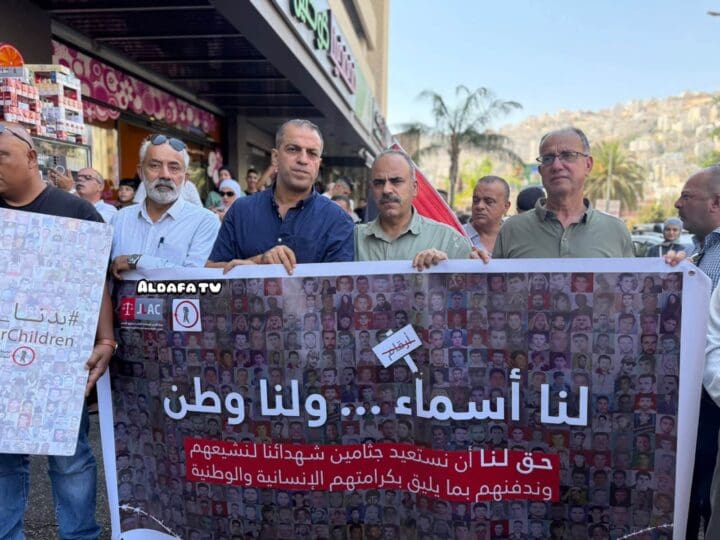
This campaign is what I’m most proud of in my history with this center. It’s something I speak about with passion, something I love. At certain points, this campaign was the most important thing to me after my family. Issam Al-Arouri, Executive Director of the Jerusalem Legal Aid Center
Introduction
There is growing debate about the future of non-governmental organizations (NGOs) globally as well as in the Arab region, as funding sources dwindle and civic spaces continue to shrink. Not only are questions being raised about the survival and evolution of these organizations, but also about their past and present contributions to human rights and social justice movements. Have NGOs advanced the causes they claim to support – or have they, under various constraints, contributed to weakening the very movements they were meant to empower?
Over the years, many NGOs across the region have come to operate less as political or rights-based actors and more as project managers for development work – positioning themselves as technical experts and trainers, often working within the logic of deliverables and logframes. In this role, they have focused on upskilling the communities they serve, filling gaps in public services, or promoting changes in culture, norms, and behavior. Their constituents are often referred to as “beneficiaries,” and they are increasingly treated by governments as subcontractors – implementing programs financed by international donors. While this model has come to define many NGOs, it is not the only one.
Other NGOs continue to document violations and abusive policies while also advocating causes and policies at the national and international level, including at the UN, the International Court of Justice and the International Criminal Court. However, these efforts are increasingly challenged as governments tighten restrictions on civic space, limiting the ability of NGOs to document and advocate. Meanwhile, international fora remain deeply shaped by geopolitics and the interests of global powers, limiting the effectiveness of legal arguments and submissions. Cynicism about the value of such advocacy has gained traction across the Arab region, especially in the wake of Israel’s genocide in Gaza and the ongoing impunity for Israeli leaders. Thus, this role of NGOs has been undermined.
Some critics argue that over the years, NGOs have, intentionally or not, displaced grassroots networks and informal activism, softening resistance and legitimizing government narratives – particularly when some acquiesce or adapt to restrictions on civic space rather than defy them. Others explain that NGOs operate under intense constraints: from donors, who tie funding to rigid conditions, and from states, which impose legal and political barriers to independent action. In this view, the problem is not the NGOs’ unwillingness to build people power and protect the space to resist, but the impossibility of doing so, and surviving, within the limits imposed.
This article offers a different argument. While acknowledging these constraints, I argue that there are NGOs in the Arab region that have, in fact, managed to overcome both external and internal limitations – and in doing so, have succeeded in reclaiming their political potential by helping communities build leadership, organize contentious collective action, reclaim power, and resist authoritarianism.
At this critical juncture, I argue that the future relevance and legitimacy of NGOs will depend on their ability to reorient themselves toward this kind of grounded, constituency-based organizing. This does not mean abandoning traditional roles such as documentation or international advocacy. But it does require a shift in positioning: from acting on behalf of people, to acting with them as they lead with their own power.
To illustrate this, I present two case studies: one from Palestine and another from Lebanon. Drawing on existing research and on in-depth interviews with two NGOs, I show how they went around limitations and constraints that often confine the role of civic organizations to non-contentious or non-political work.
These two cases are not the only examples in the Arab region, but this article’s space permits a focused analysis of just these. I therefore call for further research – both to document similar NGO experiences that have prioritized people power, and to study informal networks, citizen committees, and grassroots campaigns to understand their expectations and needs from NGOs at this critical period.
Background: People Power and Civic Organizations
Assessing whether NGOs amplify or constrain people power requires laying out a clear conceptual framework for the meaning of people power. Civil society comprises heterogeneous organizations that engage with power in fundamentally different ways: some act in opposition to formal authority, while others operate in cooperation with it. Failing to account for these distinctions risks treating NGOs as a uniform category and relying on reductive assumptions, thereby obscuring their true political impact and the dynamics through which power is exercised.
People power is the dynamic capacity of ordinary people to challenge systems of domination, which fundamentally depend on public acquiescence – silence, obedience, and cooperation. Withdrawing consent through civil disobedience undermines these systems because authoritarian regimes rely on voluntary compliance, reversible through strategic action. Acts of disobedience can target multiple power levels: decision-makers, agenda-setters, or cultural/ideological foundations. The three-dimensional view of power (visible, hidden, invisible) emphasizes that resistance must address both structures and dominant norms. People’s resistance, namely refusal to comply – whether through questioning, protest, non-cooperation, or disobedience – can disrupt the mechanisms of control at any of these levels.
Civil society organizations can shape people’s power, but this influence depends in part on the form of civil society – whether it is a citizen network, a union, a community committee or a registered NGO. It also depends on its mode of intervention. NGOs have become the prevalent institutional form in the region, and they have the potential to nurture and facilitate such acts of resistance. In doing so, they could contribute to building people’s power. However, NGOs face contradictions: to operate legally (secure funding, hire staff, move money), they often work within the very systems they may wish to challenge. Consequently, few openly support civil disobedience or confrontational action.
But even short of supporting large-scale mass protests, NGOs can still adopt quieter and less overt forms of resistance that can be powerful. Quieter resistance – fostering collective identity, political consciousness, and solidarity – can also build power if transformational and not merely instrumental. Such groundwork enables future disobedience. Transformational NGO activities (awakening consciousness, building organizing capacity) differ from tokenistic “participation” or non-confrontational service/advocacy, which reinforce the status quo. Routine service provision in the face of state failure, non-confrontational advocacy, and superficial participatory initiatives may, in fact, deprive the people of their power.
Literature on civic life in the Arab region shows that traditional organizations (movement committees, religious endowments, guilds, unions) played significant roles in challenging authority historically, but colonial powers often suppressed these, centralizing control and fostering distrust of formal civic structures. It also shows that the modern form of the NGO emerged prominently in the late 20th century. The 1980s/90s neoliberal reforms (state retrenchment, market focus) spurred NGO proliferation but aligned them with donor agendas. This “NGOization” shifted activism toward professionalized, project-based work, depoliticizing movements and limiting their transformative potential. Dependence on external funding deterred contentious politics. For example, in Palestine, post-Oslo donor funding prioritized professionalized NGOs, sidelining popular resistance and political mobilization. This has given rise to what some critics call “liberal peacebuilding,” in which the international community supports civil society in theory, but only insofar as it aligns with predetermined, non-threatening development goals. Similarly, in Egypt, the surge in donor support in the early 2000s contributed to the formalization and growth of NGOs, but with it came increased state surveillance and new laws that effectively depoliticized the sector by banning political activities and controlling foreign funding. Regionally, many actors in the Arab women’s movements transitioned into NGOs in the 1990s. While this institutionalization expanded organizational reach and access to funding, it also risked disconnecting organizations from their original grassroots constituencies.
Furthermore, the legal and political frameworks governing civil society in most Arab countries have historically been restrictive. Regulations often require NGOs to register with government ministries, report their funding sources and in some countries seek approvals, and limit their political activities. This has created an environment where NGOs must carefully navigate between activism and state tolerance. This restrictive environment results in a “managed” civil society, where only politically harmless or regime-aligned organizations are allowed to thrive. Some governments in the Arab region have also created or supported government-organized NGOs or royal NGOs, which serve to simulate civic participation while remaining loyal to the ruling order. These organizations can crowd out or delegitimize independent, grassroots civic actors.
During the Arab Spring, some NGOs seized the moment to engage in more contentious politics, mobilizing networks and beneficiaries to challenge power and support collective action. In the post-2011 period – and especially after the autocratic consolidation that began in 2013 – most NGOs returned to service delivery and advocacy with decision-makers, both nationally and internationally. They largely avoided even quieter, strategic approaches to building people power as defined here – that is, encouraging withdrawal of consent and non-cooperation. While a few organizations did experiment with such creative strategies, the majority appeared to prioritize safety over innovation. This caution is understandable given the risks, yet it also represents a missed opportunity: NGOs could have explored subtler, strategic ways to strengthen civic engagement and disrupt authoritarian mechanisms. Their contributions remain significant, but the potential for more transformative impact often went underexplored.
Pathways for Civic Organizations to Nurture People Power: Examples from the Region
“In Syria, everything social, cultural, political was in the hands of the state – al-Assad’s regime. When the revolution happened, the social agency and the ability to reach funding moved to the organizations. When we used to argue [...] for an approach of work that gets the people to make the decisions and put their own plans, it is like you are passing that agency from the hands of the state, to the hands of the organizations then to the hands of the people of the cause. We built people power that way.” Anas Tello, Community Organizing Advisor, Women Now.
Many organizations in the Arab region have tried to counter limitations and resist NGOization and depoliticization. Some have done so by intensifying their advocacy in opposition to their governments. Others have taken on the role of agitators, working with civic organizations in their ecosystem to push for a more unified and defiant voice vis-à-vis the authorities or donors. While some of these organizations have gained and exercised power in the process, they did not necessarily build people power – defined as the capacity of ordinary people to challenge systems of domination by withdrawing consent through civil disobedience.
However, some NGOs have gone beyond tokenistic community engagement to organizing constituencies so that they lead themselves in collective action toward the change they seek. These NGOs focused on identifying and organizing leadership, shifted their role to facilitating this organizing, mediated tensions between the leaders or between the leaders and the organization itself, and acted as the institutional cover for the community when needed. Their experimentation is important in revealing practices that disrupt the conventional NGO model. They challenge the dominant narrative that the hands of NGOs are tied when it comes to returning power to the people.
Below, I share the stories of two such NGOs – one in Lebanon and one in Palestine. I describe the techniques they used in building people power, and how they faced the above limitations that pushed them toward depoliticization and NGOization. While these two organizations are not unique, and there are others that have succeeded in building organized people power in defiance of oppressive authorities, that group of organizations continues to be the exception and not the majority of the sector.
Story 1: La Tkabrouna Grassroots Campaign – Women Now for Development
In the aftermath of the Syrian revolution, a group of feminist activists in exile found themselves disoriented – not only by displacement, but by the organizational void that followed. In response, and in 2012, led by Samar Yazbek – a Syrian writer and journalist – Women Now for Development was born. The initiative was not simply a continuation of informal activism, but it was registered as an NGO with the legal standing to build programs, hire staff and fundraise. This history introduced a tension that would shape its future: the clash between radical, agile activism and the formal structures and processes of an NGO.
This tension surfaced in their work with Syrian refugees in Lebanon’s Bekaa region, where Women Now offered protection programs for women, including workshops on child marriage and leadership. While the women appreciated the workshops, many expressed frustration – they understood the harm of child marriage but still lacked the power to change their realities.
At the same time, Women Now’s former executive director, Maria Al-Abdeh, had supported a Syrian grassroots campaign called Families for Freedom that was learning community organizing with Ahel, a nonprofit that accompanies grassroots leaders in the Arab region in organizing their constituency into collective action for a specific cause. Maria was intrigued by the methodology because unlike traditional NGO approaches, this model emphasized collective power over service delivery. Inspired by that experience, Women Now decided to try community organizing in the Bekaa area in Lebanon and appointed staff member Anas Tello to learn and lead this new approach, not by directing, but by helping those most affected to lead themselves to achieve the sought-after change.
In September 2019, Anas began with relational groundwork, engaging in dozens of one-on-one conversations with Syrian women who had been married as children. These were not interviews, but exploration of stories, values, agency, resources, and an invitation to leadership. Next came leadership formation: creating a safe, consistent space for these women – not to receive aid or training, but to organize themselves based on their personal stories which together formed the collective identity of the group. They shaped a shared narrative, named the harm of child marriage, and imagined the change they wanted. They set a goal and developed a strategy. Next came scaling leadership beyond one team but into five teams of constituency members who were directly affected by child marriage. They developed and ran tactics informed by their lived experience. By June 2020, the campaign had exceeded their strategic goal for the first phase. They secured pledges from 1,826 households not to marry off their daughters as children. They also had them stencil the campaign slogan on their homes and tents as an announcement of such commitment. In May 2021, they – the women with the support of Women Now – launched the second phase starting with a relational tactic called “the listening drive.” They ran one-on-one meetings with close to a hundred community members to determine their direction and find leaders to join them. They decided to enlist men to persuade fathers whose young daughters are engaged to marry to break or delay the engagement. They faced challenges, but in the end 90 men advocates helped in canceling 61 child engagements and in delaying another 50. They again ran listening drives to determine the focus of their next phase. After which they decided to bring more young girls and boys as agents of change in the campaign and to target “self-appointed unregistered Sheikhs who lacked any legal authority but claimed to act on behalf of the Sharia’ Court which enabled them to conduct marriages for girls below the age of 18.” In August 2022, the campaign had recruited 390 girls (aged 14–17) and trained them how to negotiate with their parents about their own futures and how to convince other girls their age not to agree to getting married young. The older members of the campaign intervened in such persuasion only when necessary. Those 390 ended up persuading 479 other girls and boys to do the same. All of them together ended up breaking 109 child engagements, postponing 90 engagements, and garnering commitments from 662 parents who pledged not to marry their children before 18. Throughout, the campaign quietly worked with religious leaders to speak against child marriage, highlighting how it contradicted Muslim culture, and recruiting them to speak up publicly and on camera with a clear message to the parents. These religious allies also began to open doors for the campaign in the Sharia’ courts. In the last phase, the community and campaign leaders conducted many meetings with the Sharia’ court judges, equipped with their stories, efforts, wide social base and legal knowledge. In November 2022, the Sharia court issued a directive affirming that the authority to grant permission for marriages rests solely with the court judge or the Sharia’ judge or those who are authorized by it. It also announced that unregistered Sheikhs who performed marriages for minors had no legitimate legal status within their region. This opened the door for the campaign members and leadership to report such Sheikhs to the court for further disciplinary action.
Between the different phases of the campaign, the leaders consistently organized three things. Public celebrations, or recognition events if celebrating was insensitive given the context – honoring fathers, allies, and the young women resisting marriage. Evaluation and learning gatherings where all leaders from all teams entered into a reflection process to learn from their failures and their advancements and to improve their strategizing for the following phase. A listening drive with their community and people to understand what they needed or what the next focus or strategy should be.
By the end of the initial campaign, the two women leaders from the community who had begun the work alongside Anas Tello as campaign coordinator had themselves become the campaign coordinators, ensuring the movement’s sustainability. The initial two leadership teams, each focusing on one geographic area, became 12 teams. In those teams, there were 89 organizers and leaders from the constituency itself in Bekaa. Leadership selection also became more democratic and rooted in the community: the broader group elects the campaign’s co-coordinators based on clear criteria, while the core team nominates each team coordinator following an agreed set of guidelines. This shared distributed structure of leadership built more leadership in the community. These successive generations of leaders helped sustain collective action in a community that is often waiting to emigrate to Europe. Those 89 organizers and leaders were able to mobilize a broad segment of the community that trusted them, strengthening their collective power and their capacity to make decisions together.
The campaign leaders overcame the doubts of their own community, successfully countering claims that they are defying Islam and implementing foreign agendas. They also navigated external challenges: a revolution in Lebanon, a pandemic, economic collapse, and the Beirut port explosion. Some leaders traveled and conditions changed. But what remained was shared power, rooted in values, collective action, and reflection. For this to be possible, Women Now had to redefine its role from a programmatic operator to a movement supporter – providing organizing guidance, emotional safety, and the space to fail, adapt and grow.
In 2023, after the last campaign ended, the campaign leaders and Women Now began discussing the future. They ran a reflection and evaluation – this time of the whole journey. Their options were: another round in the same location, which to some did not sound necessary as child marriage had become frowned upon culturally; moving to another location and coaching local leaders; or continuing to organize in their areas and apply their experience to another urgent issue. Women Now was thinking of two things: how to carve out even more autonomy for the campaign leadership and how to integrate community organizing and constituency leading collective action in other parts of its work. These conversations were underway in 2024, but they were soon overtaken by far bigger questions after the fall of the Assad regime. The focus shifted toward the prospect of return to Syria and redefining the organization’s work inside the country.
Story 2: Istirdad Jathameen AlShuhada (Recovering the Bodies of the Martyrs) National Campaign – Jerusalem Legal Aid and Human Rights Center
Issam Al-Arouri and Mashhour Al-Arouri were not only cousins but also comrades in the Palestinian resistance. Shortly after their group was exposed in 1975, Mashhour fled the country and Issam was arrested and imprisoned. In May 1976, Mashhour participated in a military operation against Israeli targets in occupied Palestine and he was killed by Israeli forces who withheld his body from his family and buried him in what Palestinians refer to as “Makaber el Arkam” – the cemeteries of numbers.
The Israeli practice of withholding Palestinian bodies of prisoner combatants is old. Since 1967, Israel has withheld hundreds of Palestinian corpses, using them as bargaining tools in negotiations or prisoner exchanges. Some, like Mashhour’s, are buried in numbered graves known as the “Cemeteries for Enemy Combatants” or the “Cemetery of Numbers,” where corpses are interred without names or identifying information. This policy of withholding bodies, which stemmed from British Mandate Defense Regulation 133(3) of 1945, adopted by Israel in 1948, is illegal under international law, including Common Article 3 of the Geneva Conventions, Article 34 of Additional Protocol I, and Article 16 of the Convention Against Torture, which prohibit cruel, inhuman, or degrading treatment of individuals and require respectful handling, identification, and burial of the dead. The policy, although fluctuating over time, became systematic after a suicide bombing in 1994, and was legally formalized after the 2015 Intifada in Jerusalem. In October 2015, Israel’s Security Cabinet formalized a policy to withhold the bodies of Palestinians as bargaining chips. This policy was later passed by the Knesset as law in 2018, and endorsed by the High Court in 2019 which expanded it to include all alleged attackers, citing national security and deterrence.
After leaving jail in 1979, Issam completed his studies at Birzeit University, then starting in 1984, he became active in AlTaleia Newspaper – a weekly newspaper with links to the Palestinian Communist Party. He also became active in the first Intifada which erupted in 1987 and was arrested again for multiple short periods. In 1993, Issam joined the Palestinian Agriculture Relief Committees and in 2002, he became the executive director of the Jerusalem Legal Aid and Human Rights Center (JLAC). JLAC is a Palestinian NGO that provides free legal services to marginalized individuals, particularly in East Jerusalem, the West Bank, and Gaza Strip. It focuses on defending human rights, challenging injustices legally and administratively, and supporting victims of occupation-related violations.
In 2007, Issam paid a visit to Mashhour’s parents – his uncle and aunt – at their home. He wanted to pursue through the center and its lawyers the return of Mashhour’s remains. He was hesitant as he was afraid that such efforts would reopen the wounds of the family, especially if his efforts failed. At the time, and despite attempts by different Israeli human rights organizations, no remains of killed Palestinian fighters had been returned by Israel to Palestinian families since Israel returned 15 corpses as a sign of goodwill when Mahmoud Abbas took office as president in 2005.
After a week or so, Mashhour’s parents came to JLAC and signed the power of attorney to the center’s lawyers to proceed. The center’s lawyers were skeptical as the case was too difficult and too politically sensitive. Issam emphasized that the outcome was not guaranteed but promised two things: full effort and the willingness to learn even from failure. The lawyers submitted a legal subpoena to the Israeli authorities and the journey started, and JLAC launched a public call for people to come forward and register if they had loved ones whose corpses were being held by Israel. JLAC wanted to attempt to return as many Palestinian remains as possible and not only that of Mashhour. Ads and forms, with the center’s phone numbers, were placed in different centers and organizations in different cities in the West Bank and Gaza Strip. Within just two weeks, 70 families had filled the form with the name of their dead relative and their stories.
In March 2008, JLAC organized the first meeting for the families who registered. Between 25 and 30 families showed up. While JLAC intended to talk strategy with the families, that was not possible as families needed to share their stories and their grief. At the end of the meeting, JLAC gave the parents forms and asked them to find other families with a similar story. After that meeting, Issam Al-Arouri realized that the campaign needed a dedicated coordinator who has a history in organizing for freedom and who has a fighter spirit. In April, he hired Salem Nakhleh, known as Abu Ziad, and both men made it clear to the center’s staff and later to the families who joined the campaign that this effort was not an NGO project – it was a grassroots cause, not to be turned into a donor-funded initiative or co-opted in reports. This message was essential in building trust among families who had grown wary of institutions and NGOs they believed had used their suffering.
Within weeks the number of cases doubled to 140 and Abu Ziad decided to create family leadership committees in each of the cities where families lived. He asked each city group of families to form a small team for coordination and for the small team to nominate one person to be the representative in the national coordination committee. This approach of branched leadership committees with a core team for coordination was a common practice that both Issam and Abu Ziad were familiar with from their organizing activities during the first Intifada.
The official launch of the campaign – titled in Arabic “Istirdad Jathameen AlShuhada National Campaign” and in English “The National Campaign to Retrieve War Victims and Unravel the Fate of Those Missing” – took place on 28 May 2008. A basic website was created and the campaign launch event was co-organized with partners and attended by representatives of the Palestinian Authority, the Palestinian Legislative Council, different human rights organizations and media outlets. The launch was followed with events and stands organized by the families. As the number of families who joined expanded, political recognition followed. In May 2009, then-Prime Minister Salam Fayyad agreed to meet with what became known as the “families of the martyrs” and publicly supported the campaign’s efforts. He committed to make their demand a top priority. The cause was later discussed in the ministerial council meeting and the prime minister instructed different ministries to support the demands of the campaign, and the cabinet officially declared 27 August as the National Day for the Return of Martyrs’ Bodies. A few months later, the campaign published the first edition of its book, called “Lana Asma’ wa Lana Wattan – We Have Names and We Have a Homeland.” The book had the names and pictures of 302 mostly Palestinians and a few Arabs whose bodies were withheld by Israel, as well as some of their stories as told by a family member. For the parents that was significant because their children were not only never properly buried, they were forgotten by the public. This energized the families and encouraged them to mobilize publicly and join JLAC in talking to foreign ambassadors, UN and ICRC officials, to publicize their cause further. Meanwhile, JLAC lawyers were pursuing Mashhour Al-Arouri’s case in court.
A major breakthrough came at the end of 2009, when Israel’s High Court ruled to return Mashhour Al-Arouri’s body to his family 34 years after his death. However, Israel delayed implementation. Eventually, his family paid more than $5,000 to cover the DNA testing costs, especially when the first few tested bodies were not Mashhour’s. On 12 August 2010, Mashhour’s body was brought to Ramallah for a massive funeral that shut down the city and later moved to his village of Aroura where his mother and father, both above 90 now, were waiting to put his body to rest. The emotional weight of the return, and the visibility it brought, energized the campaign, attracted more families including Palestinian families from Jordan, and led to the formation of additional local committees, including in places like Hebron where the campaign had not previously been present. JLAC submitted another case to the Israeli court to return the body of Hafez Abu Zant, Mashhour’s partner in the 1976 military operation. In October 2011, the Israeli court ruled to return Abu Zant’s body.
After several months, Salam Fayyad, then prime minister, found a way to fulfill his promise to make this issue a priority. As part of a goodwill arrangement aimed at restarting negotiations between the Palestinian Authority and Israel, Fayyad reached an agreement in which Israel would return the bodies of Palestinians it had withheld for years. On 31 May 2012, Israel returned 91 bodies to the Palestinian Authority, which in turn returned them to their families in both the Gaza Strip and the West Bank. However, 18 of those bodies were not identified. The campaign later managed to identify and return nine of them to their families. The remaining nine are still buried in Ramallah, awaiting proper identification.
The campaign continued to grow and solidify, pushing for accountability and return of the remaining bodies. In 2013, the Israeli High Court instructed the return of 36 additional bodies, though by early 2014, only 27 had been released. The remaining bodies are still being withheld, without explanation.
However, in October 2015, Israel’s Security Cabinet formalized a policy to withhold the bodies of Palestinians as bargaining chips – particularly those affiliated with Hamas or involved in major attacks. In 2018, the Knesset passed a law to legalize the practice. In September 2019, the High Court (reversing a previous contrary ruling in 2017) endorsed the policy of withholding bodies as legal and expanded it to include all alleged attackers, citing national security and deterrence.
One might expect the campaign to halt or lose momentum due to the changing legal and political context, but it has continued – rising and falling in visibility, often peaking on the national day for the return of the martyrs’ bodies. The families, especially the parents, continue to support each other emotionally and share advice on negotiating with authorities. They also rally publicly and engage with diplomats. For example, it has become customary for campaign mothers to visit the mother of a newly fallen Palestinian whose body is being withheld by Israel, offer emotional support, and welcome her into the campaign. As one parent put it: “The parents vary in their level of hope. But many say, since it took tens of years to return some of the martyrs’ bodies, our sons will return – even if it takes ten more years.”
Insights from the Two Campaigns: How Can Civic Organizations Build People Power in the Communities They Work With
In the two highlighted campaigns, Women Now for Development in Lebanon and JLAC in Palestine have played a crucial role in returning power to the people to resist by facilitating grassroots campaigns that challenge dominant power structures in a contentious fashion.
To do so, they had to rethink and depart from some conventional, professionalized approaches that have become typical of NGOs. To remain aligned with their commitment to people power, they also had to approach funding and resourcing in new ways. Through desk research and interviews with both organizations, I observed specific qualities in their positioning, structure, and culture that allowed them to politicize their work building people power to challenge systems of domination.
Political Identity and Values
Despite operating in different national and political contexts, both organizations were born out of moments of political rupture. Women Now emerged at the height of the Syrian revolution and was founded by a group of feminist women leaders who saw themselves as activists and resisters (munadhilat). They needed a vehicle for their collective struggle, which became the raison d’être for establishing Women Now.
JLAC was originally established by the American Friends Service Committee (AFSC) in 1974 to provide legal defense for Jerusalemites. In 1997, after the establishment of the Palestinian Authority, the AFSC decided to shut it. However, a group of Palestinian activists and human rights defenders believed that the interim agreement – known as the Oslo Accords – would not end Israeli violations against Palestinians, and that defending Palestinians in Jerusalem, the West Bank and Gaza Strip remained urgent even with the presence of the Palestinian Authority. That group formed a board of directors and took over the leadership of the organization and renamed it as JLAC.
These origin stories shaped the ethos of both organizations, each formed with a clear political purpose rooted in political resistance. Their founding narratives are not centered on service provision alone, but on active participation in broader liberation movements: the Women’s Rights Movement post-revolution in the case of Women Now, and the Palestinian Liberation Movement post-Oslo in the case of JLAC.
Furthermore, both organizations also adopted a political philosophy grounded in respect for people’s strength and a commitment to shared leadership. This philosophy is reflected in their work and in their internal culture. Women Now draws on feminist principles: the belief that the personal is political, the value of collective deliberation, and learning through reflection and failure are some examples. For instance, before launching the campaign studied here, the organization undertook an internal accountability process in Lebanon, holding its director accountable and reforming procedures – a reflection of its values in action. JLAC mirrors similar values that are drawn from grassroots organizing traditions, particularly those formed during the first Intifada: deep belief in people’s strength and emphasis on independence from external funders or parties. Internally, they lead collectively “even in crisis moments and even if the meeting takes four hours.” They safeguard the dignity of each team member and deliberately avoid hierarchical control.
This shared political identity includes a fundamental belief in “people power” – not as recipients or beneficiaries, but as activists and agents of change. And not just any people: both organizations center those most affected by the issues – the rights holders or “the people of the cause.” As Anas Tello, the Women Now coordinator stated in a podcast:
We expanded our understanding and the definition of “the people of the cause”: they are those who were married as children or those born into a family in which the mom or dad was married as a child, and the young ladies who are now facing pressure from society to get married young. These three categories were the most capable to carry this cause, believe in it, and pursue change. If it is not those who suffer daily from the problem, leading it, we will not reach a change that will last 2 and 3 years and more. If we get supporters to lead the cause, after a while the [the struggle for the] cause will not last long. We know that social change will take years and years, so if the leaders are not the people of the cause then after a while the cause will die.
Women Now conducted one-on-one meetings and identified women who were married off young and invited them to lead a collective effort to end this practice. JLAC worked hard to reach out and find the parents of Palestinians whose bodies had been withheld by Israel and who had lived with deep pain – not to change the past, but to shape the future. In both cases, the organizations began by creating space for these individuals to tell their stories, to express what moved them and be in solidarity. Later on they discussed “what will we do together?” In neither organization were these individuals referred to as “beneficiaries” or “victims.” They were called “the campaign leaders.”
Giving Up Command and Control, Redefining the NGO’s Role
Both organizations naturally welcomed the idea of forming the leadership of the campaign from the constituency itself. They respected the capacity of people directly impacted by the issues – whether women resisting child marriage in Lebanon or families of “martyrs” in Palestine – to lead the struggle. Also, and perhaps more importantly, neither organization was satisfied with having one leadership team from the constituency. They both scaled constituency leadership in multiple teams. Both organizations and both campaigns had more than 10 leadership teams in charge of different geographic areas (by neighborhoods in Lebanon and by cities in Palestine) and in charge of organizing the constituencies in that area. Both also had created a team that has representatives from each geographic team to coordinate decisions, structures and actions. They did not call that team the central team nor the leadership team but the coordination committee/team. In both cases, constituency representatives in the coordination committee were nominated or elected by the constituency itself and not JLAC or Women Now. In the Return the Martyrs’ Bodies campaign, city teams nominated the city coordination team which represented them in the national coordination committee. In the La Tkabrouna campaign, the initial organizers became the founding members of the coordination team, and the coordination team kept growing with a member from every new neighborhood team built based on a set of agreed criteria.
While the trust in grassroots leadership was central to both organizations, neither fully relinquished decision-making authority, nor did either cling to it entirely. The challenge lay in determining where to draw that line – a tension they had to learn to sit with, returning to it periodically in conversation within the organization and with the constituency whenever it resurfaced. Both organizations were open and firm at the same time.
When the constituency of the Return the Martyrs’ Bodies campaign – the fallen fighters’ parents or siblings – asked JLAC to play a role in helping them settle certain issues with the Palestinian Authority, their initial reaction was not to get diverted from their core efforts to pressure Israel to return the bodies. However, with deliberation, they realized that the constituency’s day-to-day needs were critical. Addressing those needs was essential for sustaining trust and ensuring that families continued to believe in and stand with the campaign.
Some of these needs were deeply consequential. For example, an inheritance case could remain stuck without distribution for decades because no “death certificate” could be issued in the absence of the body. In another case, a woman whose husband had been killed but whose body was not returned remained legally married and therefore unable to remarry. After deliberation, JLAC decided to support the constituency in navigating such issues administratively and socially as part of the campaign.
However, when some families wanted to add a demand for compensation – calling not only for the return of the bodies but also for financial reparations for Israel’s years-long withholding – JLAC assessed this as potentially harmful to the legal cases and to the broader advocacy strategy. After deliberation, the constituency’s leadership agreed not to pursue the compensation demand within the campaign.
Similarly, Women Now’s team engaged in deep deliberation around controversial campaign choices. In the first year of the campaign, the campaign members found resistance from their own community as they ran their tactics. Their own community was claiming that Islam allowed child marriage. The women leading the campaign decided to approach religious clergymen (Sheikhs) and ask them to speak on video against child marriage and how it contradicts Islam. This would help them refute community claims that “Islam allows it, why do you want to ban it.” Women Now – a feminist organization – did not feel at ease with strengthening religious authority in a campaign that it nurtured, but they decided not to block the campaign’s decision making or manipulate it. This experience encouraged Women Now to reflect more deeply on their understanding of feminism. They needed to figure out how to make it more local and more accessible and not block the grassroots leadership they are building. They accepted it and when faced with criticism from other feminist organizations in Lebanon who disagree with giving Sheikhs more power over the community, they said that the campaign has autonomy and the decisions are made by its leadership: “It [the campaign] having its own name and logo and leadership helped.”
The importance of independence also surfaced in conversations with JLAC. “Not only did the campaign have its own name, logo, and internal leadership structures. We also cared that the center that is associated with the campaign [JLAC] be seen as independent.” JLAC operated with independence from any political party, despite the politically charged Palestinian context. JLAC’s board members spanned different political affiliations, and the campaign’s leadership included families from a range of political backgrounds. This pluralism enhanced their credibility and enabled broader support for the campaign and the center.
To complete the picture, and given the above description of decision making and power between the center and the campaign, it is important to understand the profile and role of the person holding the campaign in both organizations.
Salem Nakhleh, Abu Ziad, was the first campaign coordinator at JLAC. He was a political actor and that is “how we treated him in the center,” said Issam Al-Arouri, the executive director of JLAC. He added:
He could have been part of the constituency given his political activism. I told him you are not a member of staff. You will lead this campaign with the families of the martyrs. I never asked him for a CV, I didn’t even know if he had finished high school.
The coordinator was not treated like typical NGO staff accountable to time sheets and project deliverables, but as a partner in the political process. “His strength was in listening to the parents, encompassing them, understanding their feelings and facilitating the process to go forward in the campaign. There were often challenges and disagreements between the parents and he managed to bridge them and create understanding.”
In Women Now, Anas Tello, who was the Advocacy and Communications Coordinator at the organization,, became the campaign coordinator for the first couple of years. Then when the campaign had its own campaign coordinator from its ranks, his title became Community Organizing Advisor and he became a coach to the campaign leadership. Anas was known not to be a bureaucratic manager. He was “empathetic, firm, connected and approachable by the people in the area.” He has been in the organization for a long time, and at some point when there was a gap in leadership, he acted as its interim leader. He did not need to seek constant approval from the director but operated with trust and autonomy. Similarly, he gave trust and autonomy to the constituency. “He [the coordinator] acted as a facilitator – someone who bridged between the organization and the community, mediated internal tensions in the campaign leadership, and created space for others to step into leadership.”
In both examples, these roles were deeply relational. They were not project managers; they were movement builders facilitating the collective leadership and organizing of the constituency. They heard stories, recruited the first seed of leaders, kept an eye on the teams’ health, held tensions and bridged disagreements. As they defined and evolved their role in the campaigns, they also redefined the role of their organization vis-à-vis people power.
Resourcing for Power, Not for Projects
In both cases, funding was approached not as a means to deliver predefined outputs, but as a tool to nurture collective power, protect autonomy, and sustain organizing over the long haul. Women Now could have drawn up a proposal, approximated some milestones, got the funding and maneuvered the donor. But doing so risked turning the campaign into a project – undermining its independence and subjecting it to a logic that rewards outputs over ownership and experimentation. Instead it secured flexible funding from feminist funders who understood that the campaign’s core goal was to build shared leadership in the constituency and return the power to the people. The funders respected the independence of both Women Now and the Campaign and did not interfere with tactics, timelines, or messaging. But they needed some sort of road map. For that, they accepted a document from Women Now that stated that there were four broad phases: 1) Storytelling, trust-building, leadership identification and formation; 2) Leaders setting the change goal, the strategy and the structure for leadership expansion; 3) Running tactics and field action; and 4) Reflection, learning, and preparing for the next cycle. The document did not specify a goal or a strategy or a predetermined set of tactics and activities. The Beirut-based program officer accepted the model and asked Women Now to help in educating the staff at the funder’s headquarters that the funding will be structured according to the phases – flexible, principled, and aligned with the movement’s needs.
JLAC, on the other hand, eschewed donor funding entirely for its campaign. No grants were secured for this work. The director told the team clearly that this work will not be included in any report or with any donor:
“It was forbidden that we turn this into a project. We don’t want to be asked ‘why are you using the word martyrs? And Dalal Mughrabi is a terrorist.’ We don’t want anyone to interfere in our business. Also we don’t want the families of the martyrs to feel that we are turning the blood of their sons to be a benefit for us at the center. Sometimes there is a negative view of NGOs working in certain areas, they are accused by the people that they are trading with their causes. It is a very sensitive issue…Frankly, money was the least of our concerns, although if we had gotten funding we would have decreased distances.”
Costs for transportation, printing, or campaign materials were covered creatively – through support from other civic organizations like the Chamber of Commerce and personal contributions. Lawyers involved in the cases were already full-time staff. This rejection of donor-led funding models allowed the campaign to remain nimble, credible, and accountable only to its base.
The budgets for both efforts were modest. JLAC paid the coordinator from its core funds and relied heavily on community resources. Women Now covered a coordinator’s salary, coaching fees from Ahel (a movement-building organization based in Jordan), and small operational expenses including a small honorarium for the team coordinators.
These lean budgets were a feature, not a detail – they allowed organizing to remain grounded, not professionalized, and the campaigns to continue year over year as needed.
System Pushback and Tactical Resilience
In addition to the internal challenges mentioned above, both faced resistance from external forces and systems of power. Both managed to maneuver around them and navigate them. Neither managed to stop them or defeat them completely and neither one tried.
In the case of Women Now, the campaign did not undermine or threaten the Lebanese government, so the government did not pressure them or take steps to shut down their work. Whenever campaign leaders needed to notify the government of a public event they were running, Women Now did the bureaucratic process on their behalf and gave them cover. Over the campaign’s duration, the public space in Lebanon was closing for external reasons – such as COVID-19 and Lebanon’s economic collapse – but the campaign leaders found ways at the local level to continue organizing by shifting from group tactics – by holding one-on-one meetings instead of the planned large house meetings or switching from celebrating achievements to more low-key recognition of fathers who were key allies.
This does not mean that the campaign did not clash with authority. According to Fatima Alitir, one of the campaign’s coordinators,
“The authority we challenged was traditional religious leadership. For example one of the judges in the Sharia court, attempted to undermine the campaign feeding widespread societal beliefs that painted the women leaders as agents of foreign agendas, supposedly working to erode social values and promote sexual relationships over marriage. This was undermining the campaign and its leaders and the leaders kept hearing it on different occasions. ‘We are not coming from outside, we are not coming with foreign agendas, we are not coming with western thoughts, we are the people of this environment.’”
She added:
“We are not like other organizations who do an awareness campaign and throw information and turn their back and leave, no, our campaign is a community organizing campaign, we are organizing the people to be power on the ground.”
The women also shared their stories, how they were married as children, details about the struggles they faced, and the harm that child marriage inflicts on their own children. As they shared their motivation through sharing their stories, they saw the shift in position among the men and women who had initially undermined them. With time, such claims evaporated. While this was not a challenge directed at Women Now, it was an undermining of Women Now’s legitimacy and the leaders themselves faced it head on and defended it with their narratives.
As for JLAC, they did not challenge the Palestinian Authority (PA) or undermine it with regard to the return of the bodies’ campaign. “The PA understood early on that this cause enjoys popular support and that it has to be on the right side,” said Issam Al-Arouri. The prime minister at the time, Salam Fayyad, welcomed the constituency leaders and the campaign and took measures to respond to their advocacy. What JLAC had to navigate vis-à-vis the Palestinian Authority was the delicate balance of maintaining a strong working relationship with the PA without becoming too associated. While the PA supported the campaign, the campaign itself needed to stay independent of the PA and its Ministry of Prisoners’ Affairs since its constituency had different positions vis-à-vis the PA and had different political affiliations.
The campaign, however, challenged Israel. The resistance they faced was not from the Israeli authorities themselves because JLAC for years was engaged with the Israeli judicial system and military structures in the West Bank. JLAC’s lawyers spoke Hebrew and understood the legal procedures and regulations within that system. However, settler organized groups present in the Israeli courts and yards started targeting JLAC lawyers as defenders of “terrorists who have Israeli blood on their hands.” They started name-calling them, harassing them, and posting pictures of the lawyers on social media to make them targets of hate speech and action. As this tactic continued, JLAC decided to appoint multiple lawyers on the cases and on occasion subcontracted private lawyers that were unknown to be associated with JLAC.
Conclusion
These findings suggest that NGOs can strengthen human rights movements by playing a more active role in empowering people to organize, develop their own leadership, and mobilize around their causes. This is not to diminish the vital contributions many NGOs make in documenting violations, pressuring oppressive regimes at the national level, and advocating internationally. However, fostering popular power to challenge systems of oppression is especially crucial at a time when some NGOs inadvertently undermine this power themselves, face growing delegitimization, and operate within shrinking civic spaces.
The findings presented here highlight various strategies employed by two NGOs to navigate both internal and external constraints. At the core of these efforts lie three fundamental principles: a willingness to take risks and trust in people’s capacity to lead themselves despite apparent passivity or dependency; a readiness to relinquish control over decision making in related work; and an acceptance of unpredictability in direction, deliverables, and outcomes. Additionally, there is a shift in understanding resources as extending beyond just funding, recognizing that diverse forms of support can be mobilized for the cause. If adopted more widely, this repositioning has the potential to revitalize the human rights movement and civil society throughout the Arab region.
There remains much to explore on this topic. Further research could examine the experiences of other NGOs that prioritize people’s power, investigating what they have learned and how they have navigated challenges and limitations. Also, many grassroots campaigns, citizen committees, and informal networks already have meaningful experiences with NGOs. Exploring these interactions will broaden our understanding of how NGOs can build people power – not only by founding and nurturing grassroots movements, as seen in this study, but also by supporting and strengthening existing grassroots collective action in ways that go beyond traditional advocacy.
The views represented in this paper are those of the author(s) and do not necessarily reflect the views of the Arab Reform Initiative, its staff, or its board.