






Introduction
In the first months following the fall of Bashar al-Assad’s regime, the civic landscape in Damascus looked different from what the city had known for decades. Public forums returned; hotel ballrooms and cultural centers were filled with discussions; solidarity rallies and volunteer initiatives were organized; and dozens of meetings brought together activists, civil society organizations, government entities, and UN agencies in an effort to grapple with the questions of this new phase. After years during which civic work was governed by security restrictions and open warfare, the public sphere has suddenly opened up to actors accustomed to working under exceptional circumstances.
While this opening is not merely an expansion of the scope of civic activity, it raises deeper questions regarding the very function of civil society itself. Syrian organizations, which over the past years have accumulated extensive experience in relief work, documentation, international advocacy, human rights work, and even local governance in some areas, now find themselves facing qualitatively different tasks: How can they contribute to the development of public policy? How can they hold new institutions accountable? How can they participate in rebuilding trust between the state and society without compromising civil society’s independence or turning it into an extension of state power?
The importance of these questions lies in the fact that Syrian civil society was not a single entity during the years of conflict, but a collection of experiences that developed in different political and geographical contexts. Diverse experiences took shape within areas under the former government’s control, in northwestern and northeastern Syria, and among the diaspora, each with its own priorities, tools, networks, and relationships with local authorities and donors. Therefore, the transition in Syria does not mean that all of these experiences have become obsolete; rather, it means that many of them need to be repurposed within the emerging context of the new state in Syria, its relationship with society, and the new questions at hand.
This paper does not start from the premise that Syrian civil society is facing a general crisis, nor does it seek to downplay the achievements it has made during more than a decade of conflict. Rather, its premise stems from a different observation: political transition does not merely change the nature of authority; it also alters the roles required of civil society actors. The capabilities and tools that proved effective during the war do not automatically carry over to the phase of institutional rebuilding, policymaking, public accountability, and community representation. Hence, the most pressing question today is: How can Syrian civil society redefine its roles during the transitional phase without losing its independence or undermining the extensive experience it has accumulated during the years of war? And what steps and mechanisms will enable it to build the capacities and relationships necessary to assume these new roles? This paper addresses these questions through three main points: the roles required by the transitional phase; how this transformation can be achieved both at the level of individual organizations and at the level of the civil society system as a whole; and the legal conditions necessary for this transformation.
Syrian Civil Society After 2011: Multiple Experiences, Not a Single One
It is difficult to speak of Syrian civil society after 2011 as a single experience or a homogeneous sector. The years of conflict have reshaped the civic landscape in unprecedented ways – be it in terms of the fields in which civil society has operated, the political environments within which it worked, or the nature of the experiences it accumulated. Therefore, reducing this experience solely to a “state of emergency” overlooks an important aspect of the transformation Syria has undergone over more than a decade.
In areas that fell outside the control of the former regime, local councils emerged as one of the earliest experiments in civilian governance, taking on tasks that went beyond service delivery to include organizing daily life, managing limited resources, and negotiating with local and international actors. At the same time, humanitarian relief networks expanded into large organizations managing complex programs in the areas of food security, health, education, and protection, while organizations specializing in documenting violations, legal work, human rights advocacy, international advocacy, and independent media emerged, seeking to bring realities on the ground to international attention.
In parallel, initiatives led by women – as well as others founded by survivors of detention or families of the missing – emerged, focusing on issues of transitional justice, truth-telling, psychosocial support, and the preservation of collective memory. Extensive networks of Syrian organizations also formed in countries of asylum and within the Syrian diaspora, accumulating expertise in working with international institutions, managing grants, and influencing policies related to Syria at the regional and international levels.
However, these experiences did not develop in a uniform environment. Organizations operating in Damascus faced legal and political constraints different from those faced by organizations in northwestern or northeastern Syria, and the priorities of organizations operating from abroad differed from those that remained inside the country. Over time, Syrian civil society ceased to be merely a collection of organizations and instead became a collection of distinct civil environments, each with its own organizational culture, networks, and relationships with the local community, the ruling authorities, and donors.
Despite this diversity, there is a common thread linking most of these experiences: their priorities were shaped under the pressure of war. Humanitarian response, protection, documentation, advocacy, and crisis management imposed themselves as urgent tasks that could not be postponed. This was not so much an organizational choice as it was a response to a reality imposed by years of violence, displacement, and institutional collapse. It is only natural that, in such a context, organizations would develop tools suited to the nature of the phase in which they operated.
However, the transitional phase today raises a different question. The issue is not whether civil society has developed expertise and capabilities during the war; it has undoubtedly done so, and often with remarkable efficiency. Rather, the question is: To what extent can this expertise – which was primarily designed to respond to exceptional circumstances – be transferred to new functions such as participating in the formulation of public policy, holding institutions accountable, building partnerships with the state, and promoting community participation in the reconstruction of Syria? It is precisely here that the dilemma facing Syrian civil society today begins.
From Response to Impact: When the Role Changes, Experience Alone Is Not Enough
If the years of war forced Syrian civil society to master the art of rapid response, the transitional phase now requires it to master something entirely different: long-term, cumulative work. The challenge is no longer limited to delivering aid, documenting violations, or defending victims; it now also involves contributing to the development of the public sphere, shaping policy, monitoring the performance of institutions, and helping to rebuild trust between the state and society.
These are not merely new tasks, but roles that differ in their logic, tools, and mechanisms for success. In times of war, an organization’s value was often measured by its ability to respond quickly, reach affected communities, and adapt to highly volatile environments. In the transitional phase, however, success is measured by the ability of civil society actors to generate knowledge and policies, build coalitions, pursue issues over the long term, and transform initiatives into sustainable institutional reforms.
It is precisely here that the gap between expertise and function becomes apparent. Extensive experience in relief work does not necessarily mean possessing the tools needed to monitor the performance of public institutions. Success in documenting violations does not automatically translate into the ability to contribute to the design of transitional justice policies. Similarly, expertise in international advocacy differs from the skills needed to build local consensus among communities still bearing the scars of war and division.
This is not a matter of a lack of competence, but rather a difference in the nature of the skills required. Public policy development requires research and analysis, the production of evidence, an understanding of how institutions function, and the ability to negotiate and build alliances. Monitoring government performance, on the other hand, requires clear standards, consistent follow-up, and legal and technical tools that differ from those used in media campaigns or human rights advocacy. Working toward social cohesion and reconciliation requires long-term commitment, careful timing, and the ability to engage with communities that hold competing narratives and a memory burdened by violence.
For this reason, one of the greatest challenges facing Syrian civil society today is not redefining its mission, but rather redefining the nature of civil society work itself. Political transition does not only change the relationship between society and the state; it also changes the relationship between an organization and its tools. What was considered a success during wartime may not be sufficient during the reconstruction of the state.
Hence, the question that should be at the heart of the Syrian debate today is not whether civil society is capable of playing a role in the transitional phase, but rather what specific roles civil society needs to fulfill. Are all organizations expected to transform into public policy organizations? Or does the strength of civil society lie in the diversity and complementarity of its functions, such that some organizations retain their human rights and oversight roles, while others specialize in capacity building, knowledge production, supporting public institutions, or representing local communities?
This shift in how the question is framed allows us to move from evaluating civil society based on what it accomplished during the war to evaluating it based on what Syrian society needs during the reconstruction phase.
Damascus as a Testing Ground for the Transition
It may be too early to make general judgments about the performance of Syrian civil society during the transitional phase, but the first few months following the fall of the regime provided a number of revealing moments that help us understand the nature of the new challenges. Damascus stands out here not simply because it represents all civil society organizations, but because it illustrates how, for the first time in decades, civil society work is encountering a relatively open public sphere and a society that simultaneously harbors great hopes and deep wounds.
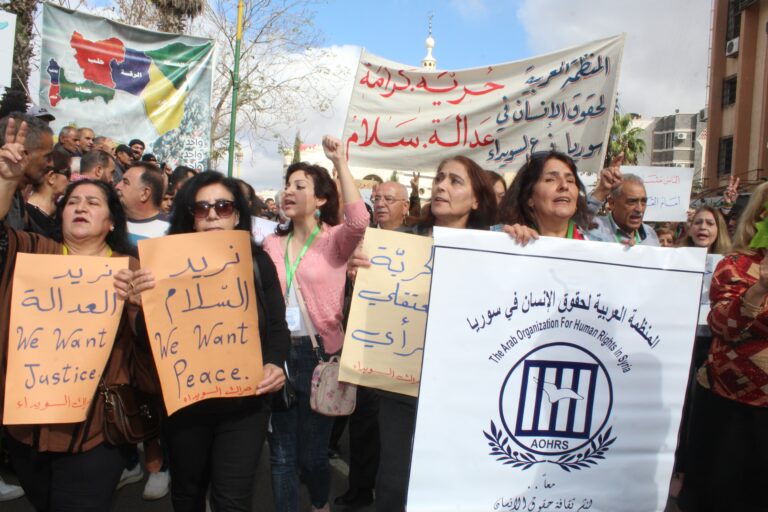
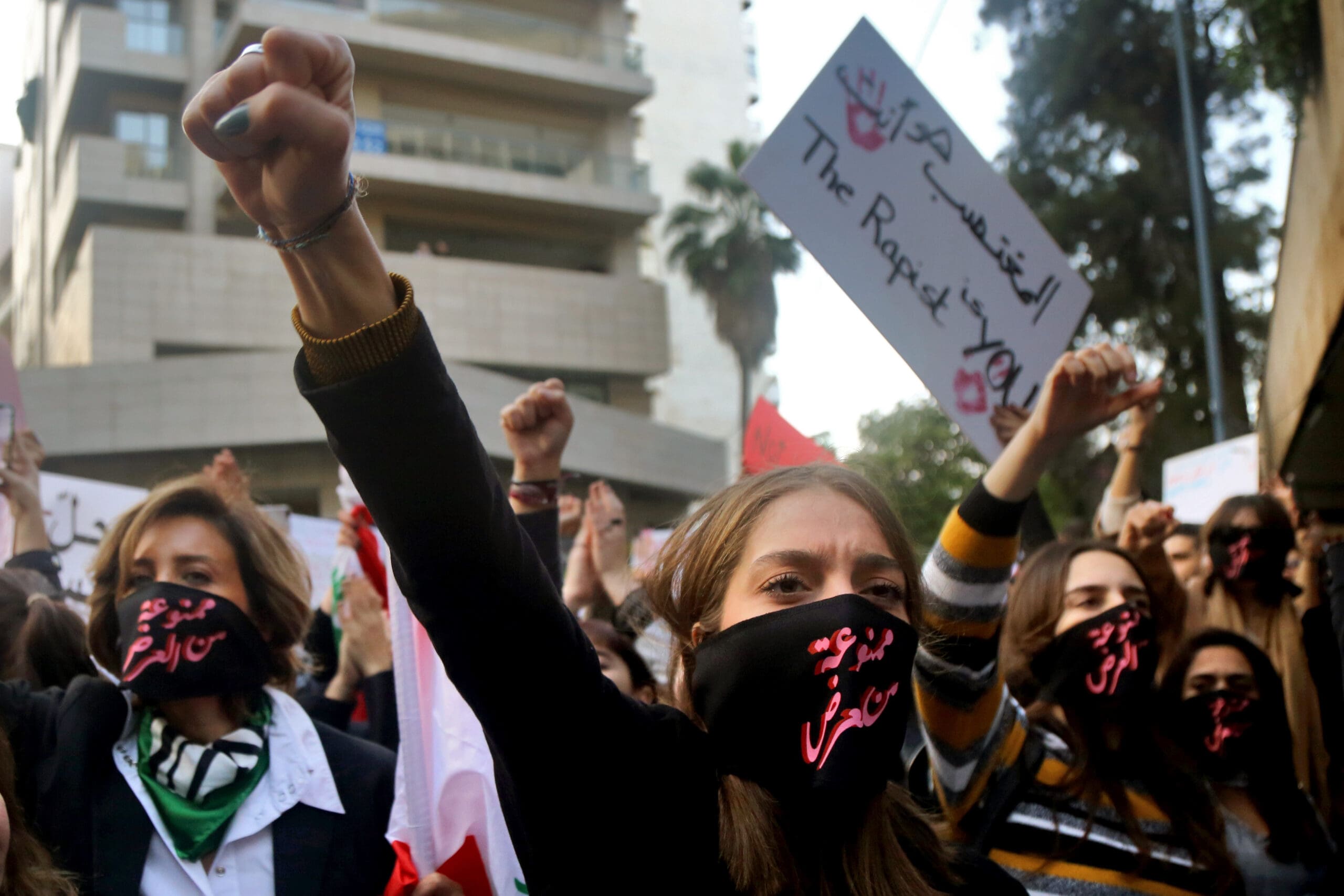
One such moment came in the wake of the violence in Syria’s coastal region in March 2025, which claimed the lives of hundreds of civilians and security personnel. A group of activists and civil society organizations in Damascus took the initiative to organize a rally in Al-Marja Square, expressing solidarity with all victims and calling for the rejection of sectarian revenge. I participated in that rally in my capacity as a researcher and observer of civil society affairs. The goal of the event was not to offer solutions to the crisis, but rather to send a moral message against violence and to affirm the value of civilian lives, regardless of their affiliations.
However, the reactions to the rally revealed another side of the story. Some passersby viewed the mere act of showing solidarity with victims in Alawite neighborhoods as a biased political stance, while others felt the rally did not go far enough in condemning those responsible for the abuses. This polarization was not surprising in a society that had just emerged from a long war, but it highlighted the magnitude of the challenge facing any civil society initiative attempting to operate in a public sphere whose political and moral boundaries are still taking shape.
A similar scene, albeit in a different context, recurred following the violence in Suwayda in July 2025, when a group of activists organized a protest in front of the parliament building in Damascus under the slogan “Syrian blood is sacred to Syrians,” to denounce the violence and call for the protection of civilians. Once again, the problem was not with the rally itself, but with how quickly the public discourse devolved into an exchange of accusations and suspicion regarding motives – a reflection of the fragility of the public sphere in a society where the war remains ever-present.
These examples do not mean that civil society organizations have failed, nor do they represent the performance of the entire sector. Other organizations have chosen to work away from the media spotlight and have continued their efforts in community dialogue, legal support, capacity building, or coordination with local authorities. But these episodes raise an important question: What happens after the event?
A protest rally, statement, or symposium is not in and of itself an indicator of success or failure, but rather the beginning of a process that should involve follow-up, the generation of knowledge, the building of alliances, and the translation of public discourse into initiatives, policies, or accountability mechanisms. In this regard specifically, it appears that a number of civil society actors are still in the process of discovering the tools required by this new phase – tools that differ from those that were sufficient during the years of war.
Perhaps the significance of these examples lies in the fact that they reveal a shift deeper than simply organizing a protest or issuing a statement. They reflect civil society’s transition from an environment where the primary concern was reaching people despite security restrictions to one where the challenge is how to transform a presence in the public sphere into lasting impact. This transition does not occur automatically simply because the political system has changed; rather, it requires the development of new tools for planning, follow-up, building alliances, and long-term work.
One Civil Society… or Multiple Civil Functions?
Perhaps one of the most prevalent assumptions in the Syrian debate today is the tendency to treat civil society as if it were a single entity expected to play one uniform role. When civil society’s performance is criticized or praised, the discussion often takes place in the singular, as if the thousands of organizations, initiatives, and networks spread across Syria and abroad all share the same mission, the same tools, and the same responsibilities.
However, the experience of other societies emerging from conflict tends to show the opposite, as will become clear below. During phases of political transition, civil societies succeed not because they adopt a single model, but because they develop an integrated system of specialized roles, in which each actor complements the others without losing its independence or becoming subsumed by the state’s project or donor agendas.
In the Syrian context, it appears that the coming phase will require at least four key roles, each with its own distinct rationale, tools, and criteria for success.
The first of these roles is that of oversight and human rights advocacy. There will continue to be a need for organizations that monitor the performance of the authorities, document violations, defend rights and freedoms, and push for transparency and accountability. This role does not diminish with the end of the war; rather, it may become even more important during the phase of institutional reconstruction, because new legitimacy is built not only through elections or reconstruction, but also through the government’s accountability to society.
The second role involves generating knowledge and technical expertise and participating in public policymaking. Many of the issues Syria will face in the coming years – from local governance reform to transitional justice, education, public sector reform, and economic development – require specialized expertise capable of transforming the field knowledge accumulated by organizations into practical, actionable proposals. Here, the role of civil society is no longer limited to demanding change but extends to participating in shaping it. Political transition requires more than just slogans; it requires data, research, evaluations, policy analysis, and legal, economic, and administrative expertise to help decision-makers, civil society, and international actors make more evidence-based decisions. This role combines two complementary dimensions: providing evidence and technical expertise, and possessing the access and skills necessary to actively participate in decision-making processes – rather than merely producing papers that never reach decision-makers. This may be one of the areas most in need of investment, as a significant portion of the public discourse in Syria remains driven by reactions rather than by structured knowledge.
The third role involves strengthening community representation and building trust and alliances. After years of division, local communities need institutions capable of amplifying their voices, creating spaces for dialogue, and building bridges between citizens and local and national authorities. This function differs from political mediation or human rights activism, as it centers on rebuilding relationships within the community itself. This role takes on particular importance in Syria, where public life lacks independent representative frameworks: political parties are virtually nonexistent, and professional and labor unions – to the extent they exist – have inherited close ties to the state from the previous era. Consequently, civil society – in its broad sense, which is not limited to nongovernmental organizations but also includes professional associations and community organizations – becomes a channel for gathering disparate voices and expressing them collectively, as well as a framework for building broad-based alliances. However, this role raises questions of legitimacy, as these organizations are not elected, and some rely on external funding – which calls for caution to ensure that civic representation does not morph into a claim to political representation.
The fourth role is institutional support and partnership with local administrations and public institutions. Some organizations will choose to engage directly with the authorities by providing technical expertise, training, and administrative capacity building – a role that requires transparency in the relationship and publicly stated standards that preserve independence. Conversely, other organizations will prefer to maintain a distance from the authorities, and their role is no less legitimate than that of those who engage. The four roles thus span a spectrum ranging from engagement to distance, a topic addressed in the following section.
This classification does not mean that every organization must rigidly choose a single role, nor that these roles are completely separate from one another. Some organizations may combine more than one function depending on their expertise and operational context. However, the fundamental idea is that the success of civil society is not measured by the ability of all organizations to do everything, but rather by the sector’s ability as a whole to produce an integrated system of functions, in which responsibilities are distributed, expertise accumulates, and cooperation among them becomes more important than the similarities they share.
Perhaps this is where the true transformation brought about by the transitional phase lies. The question is no longer: How does civil society survive? Rather: How does it organize itself to play different, yet complementary, roles in serving the public interest? The shift from the logic of “the organization that does everything” to the logic of “the system that shares roles” may be one of the most important conditions for the maturation of Syrian civil society in the coming years.
How Does the Transition Happen? At the Organizational and System Levels
Perhaps one of the most significant challenges at this stage is preserving the independence of civil society without allowing it to become isolated from state institutions. For the first time in decades, the transitional phase imposes a reality in which cooperation with public institutions becomes part of the reconstruction process, while maintaining the capacity for criticism and accountability remains a fundamental requirement for gaining the trust of society. This is not an easy balancing act, but it is not a new one either; other societies emerging from conflict have faced it and discovered that state-building and civil society-building are not necessarily conflicting paths, but can be complementary if the boundaries between partnership and independence remain clear.
Other countries’ experiences do not offer a ready-made recipe, but they do shed light on the risks and opportunities. In Guatemala, the Civil Society Assembly served as an inclusive platform during the peace negotiations in the mid-1990s and put forward proposals for a number of agreements. In Tunisia, the National Dialogue Quartet, which sponsored the 2013 national dialogue, played a decisive role in overcoming a political crisis, even though it relied on major organizations rather than a broad civil society network. Post-1994 South Africa, however, highlights the other side of the coin: the migration of civil society talent to state institutions and the shift of donor support toward the government weakened many independent organizations just when they were needed most. The common lesson is that engagement in state-building requires institutional safeguards for independence, and that coordinating roles is more effective than competing for them.
At the level of the individual organization, the transformation begins with a shift from a project-based approach and the donor cycle toward building cumulative institutional capacity. In practice, this means three things: transforming the data and field experience the organization has accumulated into usable analysis and policy papers; developing legal, technical, and negotiation skills that were not required during the war; and establishing regular channels of engagement with institutions, through memoranda of understanding, technical committees, or periodic consultations. This is matched by an equally important condition: protecting the critical voice – by diversifying funding sources, declaring clear principles for dealing with the authorities, and defining what the organization will not compromise on. It is wise to begin partnerships with limited, publicly stated technical agreements before expanding them.
Some current Syrian examples reveal both the opportunities and tensions inherent in this approach, though it is not yet possible to pass judgment on any of them. In June 2026, the Syria Justice and Accountability Centre (SJAC) signed a memorandum of technical cooperation with the National Commission for Transitional Justice to support investigation and documentation, and at the same time was among the organizations that signed a joint position paper criticizing the circular issued by the Minister of Social Affairs and Labor in October 2025. This combination of technical cooperation and critical stance raises the question at the heart of this paper: How does an organization maintain its independence while offering its expertise to institutions that are still taking shape? Organizations such as the Syrian Legal Development Programme (SLDP) and the Syrian Network for Human Rights (SNHR) are also worth noting in this regard, having accumulated legal knowledge and databases that can be used for long-term monitoring.
At the level of the civil society sector as a whole, what is needed is to foster integration between organizations that have chosen to engage with the authorities and those that have preferred to maintain a distance from them, rather than entrenching the division between “collaborators” and “opponents.” Several mechanisms can facilitate this: a publicly available roadmap for the distribution of roles that clarifies who does what; a permanent coordination platform that brings both sides together around shared principles; a code of conduct for dealing with the authorities that protects the independence of those who engage and shields those who remain at a distance from accusations of dereliction of duty; and bridges connecting different working environments – in Damascus, northwestern Syria, northeastern Syria, and the diaspora – to facilitate the exchange of knowledge and resources.
This transformation cannot continue without an appropriate legal framework. Civil society work in Syria remains governed by Law No. 93 of 1958 on Associations, and a ministerial circular issued in October 2025 reaffirmed the requirement for prior administrative approval for external funding and membership in foreign bodies. On 5 October 2026, the committee tasked with drafting a new law to regulate the work of nongovernmental organizations presented a preliminary draft for review by individuals and organizations, but it allowed only three days for comments. Subsequently, in response to objections raised by various voices within civil society, the committee extended the deadline for review, consultation, and feedback by an additional week.
According to a preliminary review, the draft – which remains incomplete – includes positive elements that align with the calls made in this paper: the repeal of the 1958 law, the adoption of a registration system with tacit approval of the application after the deadline has passed, limiting the dissolution of an organization against its will to a court ruling, prohibiting administrative interference in its management and programs, recognizing unregistered networks and initiatives, and protecting advocacy activities and policy research from interference by relevant administrative and sectoral authorities.
However, the draft raises several fundamental concerns. First, external funding remains restricted: accepting bank transfers from abroad, conducting fundraising campaigns abroad, and joining organizations based outside Syria are all subject to official approvals – including approval from the Ministry of Foreign Affairs – with fines imposed on board members who violate these rules. This perpetuates the prior-approval system in the October 2025 circular criticized by civil society organizations, which most severely impacts organizations that rely on grants. Second, authority is concentrated in the Ministry of Social Affairs and Labor, whose employees have the status of law enforcement officers and are authorized to enter organizations’ premises to conduct inspections; the government holds a majority on the National Advisory Committee (five out of nine members), and the minister selects the organizations’ representatives to the committee for the first term and has the power to reject its recommendations. Third, a judicial appeal does not suspend the implementation of an administrative decision unless the court so rules. Fourth, the distinction between political activity – which is prohibited for organizations – and protected advocacy remains vaguely defined, which could place monitoring and human rights organizations in a precarious position. Finally, the draft stipulates that the headquarters must be located in Syria and that the chairperson of the board of directors and the majority of its members must be Syrian; it defers the section concerning foreign organizations, and the status of organizations registered abroad or in areas not under the control of the former government remains unclear – and this is the very essence of the diversitythis paper is advocating.
The true test, then, lies in the final text and its implementing regulations, and in whether organizations will be seriously consulted in their drafting, because this participation is the first practical test of the roles advocated in this paper.
Conclusion
The issue today is not for Syrian civil society to abandon the experiences it has accumulated during the years of war, nor to start over as if that experience never happened. The years of conflict have produced institutions, networks, knowledge, and new forms of organization without which it is difficult to imagine the Syrian landscape. But the transitional phase raises a different question: How can these experiences be transformed from tools for response into tools for participating in the construction of the public sphere?
Not all civil society organizations can be expected to play the same role. There will continue to be a need for organizations that monitor and hold accountable, others that generate knowledge and policies, still others that build trust within local communities, and yet others that provide technical expertise or defend rights and freedoms. The strength of civil society lies, perhaps now more than ever, in its ability to preserve this diversity, not in seeking to unify it under a single model.
Ultimately, the success of Syrian civil society in the coming phase will not be measured by its ability to fill the void left by the state during the war, but by its ability to contribute to building a new relationship between society and the state – one based on participation, accountability, independence, and collaboration. Political transition does not merely change the form of authority; it also reshapes the role of civil society. Perhaps the most difficult task today is not the transition from war to peace, but rather the shift from a crisis-management mindset to one of institution-building, and from reacting to events to helping shape the future. This also requires a legal framework that protects the independence of organizations, as well as coordination mechanisms that preserve their diversity and transform it into complementarity.