Introduction
The sale of public assets in Egypt endures under pressure from the economic crisis and persistent International Monetary Fund (IMF) demands to accelerate privatization and divestment, as part of Egypt’s broader narrative on structural reform. These sales were a key component of the Egyptian government’s plan to address its economic crisis (2022-2024), and Gulf sovereign wealth funds were the primary US dollar (USD) liquidity source needed to mitigate these effects and prevent the economy from sliding into even more dangerous territory. This paper focuses on that period during economic crisis intensification; consequently, asset sale practice analyses take on an additional dimension under those pressures.
This paper analyzes recent Gulf acquisitions in Egypt from an economic perspective and through an institutional lens, highlighting the fundamental challenges facing the governance of these acquisitions, primarily related to a lack of transparency in announced deals as well as a decline in oversight by government regulatory bodies, the judiciary, parliament, and other institutions. These bodies should play important roles in regulating these acquisitions and preventing harm to public funds.
The paper is divided into three main parts. In the first part, we address the nature of these acquisitions and the economic context that led to asset sales, as well as how they took place amid the economic crisis. Under crisis pressure, many other factors that should have been taken into account were overlooked; foremost among them was how these assets were priced.
In the second part of the paper, we examine legal and institutional acquisition challenges, and the legal and regulatory framework that allowed many considerations related to transparency, preventing concentration, and monopolization in these deals to be omitted. In the third part, we attempt to assess their long-term developmental impact on the Egyptian economy.
By assessing the impact of government acquisitions, economic sovereignty, and the possibility of building an economic model that promotes sustainable and equitable development in the Egyptian context, this paper aims to challenge the basic assumptions that link privatization and attracting foreign investment to structural economic reform in Egypt.
Part I: Diagnosing the Framework Governing Gulf Acquisitions in Egypt
Before we describe the economic and political conditions that drove these recent acquisitions, a conceptual framework is needed. This framework relates to two ideas: the first is the concept of investment governance itself in the Egyptian context, and the second concerns what we mean by the developmental impacts of these investments. This paper uses these two concepts in an integrated manner, whereby ensuring long-term developmental impact becomes part of the governance process itself.
In mainstream economic literature, governance refers to a set of institutional, legal, and political arrangements through which investment decisions are made, as well as the manner in which deals are negotiated and evaluated. However, this institutional concept, which reduces governance to a set of transparency-related procedures, is fundamentally flawed, as it fails to account for these various transactional dimensions.
This paper adopts governance in a broader sense than institutional deal-completion arrangements, treating foreign direct investment not necessarily as a positive flow, looking beyond finance, and situating this investment, specifically acquisitions, within the context of power relations, financial constraints, and long-term state strategies, particularly during economic crises. Consequently, it adopts a concept of governance derived from analyzing a political economy where governance is not understood merely as a process of improving the regulatory environment – despite its importance – but rather as a space for negotiation between the state – as manager of “public finances”, and society, as owner of public finances – with a third party being Gulf sovereign wealth funds that ultimately benefit from these asset transfers.
Public asset sales have been and remain a defining feature of Egypt’s recent economic crisis. They have become an integral condition of the IMF loan agreement, which Egypt signed at the end of 2022. It stipulated that the Egyptian government would mobilize an additional US$14 billion in financing from Egypt’s regional and international partners, including funding from Gulf Cooperation Council (GCC) countries through state-owned asset divestment.
Over the past three years – the crisis years – the IMF has emphasized, in more than one review, the need to accelerate the sale of government assets. The Egyptian sovereign wealth fund’s justification was that these government projects – regardless of their nature – contribute to reducing competitiveness in the economy as a whole and make it difficult for the private sector to enter those areas.
However, what we can observe in the IMF’s discourse is that, despite the apparent distinction between public assets (public sector) and assets owned by sovereign entities, it does not actually differentiate between the two. It treats the negative impacts resulting from each as equivalent. This is something we must begin to deconstruct if we are to reflect on the recent wave of government acquisitions.
This wave began with the signing of the credit facility loan agreement at the end of 2022, an agreement that saved the Egyptian government, which is closely linked to the tone of the discourse and the extent to which the government has succeeded in selling assets, in accordance with the conditions set by the IMF.
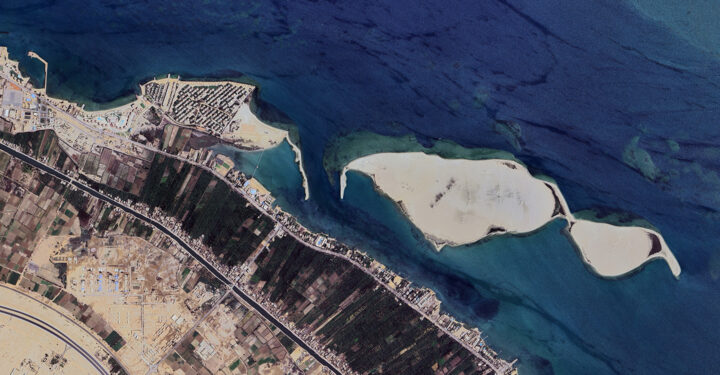
The agreement between Egypt and the Fund stipulated that the country needed support from its Gulf partners, whether through loans and credit facilities or through purchasing assets, in order to rescue Egypt from its crisis. This materialized in February 2024 with the Ras al-Hikma deal, which is the largest foreign direct investment deal in Egypt, valued at approximately US$34 billion.
Most of the deal’s value was paid in “cash”, which is unusual for large-scale land purchases, as real estate developers typically make payments that extend beyond the project’s completion. Furthermore, the deal had implications beyond a mere commercial transaction; it was primarily political, aimed at providing the necessary USD liquidity and slightly expanding the Egyptian government’s fiscal space, which helped stabilize a number of key macroeconomic indicators, foremost among them inflation and the exchange rate.
The Extended Credit Facility agreement was not the first loan agreement Egypt signed with the Fund that stipulated the privatization of public assets, as this had been a recurring condition in the Fund’s various programs. What was new this time was the stipulation that the assets be sold to Gulf countries to raise USDs, rather than listing them on the stock exchange – one of the best mechanisms for promoting transparency and improving market efficiency. This requirement was part of efforts to mobilize financing that would alleviate pressure on Egypt’s balance of payments. Although the sales of government assets, including the Ras al-Hikma deal, did not result in significant USD inflows to help resolve the balance of payments crisis, the proceeds from the sale of government assets reached approximately US$3.9 billion during 2022 and 2023, with sales taking place at various phases, beginning in April 2022 and continuing through June 2023. During that period, Gulf acquisitions did not provide the financial leeway needed to resolve the economic crisis, necessitating another devaluation of the Egyptian pound (EGP) in March 2024 – the EGP’s value was reduced from approximately 30 EGPs per USD to about 50 EGPs per USD.
Nevertheless, the government continued to divest itself of its assets. By February 2024, the largest deal – the sale of the Ras al-Hikma land – had been finalized. In February, the Egyptian government also signed a massive deal with the UAE sovereign wealth fund Abu Dhabi Holding Company (ADQ) to develop the Ras al-Hikma peninsula on the Mediterranean coast. The deal was described as the largest in the history of foreign direct investment in Egypt. According to figures announced by the Egyptian prime minister, total investments for the development of Ras al-Hikma City will reach US$150 billion, and these funds will be spent on projects to develop a fourth-generation city, covering an area of 170km2 . According to the limited information available regarding the nature of the agreement, the Egyptian government will receive a 35% stake in the project. It is not precisely known what this stake entails or whether it will include a share of future profits. Consequently, the government’s participation entails infrastructure development for the project – but what is the cost of that infrastructure? What is the projected financial revenue analysis, and how will the Egyptian government receive its 35% share? Will this be through cash distributions after the project’s opening? Or will the government undertake designated portions of developed land in exchange for its share?
Many preliminary details of this deal are missing, especially since it has become a source of local political polarization between supporters and opponents. However, from an economic perspective, such a large influx of funds represents a solution to Egypt’s balance of payments crisis, when it faced significant financial pressures during the crisis years of 2022 and 2023. Consequently, the manner in which the deal’s funds were utilized demonstrated their importance in providing some financial breathing room for Egypt’s balance of payments. However, the government announced that the funds would be used to reduce external debt, which quickly began to rise again after only six months. By the first quarter (Q1) of the following FY (fiscal year) 2024-2025, external debt stood at US$155 billion, a level close to that at the start of the crisis in Q1 FY 2022-2023.
Figure 1
Compiled External Debt Data by Quarter
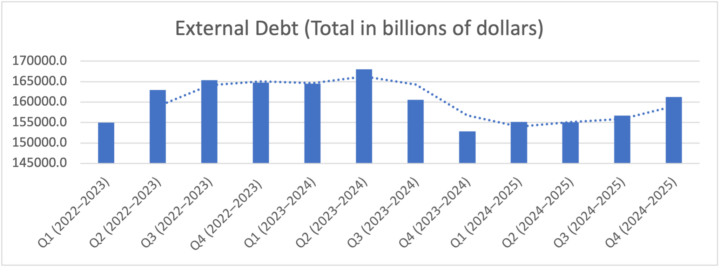
Figure 1 shows that the impact of the Ras al-Hikma deal on external debt quickly faded, despite a significant decline over two consecutive quarters of nearly US$16 billion, as external debt fell from US$168 billion at the end of 2023 to approximately US$152.2 billion by June 2024. It soon rose again, reaching, according to the latest end of June 2025 data, approximately US$161.2 billion – a level higher than its level at the start of the crisis (approximately US$155 billion). Although this highlights a problem with short-term external debt management, the large inflow of these funds succeeded only in reducing the debt by US$14 billion – of which US$11 billion were already deposits at the central bank, meaning they were converted into investments and removed from the external debt.
As for foreign exchange reserves, the deal had a more positive impact, as reserves rose by approximately US$15 billion – from nearly US$35.2 billion to nearly US$50 billion by the end of 2024. This increase indicates that the funds from the deal were primarily used to improve certain financial indicators related to foreign investors in Egyptian debt instruments, whether denominated in EGP or USD. Improving these indicators – particularly the balance of payments and foreign exchange reserves – remains essential for assessing the risk of financing Egypt’s public debt. However, the most important objective – reducing external debt and lowering annual debt payments – was not significantly achieved as a result of the deal, even though those financial inflows did help lower interest rates, essential for refinancing external debt without causing significant spikes in the debt figure.
Figure 2
Foreign Direct Investment, Net Inflows (% of GDP) 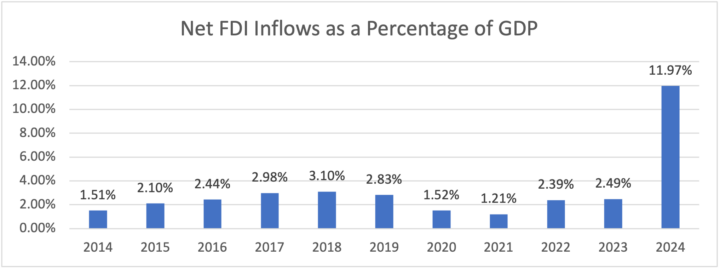
It can be said that, from an economic standpoint, the financial inflows from the Ras al-Hikma deal provided a boost to cash reserves and clearly improved the external financing conditions facing the Egyptian economy, but, at the same time, they did not drive deeper reforms to address Egypt’s structural economic crisis. The deal also raises many questions about the development model, which relies primarily on investment in infrastructure and real estate. The concentration of public and private investments over the past decade in these projects has led to a complex economic crisis and increased external borrowing rates to finance major national projects in the Administrative Capital, New Alamein, or other new cities that the government began expanding nearly 10 years ago, thereby depleting a significant number of public resources.
According to the latest Central Bank data, as of the end of June 2022, the construction and real estate sectors account for approximately 19% of GDP, and this contribution increased by nearly 5% of GDP between 2014 and 2022. During those same years, the manufacturing sector’s contribution to GDP remained nearly constant or increased by approximately 1% of GDP over eight years.
Figure 3
Manufacturing, Construction, and Real Estate Contributions to GDP
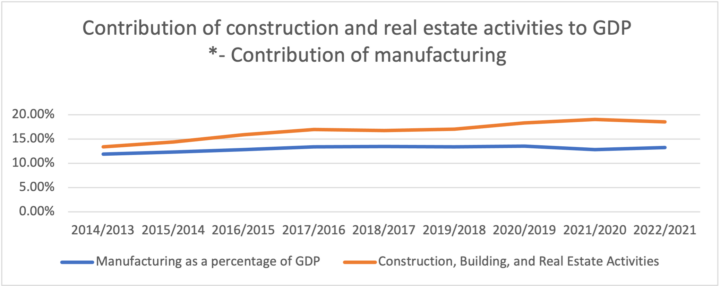
Figure 3 summarizes the structural problem of the Egyptian economy, before and after 2016. Although exchange rate devaluations and other measures supported by the IMF – such as lifting energy subsidies and launching the current wave of privatization, which were promoted as structural reforms – these reforms ignore Egypt’s urgent need to shift its development model and focus public and private investment on manufacturing, with its high value added, rather than construction and real estate, which have low value added. If forward linkages in these two sectors weaken, this indicates that the growth achieved is unsustainable.
The concept of “forward and backward linkages” provides a key insight into understanding the current structural crisis in Egypt. The concept refers to different economic sectors being able to stimulate economic activity in other sectors, where backward linkages indicate the extent to which a sector relies on production inputs from other sectors – that is, from suppliers in the early stages of production. This indicator is particularly high in the construction and real estate sectors, as building a bridge or a property requires factories producing cement, steel, electrical wiring, and other materials. However, in terms of forward linkages – which indicate the sector’s ability to drive future growth in other sectors – real estate, construction, and building sectors tend to be notably weaker than those of manufacturing or even agriculture.
The construction sector generates broad demand for inputs from other sectors. However, its outputs do not enter subsequent production chains to the same extent; rather, they are often directed toward the final demand, as in the case of buildings and housing. Consequently, the growth model based on expansion in this sector remains limited in its sustainability. In the Egyptian case, where the sector already suffers from high concentration levels, continuing to pump public and private investments into it at the same pace may exacerbate existing imbalances and increase the likelihood of financial bubbles forming.
As for manufacturing, it tends to have much stronger forward and backward linkages. Many sectoral impact studies on growth and employment in Egypt show that manufacturing has high multipliers for both production and employment, due to its strong interconnections with other sectors. However, Egypt faces another challenge regarding the sector’s value added, as many factories rely on imported production inputs. This reduces the economy’s total value added. Since manufacturing has a greater capacity to utilize production inputs and supply its outputs to more than one sector in the market or for export, it generates greater total value added compared to construction. This means that intensive investments in construction can generate increased demand for inputs, such as building materials and quarry exploitation, but they do not create strong developmental impacts in the rest of the economy, nor do they contribute to building deep production value chains. In 2016, the Egyptian Center for Economic Studies reached a similar conclusion: despite the construction sector’s importance to the Egyptian economy in recent years, its developmental impact appears largely weak when viewed through the lens of the economic multiplier effect on GDP.
The Egyptian economy’s structural crisis lies in its low contribution of productive sectors; these sectors have a greater capacity to bring about structural economic transformation. Forward linkages in these sectors allow their outputs to feed into other sectors as well as global export chains, better integrating Egypt into the global economy. Thus, the Ras al-Hikma deal – despite its importance for improving financing conditions – represents a continuation of Egypt’s structural economic crisis.
The sale of public government assets continued in parallel, as a follow-up to the first wave of Gulf acquisitions in Egypt in 2022-2023, with a number of other sales transactions, which the IMF summarized in its first and second reviews of the loan agreement with Egypt. It is worth noting that this review took place immediately after the Ras al-Hikma deal in March 2024.
Table 1
Most Significant Companies Sold by the Government during FY 2023-2024
| Sector |
Total Inflows (USD millions) |
Entity Share (%) |
Remaining Public Share (%) |
Nature of Transaction |
Actual/Expected
Closing Date |
Purchasing Entity |
Company |
| Chemical |
625 |
30 |
21 |
Stock Exchange + Cash Deposit |
November 2023 |
Emirates International Investment Holding Company |
Eastern Tobacco Company |
| Accomm. |
800 |
39 |
63 |
Capital Increase |
Q1 2024 |
Icon Investments (Talaat Moustafa Group subsidiary) |
Egyptian General Company for Tourism and Hotels (EGOTH) |
| Oil and Gas |
800 |
--- |
— |
Share Sale: Egypt Sovereign Fund |
Q1 2024 |
Abu Dhabi Holding Company (ADQ) |
Egyptian Ethylene and Derivatives Company (Ethydco),
National Drilling Company,
Egyptian Alkyl Benzene Company (ELAB) |
| Metal |
175 |
31 |
0 |
Shares: Stock Exchange |
September 2024 |
Ezz Steel Company |
Ezz Al-Dakheila Steel Co. |
| Telecom |
4 |
10 |
70 |
Stocks: Stock Exchange |
May 2023 |
Institutional investors (9.5%) and employees |
Egyptian Telecom |
| Chemical |
17 |
56 |
0 |
Stocks: Stock Exchange |
May 2023 |
National Paints Company (Dubai, UAE) |
Bakin Paints and Chemical Industries |
| Elec Gen. |
339 |
— |
— |
Asset Sale: Egypt Sovereign Fund |
Q2 2024 |
— |
Jabal Al-Zayt Wind Farm |
| Water/Elec Gen. |
300 |
— |
— |
Asset Sale: Egypt Sovereign Fund |
Q2 2024 |
— |
Desalination plant/wind farm Zaafarana |
| — |
3,060 |
— |
— |
— |
— |
— |
Total |
Table 1 reveals a number of key characteristics of current acquisition deals. One of the most important of these characteristics is that acquisitions focus on existing “Brownfield” projects rather than new or “Greenfield” projects that could create new assets and additional productive capacity in the economy. These deals have effectively led to a change in the ownership structure of these companies without altering their activities or involving extensive restructuring, which would have increased their productive assets. We can also observe that most deals, whether in the first wave of acquisitions in 2022-2023 or in recent divestments, were carried out through sales to a strategic investor, primarily via the Egypt Sovereign Fund – underscoring the short-term nature of these transactions – and undertaken to address the USD liquidity crisis. This, in turn, resulted from high debt payments over the past three years.
These divestment deals did not provide the expected financial breathing room, as proceeds from various acquisition waves over three years did not exceed US$6 billion. This means they were not the decisive factor in securing financial solvency; rather, it was the Ras al-Hikma deal that raised foreign investment indicators in Egypt to unprecedented levels in 2024, placing Egypt ninth globally. However, despite this massive deal and its positive impact on meeting financing needs, particularly debt service payments, it did not provide sufficient financial leeway to fully close the financing gap.
According to IMF estimates, the Egyptian economy’s financing gap remained significant. Financing needs rose during the first year of the crisis (2022-2023) from US$21.5 billion to nearly US$36 billion in 2023-2024, before declining again in 2024-2025 to approximately US$26 billion. They are expected to rise again during the current fiscal year to approximately US$32.9 billion, but are expected to decline to around US$26 billion in the next.
Figure 4
External Financing Needs, Sources, and State-Owned Asset Sales (US$ Billions)
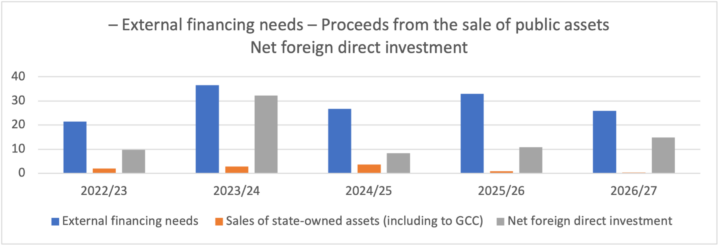
The persistent financing gap in the economy constitutes a major driver for asset sales in the coming period; however, other factors are likely to slow down operations in the near term, as financing pressures are no longer significant enough. Although IMF experts insist on completing divestments it deems necessary to reduce the state’s footprint on the economy, the absence of significant financing pressures could contribute to a more cautious approach to these divestments.
Part II: Institutional and Legal Challenges in the Context of Gulf Acquisitions Governance
Over the past few years, various legal amendments have entrenched an unsound legal framework that prevents the transparency and governance expected of foreign investments in general, and recent Gulf acquisitions in particular. In all previous Gulf acquisitions, there has been a clear lack of transparency, whether in the deals themselves, pricing mechanisms related to assets purchased by Gulf sovereign wealth funds, or agreements accompanying these deals, which were marked by significant ambiguity. For example, the three-way sale of three companies in the petroleum sector – namely, the Egyptian Company for the Production of Ethylene and its Derivatives (Ethydco), the National Drilling Company, and the Egyptian Alkyl Benzene Company (ELAB), which took place between ADQ and the Egyptian sovereign wealth fund – the Central Bank provided a guarantee that is not always common in initial investment deals. The Bank guaranteed a fixed return of 8% annually on the US$800 million transaction amount for a period of four years. This means that the Emiratis purchased assets and stakes in profitable Egyptian companies in this sector, securing a side-agreement for a fixed return, making it appear as though it is not an asset purchase.
The Central Bank of Egypt provided what amounts to a guarantee on Emirati investment, effectively treating Emirati ownership in the three companies as having preferred shares with a high return in USDs by 2024. It is unclear why the government provided this guarantee specifically for this deal, but its existence raises complex issues. The first relates to the procedural ambiguity where, just like in other acquisition deals, neither the terms of this guarantee nor the source of coverage for the actual return and the guaranteed return were disclosed in the event that the companies’ profits decline. This opens the door for the General Petroleum Authority, which is already heavily indebted, to bear this difference. Therefore, this difference will be borne by the Egyptian general budget in the future. The second issue concerns the principle of risk-sharing that is standard and agreed-upon in all foreign investment contracts. Allocating a high guaranteed return to a foreign investor effectively turns them into a creditor rather than an investor, whereas the most basic rules of investment assume that risks are shared between the seller and the buyer.
The Central Bank’s intervention to provide this guarantee raises many eyebrows; a monetary authority’s commitment to guarantee a fixed return to a foreign investor reflects a decline in the Bank’s actual independence and also raises questions about the role of other regulatory bodies that were supposed to oversee the deal, foremost among them the Egyptian Competition Authority that ultimately approved it. In this deal, and others, there is a clear absence of institutional neutrality and a lack of separation between executive and oversight functions among various state agencies.
Perhaps the most prominent example of this institutional ambiguity is the case of the Egypt Sovereign Fund itself. Since the Fund’s establishment in 2018, there has been a complete lack of transparency regarding the role it is supposed to play. Decisions to allocate assets to the Fund are issued by stripping them of their public benefit status through a presidential decree, which is peculiar, as the public benefit status is supposed to apply to the Fund itself, which ultimately manages public assets. Over the past years, the Egypt Sovereign Fund’s portfolio has expanded significantly, as it acquired, pursuant to presidential decrees, the Tahrir Complex building, the Ministry of the Interior, the former National Party building, the Cosmic Village building on October 6th Street, a number of buildings and plots of land attached to the Nasser Institute, the Tanta Zoo grounds, and other assets.
The asset transfers to the Fund expanded following the amendment of its founding law in 2020. Legal amendments were passed that added significant safeguards to asset sales through the Fund. Article 6 bis was added during those amendments, stipulating: “An appeal against a decision by the President of the Republic to transfer ownership of assets, or against actions taken pursuant to such a decision, may be filed only by the owner of the asset or the fund to which ownership has been transferred, and by no one else; and no action may be brought to invalidate contracts entered into by the Fund or acts taken by it to achieve its objectives, or measures taken based on such contracts or acts, except by the contracting parties and no one else.”
Another provision was also added stipulating that appeals or lawsuits related to the disputes specified therein shall not be accepted, a provision that further fortifies the contracts entered into by the sovereign wealth fund, which has emerged as a key player in recent acquisitions as a continuation of the legal amendments related to privatization. Law No. 32 of 2014 began regulating procedures for challenging state contracts. This early law, issued by the Presidency of the Republic before the 2015 parliament convened and subsequently ratified, was a legislative response to rulings issued by the administrative courts following the January 2011 revolution regarding privatization contracts and the sale of many public sector assets. However, the 2014 law issued remained the subject of a statutory challenge until 2023, when the Constitutional Court ruled it was legitimate. The law limits the right to challenge government contracts to contracting parties and direct stakeholders only. This prevents legal challenges to many government contracts, including privatization contracts concluded in previous periods, and those that are still pending before the courts. Under this law, courts do not accept any lawsuits or appeals from third parties regarding contracts concluded between the state and investors, constituting a clear violation of individual citizens’ right to protect public funds.
This law has closed one of the most important channels of judicial and societal oversight over the sale of public assets, thereby shielding government contracts – including asset sales contracts – from any independent judicial review. However, the justification that the law was necessary to attract foreign direct investment in 2014 seems strange, given that it has remained in effect for more than a full decade. This means that the exceptional circumstances that necessitated bypassing traditional oversight channels over public funds have persisted to this day. In the recent wave of acquisitions, the government has further fortified these contracts. By transferring sold companies to the Egypt Sovereign Fund, another layer of protection is added to these contracts, as the Fund’s assets, according to its founding law, are not public funds but private funds owned by the state.
The aforementioned factors – poor transparency and protecting privatization contracts from judicial review – have contributed to diluting the role of oversight bodies during Gulf acquisitions. Most of these deals are concluded outside of parliament, and even when some of these deals are presented to an agency, such as the Competition Protection and Anti-Monopoly Authority, they are often approved, which raises many questions about the independence of this authority and other regulatory bodies that are supposed to play important roles in protecting public funds and ensuring equal-opportunity sales processes. This ultimately led to the reinforcement of existing monopolistic situations, clearly seen in the sale of the Eastern Tobacco Company. The government’s monopoly on tobacco was replaced by a monopoly held by Emirati investors, after 30% of the company was sold to Global Investment – owned by Emirati businessmen Mohamed Alabbar and Abu Bakr Al-Husseini. This was preceded by the government’s decision to grant United Tobacco – also owned by the UAE – a new manufacturing license, effectively allowing the UAE to largely replace the government’s monopoly on Egypt’s tobacco market.
The result of this lack of transparency – as well as the failure of regulatory bodies to fulfill their intended roles – was that decisions regarding these deals were confined to a small group of executives, without any accountability. Many answers to critical questions in this context remained unanswered, such as: who is buying these assets? At what price? Were they conducted through competitive bidding processes that ensured fair pricing? The supposed roles of civil society, labor unions, and the press were also absent. Collectively, this undermines the principles of good governance and contributes to eroding public trust in how the government manages public resources, shifting foreign direct investment discourse from one that should be economic in nature to a politically polarized space. This gives rise to opposed narratives: on one side, the claim that the country is being “sold off”, as promoted by the political opposition; on the other, the government’s promotion of investments with grand visions as evidence of economic success that remains out of reach for the average citizen.
Table 2
Key Players and Stakeholders in Recent Acquisition Deals
| Actors |
Main Interest |
Institutional Role |
Political / Institutional Influence on Sales |
| Presidency |
Alleviating resulting economic pressures |
Highest executive authority that allocates assets to the Egypt Sovereign Fund |
Very High |
| Prime Minister / Cabinet Office |
Implementing State Ownership Policy |
Legally oversees Sovereign Fund; Coordinates with ministries to value assets |
High |
| Egypt Sovereign Fund |
Intermediary for sales; Ensures fair asset valuations |
Semi-autonomous structure; State assets transferrals; Concludes deals without parliamentary oversight |
Very High |
| Central Bank of Egypt |
Stabilizes exchange rate / key econ. indicators |
Guarantees fixed 8% return; Receives portion of proceeds to repay debt, on specific deals (ADQ) |
Medium – High |
| Ministry of Finance |
Reduces debt, generates rapid revenue, improves macro indicators |
Coordinates with IMF; Develops private and public debt policies |
High |
| Gulf Sovereign Wealth Funds |
Profitability; Regional influence; Hedges investments vs. political risks |
Acquires assets in strategic sectors, diversifying Gulf economy; Financially rescues Egypt from crisis |
High |
| International Monetary Fund |
Ensures asset sale implementation; Reduces econ. financing gap |
Links Fund program conditions / disburses tranches to progress in asset sales |
High |
| Egyptian House of Reps |
Strengthens institutional legitimacy; limits political representation |
Largely symbolic; Not privy to transactions or asset valuations |
Low |
| Central Auditing Organization |
Ex post-audit of public funds; Symbolic oversight |
Oversight body, monitors public finances; lacks means to halt transactions |
Low |
| Competition Protection / Anti-Monopoly Authority |
Prevents monopolistic practices; Protects domestic market |
Determines whether mergers and acquisitions create market monopolies |
Low |
| Workers and Unions |
Job security; Protection of labor rights |
Affected by post-sale restructuring; No reps in negotiations or deals. |
Very Low |
| Press / Civil Society |
Transparency, public interest, public accountability |
Tracks deals and exposes institutional opacity from outside the formal system |
Low |
| General public / Taxpayers |
Preserves nat. wealth; ensures quality; safeguards econ. sovereignty |
Actual owner of public assets; Deprived of info. or ability to challenge sales |
Low |
As for local communities – key stakeholders in this process – recent land acquisitions, such as Ras al-Hikma, Alam al-Rum, and many other plots, have caused widespread displacement – and, in many cases, forced displacement – of local residents in those areas. The state has played a direct role in suppressing local communities, underscoring that these acquisitions are not merely financial or investment-driven but raise recurring questions in Egypt regarding land, ownership patterns, and compensation rights in expropriation cases for the public good – a practice the Egyptian government has expanded in recent years. The state has relied on expropriation tools or “investment allocation” without a clear participatory process, transforming compensation from a tool of justice into a unilaterally determined social containment mechanism by the executive branch. This pattern reflects a fundamental governance gap in Gulf acquisitions: the absence of a binding framework for social impact assessment, the failure to involve local communities in negotiations, and the reliance on short-term monetary compensation that does not address the loss of livelihoods or spatial ties, thereby threatening to transform these deals from “development projects” into sources of chronic social tension.
Part III: Investment Patterns, Their Objectives, and the Absence of a Developmental Role
As previously shown, it is clear to us that several patterns in foreign investment management hinder economic development and result in investment gains of limited duration that range from negative to positive effects, as they do not attempt to address the structural imbalances in the Egyptian economy. This becomes an attempt at a temporary “fix” without a clear long-term plan for structural transformation.
First: Dollar Is King
The rush to acquire USDs quickly, at any cost, that mitigates the effects of an economic crisis and resulting social unrest, has led to the adoption of policies that deprived Egypt of its rights. Austerity policies have long been associated with IMF programs in Egypt, particularly between 1991 and 2022, when subsidy removals without a corresponding increase in wages exacerbated poverty. Low wages have led to weak savings and investment, causing the private sector to be dominated by large corporations while the enterprising middle-class – the backbone of any economy – is absent. Despite this structural imbalance, evident in a weak Purchasing Managers’ Index, the Fund insists that the cause lies with state-owned enterprises, even though the private sector controls over 85% of manufacturing, 89% of construction, and 99% of tourism – accounting for more than 75% of non-oil GDP. Instead of addressing low wages, the Fund is pushing for privatization, from which major investors benefit by purchasing productive assets without incurring construction costs or start-up risks. After beginning with the privatization of loss-making and neglected companies in the first rounds of privatization, the current phase targets profitable companies, in a process akin to selling off Egypt’s economic legacy in exchange for temporary aid that will soon evaporate. The speed of this sale, driven by the Fund’s tight timeline – especially amid crisis and anticipation of an EGP devaluation – had a profound impact on asset undervaluation, as we have detailed in this paper, and as several studies have also shown.
Second: Rapid Sales as a Substitute for Long-Term Planning
Using investments to achieve development goals requires selecting the appropriate type of investment for the appropriate sector, which the government neglected in its rush to sell profitable assets – some of which were highly important and highly profitable – without a specific strategy for the role of this investment in a broader industrial policy, beyond its role in attracting USDs as quickly as possible. For example, it did not ensure that these acquisitions were accompanied by agreements to protect workers and the environment, or commitments to increase production capacity. Nor did the government focus on attracting investment in labor-intensive, high-wage sectors to raise savings and investment rates, which would allow for the development of a small- and medium-sized private sector with strong backward and forward linkages. In the absence of a commitment to expand production capacity, we note the lack of a lasting impact of these deals on the current account, as they do not build a sustainable source of foreign exchange from exports nor do they work to satisfy the domestic market by replacing imports. In this context, these acquisitions are nothing more than a temporary measure and do not qualify as developmental or genuine investment in any recognized sense of the term.
Third: Types of Investment and Their Sectoral Focus
Considering the two main types of foreign direct investment – existing project acquisitions and new project investments – another pattern emerges. As mentioned earlier, the numerical focus remains on existing project acquisitions, while, in addition to the Ras al-Hikma and al-Rum projects, direct investments carry the greatest financial weight. Acquisitions have been concentrated in fossil fuel-related manufacturing sectors, such as petroleum, chemical, and power generation industries, which are mostly geared toward the domestic market and enjoy a guaranteed market and generous returns; or in service sectors, such as tourism and hospitality, which are generally oriented toward the external market. The large population combined with low living standards creates a constant pool of unmet demand, ensuring that the domestic market is secure due to demand’s guaranteed continuity for supply. As for tourism, at least 10% of which comes from the Gulf, we can view acquisitions in this sector as part of the Gulf’s general policy over the past decade, which aims to recirculate as much Gulf capital as possible within the Gulf’s financial systems.
On the other hand, investments in new projects – primarily in the non-commercial construction, building, and real estate development sectors – rely on the liquidity of the Egyptian real estate sector and its characteristic appetite for ensuring profitability and mitigating the risk factor inherent in investing in new projects.
In this context, we can discern the intentions and objectives of Gulf funds acquiring these projects. The projects’ guaranteed profitability and near-total absence of risk, including official profit guarantees in some cases, paint a picture of acquisitions in the Egyptian market as a long-term hedging strategy for Gulf capital against oil price fluctuations, especially if the United States lifts sanctions on Russia, Iran, or Venezuela. These objectives are, temporarily, aligned with the Egyptian government’s short-term goals of attracting USDs as quickly as possible. However, the lack of a lasting impact – whether in sustainably reducing the fiscal deficit or generating genuine development that allows Egypt to escape its crisis cycle – means that this temporary alignment may fade over time. Contracted acquisitions and investments will not generate a sustainable source of hard currency but will instead increase the rate of hard currency outflow in the medium and long term due to profit remittances, especially in the absence of exit taxes. This suggests that the alliance between political and economic circles may be short-sighted, leaving Egypt in an unenviable situation where state interests clash with those of investors who have taken control of its economic resources; this necessitates the development of a governing policy for foreign investment in the Egyptian economy that takes into account the interests of citizens and their state in the short, medium, and long term, lest yesterday’s dream turn into tomorrow’s nightmare.
Conclusion
The wave of Gulf acquisitions in Egypt (2022-2024) was not merely a normal influx of foreign investment, but rather served as a mechanism to manage the USD liquidity crisis that struck the Egyptian economy during that period. These deals redefine the state’s relationship with public finances in Egypt and can be viewed as a new wave of privatization, albeit one with more ambiguous characteristics than previous waves.
This paper argues for the need to establish legal and institutional frameworks to govern this type of foreign direct investment. Such governance should not be reduced to a matter of transparency or mere formal disclosure, but must be understood as a field for political and institutional negotiation between the state, as manager of public funds, and society, as the ultimate owner and beneficiary of these public funds. At the level of institutional and legal governance, the paper clarifies that the structural problem is not merely a scarcity of information, but rather the establishment of a legislative framework that shields asset-transfer decisions and sales contracts from judicial and societal oversight and weakens the roles of parliament and regulatory bodies, thereby transforming the decision to sell into a narrowly defined executive decision.
The paper asserts that Gulf acquisitions produce a “temporary alignment” between government short-term USD needs and Gulf capital strategies for hedging and profitability, but this alignment is short-sighted unless it translates into a governing investment policy that enforces transparency and fair pricing; links deals to productivity, environmental, and labor commitments; and targets sectors that generate employment, wages, and exports. Otherwise, the likely outcome is not “structural reform”, but rather a financial Band-Aid that deepens dependency, increases foreign exchange depletion through future profit remittances, undermines confidence in public financial management, and leaves the state and society facing long-term costs that outweigh immediate gains.
The views represented in this paper are those of the author(s) and do not necessarily reflect the views of the Arab Reform Initiative, its staff, or its board.