Narratives of Phosphogypsum Reclassification in Tunisia: Is an Environmental Toxin Becoming a Developmental Antidote?

This paper was produced as part of the training program “Public Policy and Active Citizenship”, a pillar of ARI’s project on “Fostering Critical Policy Analysis”. The training program aims to promote evidence-based research by providing up-and-coming scholars from within the MENA region with the theoretical frameworks and technical skills to enable them to write policy papers.

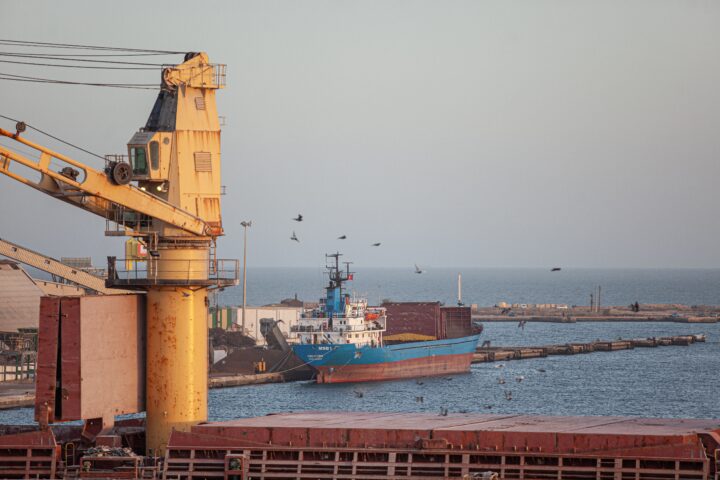
At the Port of Gabes, cargo ships load phosphate, an ingredient in agricultural fertilizers – January 2016. © Shutterstock - Sebastian Castelier

Introduction

For decades, phosphogypsum contamination has served as stark evidence of environmental injustice in Tunisia. During his meeting with the Tunisian Minister of Industry, Mines, and Energy on 4 March 2025, President Kais Saied stressed the need to “find a definitive solution to the phosphogypsum dilemma” in Gabès, asserting that “science is sufficient to prove that this substance is not hazardous”.1رئاسة الجمهورية التونسية، «لقاء رئيس الجمهورية قيس سعيّد مع السيدة فاطمة ثابت حرم شيبوب، وزيرة الصناعة والمناجم والطاقة»، 4 مارس/آذار 2025، متاح علىhttps://www.carthage.tn/fr/node/8344  Less than a day after these directives were received, a closed-door cabinet meeting was held during which it was decided to “remove phosphogypsum from the list of hazardous waste” and classify it as a produced material suitable for use in various fields under “strict conditions”.2الصفحة الرسمية لرئاسة الحكومة التونسية على الفايسبوك، يوم 5 آذار/مارس2025. متاح على https://www.facebook.com/share/v/1BTEiRMaLi/

The issue concerns the reclassification of industrial waste resulting from the processing of natural phosphate, which contains the following elements in its chemical composition:

  • Main components: gypsum (CaSO₄·2H₂O) and phosphoric acid residues.3Nesrine Ayeb et al., “Caractérisation du phosphogypse issu de l’industrie phosphatière du Groupe Chimique Tunisien et sa distribution dans l’eau et le sédiment du golfe de Gabès”, Revue FSB, vol. XVIII, 2020, pp. 69–70. https://www.researchgate.net/publication/348183007_CARACTERISATION_DU_PHOSPHOGYPSE_ISSU_DE_L'INDUSTRIE_PHOSPHATIERE_DU_GROUPE_CHIMIQUE_TUNISIEN_ET_SA_DISTRIBUTION_DANS_L'EAU_ET_LE_SEDIMENT_DU_GOLFE_DE_GABES
  • Metal contaminants: heavy metals such as cadmium (Cd), zinc (Zn), lead (Pb), chromium (Cr), and arsenic (As).
  • Radioactive elements: uranium (U-238) and radium (Ra-226), with variable concentrations depending on the phosphate ore.4Moncef Zairi and Mohamed Jamel Rouis, “Impacts environnementaux du stockage du phosphogypse à Sfax”, Bulletin des laboratoires des ponts et chaussées, no. 219, 1999, pp. 29-40.

Communities affected by its being dumped into the sea by factories suffer this injustice accutely; this dumping has led to numerous environmental, health, and economic problems, perhaps most notably the destruction of fish stocks and rare seagrasses in Gabès.5فرانس 24، «شهادات من مواطنين تونسيين عن التلوث الكارثي في قابس»، 17 أكتوبر/تشرين الأول 2025، متاح على https://youtu.be/1J1PqhZp3qs?si=gWhW7jvxVS8y1U3r Previously, Gabès had been the home to the largest Posidonia meadows – vital seagrass ecosystems - in the Mediterranean.6Posidonia seagrass meadows provide vital marine habitats and ecosystems. See “Posidonia Seagrass”, World Wildlife Fund for Nature, available at https://www.wwf.gr/en/our_work/nature/marine/posidonia_seagrass/ In addition, commercial and artisanal activities have been harmed, cancer and respiratory diseases have become more prevalent, and infections among the local population have increased.7The fight over phosphogypsum historically is not new or unique to Tunisia. In his 1980 study on the working class and the impact of industrial activity on the environment, French sociologist Denis Duclos refers to the period following 1968 and the wave of environmental movements that ensued. In his analysis, he highlights the emergence of new alliances in France that brought together environmental activists, fishermen, and certain segments of the labor movement opposed to the discharge of phosphogypsum into the Seine River and demanding that it be stored instead on land for reuse. This solution raised several concerns and objections in Europe due to the potential risks it posed. A study conducted by American researcher Jaclyn Lopez in 2022 on the phosphogypsum crisis and the regulatory failures of the US’s Environmental Protection Agency revealed numerous environmental and health threats facing the most marginalized communities living near onshore phosphogypsum storage sites. With the relocation of production centers to countries in the global south, tensions related to phosphogypsum management have spread to countries such as Tunisia, particularly as protests against industrial pollution have intensified following the revolution. The findings of the July 2024 environmental and social audit report on the Gabès Chemical Complex pointed to numerous violations that confirmed the company’s noncompliance and failure to adhere to the principles of sustainable industrial development, including the excessive cadmium levels in Tunisian phosphogypsum, which were over the regulatory limit of 106.02 NT.8Groupe Chimique Tunisien, “Réalisation d’une mission d’audit environnemental et social (E&S) des sites du Groupe Chimique Tunisien (Gabès, Skhira, et M’dhilla 1) P-TN-BB0-010”, July 2025, available at https://www.afdb.org/sites/default/files/rapport_audit_es-gct-gabes-def_16_08_2025.pdf (Groupe Chimique Tunisien, “Audit E&S”). This raises serious questions about phosphogypsum, and has led to a local dispute.

On this basis, the announced decision transcends its own technical nature to become a symbolic event with its own implications and meanings, making the decision to reclassify toxic waste an act of political boldness that is uncommon in the context of Tunisian environmental policymaking. The narratives promoted by the regime are no less important than the decisions that were adopted as a political narrative that reveals broader processes related to how the authorities frame problems and, consequently, propose solutions within scientific and political frameworks.9Carol Bacchi, “Introducing the ‘What’s the Problem Represented to be?’ Approach”, in Engaging with Carol Bacchi: Strategic Interventions & Exchanges, ed. By A. Bletsas and C. Beasley, University of Adelaide Press, 2012, pp. 21-24, available at https://www.cambridge.org/core/books/abs/engaging-with-carol-bacchi/introducing-the-whats-the-problem-represented-to-be-approach/9DA4129832FDFE5D496BF66BC1DCA51F

This paper falls under the narrative policy framework, which seeks to deconstruct narrative structures and their associated facts as social constructions of meaning and understand their components and implications at the micro, mid, and macro levels.10Elizabeth A. Shanahan, Michael D. Jones, Mark K. McBeth, and Claudio M. Radaelli, “The Narrative Policy Framework”, in Theories of the Policy Process, Routledge, 2018, pp. 173-213, available at https://www.taylorfrancis.com/chapters/edit/10.4324/9780429494284-6/narrative-policy-framework-elizabeth-shanahan-michael-jones-mark-mcbeth-claudio-radaelli The importance of narrative policy analysis increases at a time when we, as researchers in the Arab region, find ourselves confronted with authoritarian regimes that deliberately engage in the continuous obfuscation and concealment of information, official data, and the alliances and networks surrounding the policymaking process. In the Tunisian case, the regime tends to promote its policies through Facebook posts, decrees, and speeches laden with rhetoric and emotion. This makes the narrative framework of policies the optimal analytical entry point for deconstructing the narrative of the reclassification of phosphogypsum, including its instrumental objectives, from within the authoritarian text itself.

This paper seeks to answer fundamental questions: How did the Tunisian regime construct its narrative to downplay the dangers of phosphogypsum? What role did these narratives play in shaping environmental policy in Tunisia?

To answer these questions, the paper is divided into six main sections. The first section reviews the series of announced measures surrounding the reclassification decision. In the second section, we examine the decision as a corrective measure responding to local demands. The third section is devoted to deconstructing the narrative structure of the decision. The fourth section analyzes the discursive alliances that support the official narrative. The fifth section examines the discursive and symbolic mechanisms devised by the authorities to suppress alternative narratives. The final section focuses on the neoliberal dimension of the decision to remove phosphogypsum from the list of toxic substances.

Endnotes

Endnotes
1 رئاسة الجمهورية التونسية، «لقاء رئيس الجمهورية قيس سعيّد مع السيدة فاطمة ثابت حرم شيبوب، وزيرة الصناعة والمناجم والطاقة»، 4 مارس/آذار 2025، متاح علىhttps://www.carthage.tn/fr/node/8344
2 الصفحة الرسمية لرئاسة الحكومة التونسية على الفايسبوك، يوم 5 آذار/مارس2025. متاح على https://www.facebook.com/share/v/1BTEiRMaLi/
3 Nesrine Ayeb et al., “Caractérisation du phosphogypse issu de l’industrie phosphatière du Groupe Chimique Tunisien et sa distribution dans l’eau et le sédiment du golfe de Gabès”, Revue FSB, vol. XVIII, 2020, pp. 69–70. https://www.researchgate.net/publication/348183007_CARACTERISATION_DU_PHOSPHOGYPSE_ISSU_DE_L'INDUSTRIE_PHOSPHATIERE_DU_GROUPE_CHIMIQUE_TUNISIEN_ET_SA_DISTRIBUTION_DANS_L'EAU_ET_LE_SEDIMENT_DU_GOLFE_DE_GABES
4 Moncef Zairi and Mohamed Jamel Rouis, “Impacts environnementaux du stockage du phosphogypse à Sfax”, Bulletin des laboratoires des ponts et chaussées, no. 219, 1999, pp. 29-40.
5 فرانس 24، «شهادات من مواطنين تونسيين عن التلوث الكارثي في قابس»، 17 أكتوبر/تشرين الأول 2025، متاح على https://youtu.be/1J1PqhZp3qs?si=gWhW7jvxVS8y1U3r
6 Posidonia seagrass meadows provide vital marine habitats and ecosystems. See “Posidonia Seagrass”, World Wildlife Fund for Nature, available at https://www.wwf.gr/en/our_work/nature/marine/posidonia_seagrass/
7 The fight over phosphogypsum historically is not new or unique to Tunisia. In his 1980 study on the working class and the impact of industrial activity on the environment, French sociologist Denis Duclos refers to the period following 1968 and the wave of environmental movements that ensued. In his analysis, he highlights the emergence of new alliances in France that brought together environmental activists, fishermen, and certain segments of the labor movement opposed to the discharge of phosphogypsum into the Seine River and demanding that it be stored instead on land for reuse. This solution raised several concerns and objections in Europe due to the potential risks it posed. A study conducted by American researcher Jaclyn Lopez in 2022 on the phosphogypsum crisis and the regulatory failures of the US’s Environmental Protection Agency revealed numerous environmental and health threats facing the most marginalized communities living near onshore phosphogypsum storage sites. With the relocation of production centers to countries in the global south, tensions related to phosphogypsum management have spread to countries such as Tunisia, particularly as protests against industrial pollution have intensified following the revolution.
8 Groupe Chimique Tunisien, “Réalisation d’une mission d’audit environnemental et social (E&S) des sites du Groupe Chimique Tunisien (Gabès, Skhira, et M’dhilla 1) P-TN-BB0-010”, July 2025, available at https://www.afdb.org/sites/default/files/rapport_audit_es-gct-gabes-def_16_08_2025.pdf (Groupe Chimique Tunisien, “Audit E&S”).
9 Carol Bacchi, “Introducing the ‘What’s the Problem Represented to be?’ Approach”, in Engaging with Carol Bacchi: Strategic Interventions & Exchanges, ed. By A. Bletsas and C. Beasley, University of Adelaide Press, 2012, pp. 21-24, available at https://www.cambridge.org/core/books/abs/engaging-with-carol-bacchi/introducing-the-whats-the-problem-represented-to-be-approach/9DA4129832FDFE5D496BF66BC1DCA51F
10 Elizabeth A. Shanahan, Michael D. Jones, Mark K. McBeth, and Claudio M. Radaelli, “The Narrative Policy Framework”, in Theories of the Policy Process, Routledge, 2018, pp. 173-213, available at https://www.taylorfrancis.com/chapters/edit/10.4324/9780429494284-6/narrative-policy-framework-elizabeth-shanahan-michael-jones-mark-mcbeth-claudio-radaelli

The views represented in this paper are those of the author(s) and do not necessarily reflect the views of the Arab Reform Initiative, its staff, or its board.