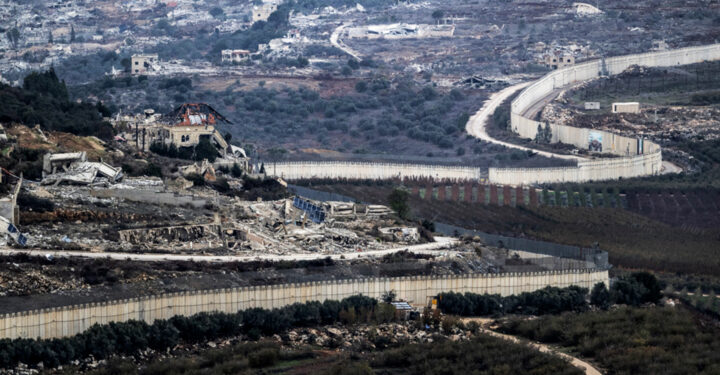
Every time Israel attacks Lebanon, the cycle is brutally familiar: mass destruction, outrage, appeals to international law – and then silence. The moment passes, the evidence scatters, impunity prevails, and a few years later the violence returns.
I learned this painfully in 2006, when I investigated Israeli violations in Lebanon for Human Rights Watch. We documented civilian deaths, unlawful strikes on civilian targets, attacks on clearly marked ambulances, and the extensive use of cluster munitions in the south. The evidence was overwhelming, and much of it fed into subsequent United Nations reporting. But little came out of it. The experience left me with a lasting conviction: documentation matters, but without a sustained legal strategy, it simply becomes another archive of pain.
What became clearer to me since then is that this failure of accountability is part of a much older pattern, in which the same places and often the same methods of violence return across generations. In April 1996, Israeli artillery killed 106 civilians sheltering in a UN compound in Qana. A decade later, Qana again became synonymous with Israeli violations during the 2006 war, including the attack on two well-marked ambulances. And that violence against rescuers has not remained in the past: since the latest war began on 2 March, Israel has struck at least 128 medical facilities and ambulances across south Lebanon, killing 40 healthcare workers and wounding 107. The pattern of cycles of violations reaches further back still. In Houla in 1948, Israeli forces killed Lebanese villagers in one of the earliest massacres on Lebanese soil during the war surrounding Israel’s creation and the Palestinian Nakba. In 2024, Israeli soldiers returned to Houla, killed more civilians, and desecrated memorials to the victims of the original massacre. Seventy-six years later, the same borderland was again made to bear the weight of the same violence.
This longer history matters because Lebanon’s problem is not impunity in the abstract, or unresolved crimes from the past. It is the recurrence of Israeli violence and the state’s recurring failure to build a response equal to it. Lebanon denounces, documents, and appeals to the international community. What it has not done is build the legal strategy and judicial architecture needed to turn recurring violations into sustained pressure.
It should have done so long ago. But it is not too late to begin now. If anything, the current moment makes the need for such a strategy more urgent and more politically possible. Hezbollah, which has long been wary of resorting to international mechanisms in the past, has been weakened militarily and politically, while public demands for the state to reclaim its role have grown louder. At the same time, Lebanon’s traditional political class is increasingly cornered: it can no longer rely only on denunciation, paralysis, or the familiar outsourcing of sovereignty. If it wants to show that there is a credible alternative to Hezbollah’s model of armed resistance, it must begin to demonstrate that the state itself can defend Lebanese rights and impose costs on Israeli violations. A serious legal strategy would be one concrete way of doing so.
Lebanon should join the International Criminal Court (ICC), or at the very least accept its jurisdiction over crimes committed on its territory. It should link criminal accountability to a broader strategy at the International Court of Justice (ICJ) and in national courts exercising universal jurisdiction. And it should treat legal action not as a symbolic add-on to diplomacy, but as one pillar of a broader state strategy against occupation, annexation, and impunity.
This will not stop Israeli bombs from falling. Law does not work that way. But it would put Lebanon in a stronger position: preserving evidence, formalizing claims, raising legal costs for those responsible, and making it harder for attacks, incursions, and occupation-related practices to disappear again into political amnesia. That matters even more today, as Israel once again moves toward occupation and some of its leaders openly speak the language of annexation. It also matters because reclaiming sovereignty means more than simply disarming Hezbollah; it means building a state with the legitimacy and tools to confront Israeli violations.
Lebanon’s problem is the absence of legal follow-through
Lebanon’s problem is not a lack of evidence. It has had evidence of Israeli violations for years. I still remember a southern Lebanese farmer’s answer in 2006, when I asked whether any trace of the Israeli attacks on his home and land remained. He pointed to his olive grove, where unexploded cluster munitions still hung from the trees, and said: “Each of these trees is your evidence.” Lyrical as the answer was, the point was plain: Lebanon has no shortage of documentation. It is a country with a vibrant civil society and media that have done extensive documentation of Israeli violations and their impact over the years.
The real issue is that Lebanon has rarely translated this documentation into a sustained legal strategy. After every major attack, there are complaints to the UN, references to international law, and calls for the international community to act. But these efforts remain fragmented and episodic.
The 2006 Jiyeh oil spill is a clear example. Israeli strikes on the fuel tanks of the Jiyeh power plant caused a massive oil spill along the Lebanese coast. The UN General Assembly has repeatedly adopted resolutions calling on Israel to assume responsibility and pay Lebanon more than $850 million for the damages caused by the spill. The Secretary-General reported again in 2024 that compensation had still not been paid. The lesson of Jiyeh is not simply one of Israeli defiance. It is also that of Lebanese inconsistency. Even where there has been an established international record and repeated UN recognition of damage, even if such recognitions are not strictly binding, Lebanon has not built a sustained legal and diplomatic campaign capable of turning partial victories into pressure and, ultimately, recovery.
This pattern matters because accountability is a cumulative process. A state does not achieve accountability only through one dramatic case. It does so through repetition, institutional memory, evidence preservation, and coordinated use of different forums. Lebanon has too often behaved as if each new war or attack starts from zero.
Why the ICC matters today, especially given Israeli plans for occupation
The strongest missed opportunity has been Lebanon’s failure to anchor its claims in the ICC. Lebanon is still not a state party to the Rome Statute. That has left it outside the principal permanent institution designed to investigate and prosecute war crimes, crimes against humanity, and genocide. Lebanon could still change that by acceding to the Rome Statute or, as a more immediate step, by filing an Article 12(3) declaration accepting ICC jurisdiction over crimes committed on its territory.
Lebanon came close in 2024. In April of that year, the cabinet moved toward accepting ICC jurisdiction by filing an Article 12(3) declaration over alleged crimes committed on Lebanese territory since 7 October 2023. A month later, it reversed course, indicating that it would instead go through the usual process of filing complaints to the UN, in effect depriving the action of any meaningful edge. While the Government never issued an explanation for its backtracking, Reuters reported that one reason for the reversal was concern that the court might broaden its investigations beyond the intended scope.
That episode exposed the heart of the Lebanese problem. The state was willing to invoke accountability when it was imagined as a performative tool against Israel, but far less willing to embrace a court that might also scrutinize Lebanese actors, including Hezbollah, operating on Lebanese territory.
This hesitation did not emerge in 2024. It is rooted in Lebanon’s postwar order and in the warlords-turned-zuama who shaped and dominated it. The 1991 amnesty law entrenched a political culture in which justice was tolerated only when tightly controlled, narrowly framed, and stripped of any capacity to unsettle the existing balance of power. As Lebanese legal thinkers such as Nizar Saghieh have long argued, postwar Lebanon treated accountability as an exception to be managed rather than a principle to be upheld. The same logic shaped later efforts at justice, including the Special Tribunal for Lebanon, which focused on the assassination of Rafik Hariri and a narrow set of related crimes while leaving untouched a wider landscape of wartime atrocities, disappearances, and political killings protected by amnesty and official neglect.
That is precisely why an ICC referral was more threatening to Lebanon’s political class. Unlike domestic arrangements or exceptional tribunals that can be narrowly tailored, an ICC process could not easily be directed toward one crime, one victim, or even one political camp. This is why an ICC referral is not only a good strategy to counter repeated Israeli crimes, but also a step toward ending the culture of impunity that has long undermined attempts to build the rule of law in the country.
The other critique of a referral to the ICC is that the institution is weak. It is indeed under pressure, slow, politically constrained, and unable to stop wars in real time. Libya and Gaza have made that painfully obvious. Yet that criticism misunderstands what the Court can do. The ICC is not an army. Its value lies in preserving legal claims, identifying individual criminal responsibility, and making it harder for atrocities to vanish into diplomatic niceties.
This matters today especially as Israel is aiming for a renewed occupation of southern Lebanon. Under the Rome Statute, war crimes include not only willful killing or attacks on civilians, but also unlawful deportation or transfer, unlawful confinement, and the transfer by an occupying power of parts of its own civilian population into occupied territory (Art 8(2)(b) of the Rome Statute). In other words, ICC jurisdiction does not simply help address unlawful attacks; it can help criminalize some of the methods through which occupation is maintained, structured, and deepened.
The ICJ should be the second pillar
If the ICC is the clearest forum for pursuing individual criminal responsibility, the ICJ is the more appropriate forum for questions of state responsibility: unlawful use of force, prolonged occupation, annexationist practices, reparations, and the duties of other states not to recognize or assist an unlawful situation. But unlike the ICC, the ICJ cannot simply be seized through Lebanon’s initiative. In contentious cases, the Court’s jurisdiction depends on state consent. That point is essential as it means that Beirut cannot simply “take Israel to the ICJ” on the basis of illegal attacks, occupation, or annexation unless Israel consents or Lebanon finds another valid jurisdictional basis.
While there is no obvious hook at this stage for a direct contentious case at the ICJ, this does not mean that no ICJ strategy is available. In theory, Lebanon could still proceed under a treaty that contains a clause binding both states and covering the dispute in question. The most visible current example is the Genocide Convention, whose Article IX gives the Court jurisdiction over disputes concerning the interpretation, application, or fulfillment of the Convention. That is the route South Africa used in its case against Israel and the one used by Ukraine against Russia. Whether such a route would be available to Lebanon would depend on whether the facts and legal threshold actually fit the Convention. It would require careful legal considerations in light of recent jurisprudence and the evidence that Lebanon is able to muster.
But even if Lebanon cannot bring a direct case against Israel, this does not end its options at the ICJ. Lebanon should not overlook the advisory opinion route. Under Article 96 of the UN Charter, the General Assembly or Security Council may request an advisory opinion from the ICJ on any legal question, and other UN organs and specialized agencies may do so within the scope of their activities if authorized by the General Assembly. Lebanon cannot itself request such an opinion directly, but it can pursue the necessary diplomacy to encourage the General Assembly to do so. The ICJ’s July 2024 advisory opinion on Israel’s policies and practices in the occupied Palestinian territory shows the importance of this route. In that opinion, the Court held that Israel’s continued presence in the occupied Palestinian territory is unlawful, that Israel is not entitled to sovereignty over any part of it, and that other states are under obligations not to recognize or assist the unlawful situation. So an advisory opinion could provide a powerful legal framework should Israeli control over Lebanese territory become prolonged, structured as an occupation, or annexationist in character.
For Lebanon, then, the ICJ should be understood as one pillar in a layered judicial strategy. It could provide a forum for clarifying the illegality of prolonged Israeli presence on Lebanese territory, reinforcing duties of non-recognition and non-assistance to Israel by third parties, and grounding claims for reparations. Obviously, that would not force a withdrawal by itself. But it would make it harder for occupation, buffer zones, or annexationist practices to be normalized as facts on the ground.
Universal jurisdiction should complement both courts
A serious Lebanese legal strategy should not just rely on the two Hague-based courts. It should also include carefully prepared criminal complaints in national jurisdictions that allow universal jurisdiction for war crimes, torture, or crimes against humanity.
The diasporic nature of Lebanese and Israeli societies makes such a strategy quite promising. More than 50,000 soldiers in the Israeli military hold at least one other citizenship, with a majority of them holding US or European passports, according to the Israeli NGO Hatzlacha, which obtained the information through official sources. This includes 12,135 US dual nationals, 6,127 French dual nationals, and 3,901 German dual nationals. Lebanese victims of Israeli attacks are also often dual nationals from these countries, creating pathways for possible universal jurisdiction cases.
Recent years have shown the practical value of universal jurisdiction when international forums are blocked. The Syrian cases proved the point: survivors and civil society groups helped drive landmark prosecutions in Europe, most notably the Koblenz trial in Germany, which led to convictions for crimes against humanity committed under the Assad regime. More recently, similar methods have begun to be used against alleged Israeli perpetrators. The Hind Rajab Foundation has filed criminal complaints in multiple jurisdictions, including Germany, Canada, Brazil, and Spain, seeking to turn travel, public appearances, and foreign presence into legal vulnerability for Israeli suspects. These efforts are still at an early stage and may not always result in prosecutions, but they are already shifting the terrain: they keep evidence alive, force prosecutors to engage, and make international mobility riskier for alleged perpetrators. There are also signs that such efforts can have some immediate effects. In 2025, Belgian prosecutors said police had questioned two Israeli army members attending a music festival over alleged serious violations of international humanitarian law in Gaza. Meanwhile, an Israeli army reservist's vacation in Brazil ended abruptly in February 2025 after he had to flee the country following a complaint by the Hind Rajab Foundation that he had committed war crimes in Gaza.
The point is not only that these avenues exist, but that Lebanon should begin building the infrastructure and relationships needed to use them effectively. That means developing specialized legal capacity, documentation protocols, evidentiary archiving, and partnerships with lawyers and organizations already active in this field. Lebanon does not need to start from scratch. It can learn from Syrian and Palestinian efforts that have used universal jurisdiction and international mechanisms to keep accountability alive across borders. It can also build on more recent attempts by Lebanese civil society to pursue financial and corruption-related accountability, including in cases linked to Riad Salameh and others, which have already required transnational legal coordination. And it should explore joint actions with Syrian and Palestinian groups where patterns overlap. The tactics Israel is applying in Lebanon today – massive destruction, displacement, attacks on civilian infrastructure, and the normalization of exceptional violence – were refined in Gaza and, in different ways, also tested in Syria, where Israel has expanded the areas it occupies over the last year. A Lebanese legal strategy should reflect that wider regional continuity.
Ukraine’s example is instructive
Ukraine’s experience is useful not because its circumstances are identical to Lebanon’s, but because it shows how a state can use law strategically even when facing a far more powerful enemy and where immediate enforcement is uncertain.
Before ratifying the Rome Statute, Ukraine accepted ICC jurisdiction through two Article 12(3) declarations, allowing the Court to investigate crimes committed on its territory from November 2013 onward. After Russia’s full-scale invasion, the ICC Prosecutor moved quickly to open a formal investigation, and the Court has since issued arrest warrants, including for the unlawful deportation and transfer of Ukrainian children. Ukraine did not imagine that the ICC would end the war or occupation by itself. But it understood that legal positioning matters: it creates a structured evidentiary record, internationalizes accountability, and preserves claims for the future.
Ukraine also did not rely on the ICC alone. It turned to the ICJ within days of the 2022 invasion, filing a case under the Genocide Convention and obtaining provisional measures on 16 March 2022, ordering Russia to suspend military operations. It worked with European partners to support universal jurisdiction investigations and a joint investigative team through Eurojust, helping national prosecutors gather and share evidence across borders. And it backed parallel reparations architecture, including the Council of Europe’s Register of Damage for Ukraine, which was created to collect and organize claims and supporting evidence for a future compensation mechanism.
In other words, Ukraine treated law not as a substitute for diplomacy and military resistance, but as a parallel front: one that preserved evidence, framed Russia’s conduct in legal terms, and made future accountability harder to escape. That is the lesson Lebanon should draw. A judicial strategy will not replace diplomacy, reconstruction, or political reform. But it can ensure that Israeli attacks, occupation-related practices, and possible annexationist moves do not remain only matters of political complaint.
This is a unique political moment for Lebanon
If there was ever a moment for Lebanon to begin building such a strategy, it is now. Prime Minister Nawaf Salam came to office after serving as president of the ICJ. That does not mean that international law will suddenly become the organizing principle of state policy. But it does mean that Lebanon’s highest executive office is now occupied by someone who understands, better than most, both the possibilities and the limits of international adjudication.
This matters especially now because the Lebanese state is being tested not only by Israel, but also by segments of its own population. For years, many Lebanese accepted – reluctantly or otherwise – the argument that armed resistance existed because the state was too weak, too absent, or too compromised to defend the country on its own. If the authorities now want to persuade the public that the future lies in rebuilding state sovereignty rather than reproducing parallel military structures, they must show that the state can do more than ask for disarmament. It must also show that it can act: by protecting rights, documenting harms, and pursuing accountability through credible institutions.
A serious legal strategy offers one concrete way to begin doing that. In that sense, the point is not only legal. It is political. A state that can show its citizens, especially those in the south, that it is capable of defending their rights in courts as well as in diplomacy begins to reclaim the legitimacy that years of war, abandonment, and institutional collapse have eroded.
This would not substitute for reconstruction or security reform. But it would be one way of showing that sovereignty means more than demanding disarmament. And while no judgment will ever rebuild a destroyed village, the absence of a legal strategy makes occupation easier to normalize, annexation easier to implement, and atrocities easier to forget. Lebanon cannot afford that.
The views represented in this paper are those of the author(s) and do not necessarily reflect the views of the Arab Reform Initiative, its staff, or its board.