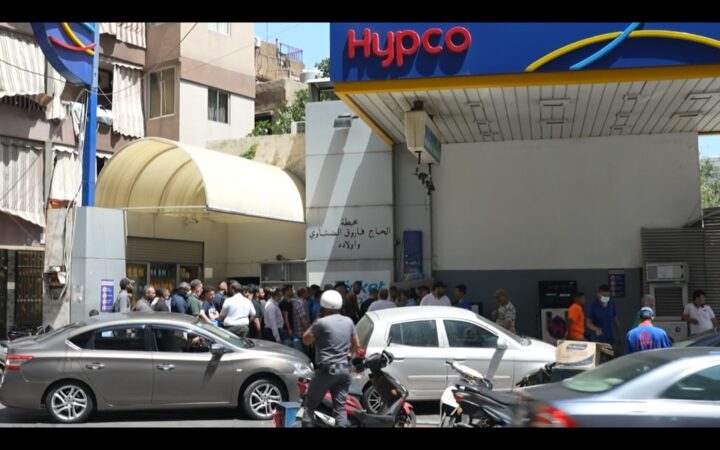
The ongoing regional war is deepening Lebanon’s crisis through two overlapping channels: the direct and devastating impact of Israeli attacks on Lebanese territory, and the wider economic shockwaves now rippling across the Middle East. Rising oil prices, inflationary pressures, disruptions to trade, and strains on remittance flows are all hitting a country already weakened by years of financial collapse, social erosion, and institutional paralysis.
Accordingly, this is not simply an external energy shock for Lebanon. It is a direct threat to monetary stability, electricity affordability, and basic household well-being. A country heavily dependent on imported fuel and external financial inflows is especially vulnerable to higher import bills, greater demand for foreign currency, and renewed pressure on already fragile reserves.
The electricity sector sits at the center of this crisis. Lebanon’s dependence on imported fuel means that regional instability is rapidly transmitted into the cost of both public supply and private generation, with immediate consequences for inflation, poverty, and inequality. The current moment is therefore not only exposing Lebanon’s vulnerability to war-driven shocks; it is also sharpening long-standing questions about pricing, social protection, regulation, and energy sovereignty.
This Q&A with Ali Noureddine, economist and energy expert, explores how the regional war is reshaping Lebanon’s monetary balances, electricity costs, and social stability, and what policy choices are now required to prevent a deeper economic and political unraveling.
How will the global energy shock affect domestic monetary balances in Lebanon, which are already strained by the ongoing economic collapse since 2019?
In 2025, mineral products, primarily composed of petroleum derivatives, constituted Lebanon’s largest import category, accounting for 22.94% of total imports and amounting to USD 4.83 billion. Brent crude prices have so far increased by 55% compared to pre-war levels, which is expected to be reflected in similar increases in the import bill for petroleum derivatives.
An increase of this magnitude would be sufficient to raise domestic demand for U.S. dollars in Lebanon by more than USD 2.65 billion annually to finance these imports, unless markets recover from the ongoing energy shock in the coming weeks.
The resulting monetary pressures, however, will not be limited to the cost of importing petroleum derivatives. Previous estimates by the International Monetary Fund have indicated that every 10% increase in crude oil prices leads to a 0.4% increase in global inflation, pointing to the impact of oil prices on the prices of all imported goods. This is especially significant for Lebanon, which remains heavily dependent on imports to meet its consumption needs. In 2025, total imports reached USD 21 billion while the trade deficit stood at around USD 17.44 billion. Any further increase in the import bill is therefore likely to widen the trade deficit and intensify demand for foreign currency to finance both consumption and essential imports.
How could the regional war affect remittance inflows and foreign exchange reserves in Lebanon, and what would that mean for exchange-rate stability?
These increased monetary pressures are likely to be met with greater strains in terms of financial inflows to Lebanon. Over recent years, remittance inflows from expatriates have ranged between USD 6 and 7 billion annually, according to Banque du Liban figures. The Arab Gulf countries constitute one of the most important sources of remittance inflows to Lebanon, with more than 600,000 Lebanese residing there. In the coming period, these inflows are expected to decline noticeably, in light of the economic constraints that these countries are facing. The central bank has already begun to register the implications of this evolving situation, as foreign currency reserves declined by USD 538.89 million over the period from mid-February to the end of March. So far, it has maintained one of the core pillars of its current monetary policy—namely, preserving the prevailing exchange rate. However, it no longer has the capacity to accumulate additional reserves and has instead shifted into a phase of reserve depletion in order to sustain exchange-rate stability.
If this depletion persists alongside the continuation of the war, Lebanon will be forced to choose between two options: either maintaining exchange-rate stability by drawing down foreign exchange reserves or preserving reserves at the expense of abandoning the exchange-rate stabilization policy.
How is the current regional war translating into electricity production costs in Lebanon, given its near-total dependence on imported fuel?
For electricity production costs, the fastest pass-through appears in the private generator sector. According to the Lebanese Ministry of Energy and Water’s monthly tariff schedule, the official generator tariff rose from LBP 30,244/kWh (USD 0.34/kWh) in February 2026 to LBP 40,580/kWh (USD 0.45/kWh) in March 2026, reflecting a 34.17% increase over one month. This development was driven by the increase in the diesel reference price, which also rose from LBP 1,398,957 (USD 15.63) per 20 liters to LBP 1,982,753 (USD 22.15) per 20 liters.
Given that fuel accounts for approximately 82% of total private diesel-generation costs, as estimated by the World Bank, fluctuations in fuel prices constitute a dominant driver of price variations in Lebanon’s private electricity generation sector, with a high degree of pass-through to end-user tariffs. Accordingly, further increases in global oil prices are expected to be translated into corresponding increases in private generators’ tariffs, as observed in March. It should be noted that between 67 and 83% of total electricity consumption is currently met by private and decentralized sources, while private generators are responsible for 51% of the total local production.
To date, no decision has been made to revise the tariff applied by Électricité du Liban (EDL). The tariff remains structured such that the first 100 kWh for each subscriber is subsidized at USD 0.10/kWh, while consumption above this threshold is priced at USD 0.27/kWh. However, this tariff was originally calibrated based on an assumed price of approximately USD 1,000 per ton of gasoil and USD 580 per ton of fuel oil, while current prices are 48.7% higher than these levels.
For this reason, the Lebanese authorities will be confronted with three difficult policy options should the disruptions in energy markets persist: either raising consumer tariffs, providing fiscal support to EDL, or allowing EDL to reaccumulate financial losses, accompanied by a gradual deterioration in electricity supply.
How will rising oil prices affect social stability in Lebanon?
According to the Consumer Price Index, the transport category accounts for approximately 13.1% of the total household consumption basket, while energy—along with other petroleum derivatives and water—constitutes around 11.8%. Prices and spending in these categories are expected to increase proportionally with rising oil prices.
However, the cost of oil imports will not only affect the expenditure categories associated with transportation and energy. It will also, by extension, impact all other categories of consumption. Energy costs are embedded in the pricing of all goods and services in the market, given their direct link to transportation, production processes, and the operation of commercial establishments.
It should be noted that before the escalation of the war, by the end of January, the Consumer Price Index recorded an annual increase of approximately 11%, which is considered a relatively high and socially burdensome rate, particularly in light of the relative stability of the exchange rate over the past three years. The high rate of inflation, despite exchange-rate stability, has implied a decline in the purchasing power of all wages, including those denominated in foreign currencies.
The result of these inflationary pressures will be further increases in poverty rates, driven by the erosion of the real purchasing power of wages. This comes in the context of already sharply deteriorating living conditions, as inflationary pressures have significantly eroded real incomes over the past six years. World Bank estimates indicate that poverty in Lebanon has more than tripled over the past decade, reaching approximately 44% of the population, largely driven by the collapse in purchasing power.
How should Lebanon balance cost-reflective electricity tariffs with social protection, especially as affordability is the main driver of energy security and sovereignty?
Experience in this sector has shown that the accumulation of deficits at EDL over the long term threatens the sustainability of grid supply. This would also impose significant burdens on the state’s public finances, which are already strained by the ongoing pressures of the war. Experience has also shown that the alternative to power supply from EDL is a larger reliance on private generators, which are significantly more costly. This means that leaving households to resort to this option is not a neutral policy choice, but rather a transfer of the burden into a more unequal and less transparent arrangement.
Accordingly, if the current period of disruption in energy markets persists, a formula-based adjustment for higher-consumption brackets should be implemented in the EDL tariffs, alongside a periodic disclosure of cost components. Such measures are essential to prevent oil price shocks from translating into political crises or into hidden losses within EDL. A measure of this kind would remain less costly for consumers than fully exposing them to the volatility of private generator tariffs, particularly in the event of a decline or interruption in EDL supply.
In this context, the optimal approach would be to protect the first essential household consumption bracket, rather than subsidizing overall consumption on a blanket basis. This aligns with international experience in energy subsidy reform, as recommended by the IMF and the World Bank, whereby support is targeted at a “minimum essential level” instead of disproportionately benefiting higher-consumption users. In fact, the current pricing model was originally designed on this basis. However, the recent increase in oil prices has effectively turned the applied tariff into a subsidized tariff across all consumer categories.
For EDL’s supply to alleviate the burden of private generator tariffs, it should gradually restore the maximum feasible levels of electricity provision in line with the current capacity of its power plants. EDL can theoretically increase supply to up to 1,884 MW, compared to an estimated national demand of around 3,000–3,500 MW for a 24-hour supply. However, this potential remains constrained by structural factors, including limited fuel financing capacity, high technical and non-technical losses, weak bill collection, and long-standing political resistance to tariff reform. Overcoming these constraints requires initiating a gradual tariff correction process—particularly for higher-consumption brackets—alongside strengthening enforcement and collection mechanisms and improving grid infrastructure.
Affordability is at the core of energy security. The most efficient approach is to support low-income households and displaced populations directly through cash transfers or targeted bill subsidies, rather than subsidizing electricity prices across the board. Lebanon already has an existing framework to build upon through Emergency Social Safety Net/AMAN and other social targeting programs, which are currently being used by the Ministry of Social Affairs to support displaced populations. This approach is more equitable and less costly for public finances than broad-based subsidies.
If the government decides to adopt a temporary measure of financial support for EDL, to offset the pressures of rising oil prices, it is essential to ensure a transparent framework by approving additional budget allocations with clearly defined ceilings. This should be accompanied by a specified time frame and a clearly articulated policy plan. Such an approach is necessary to avoid past forms of implicit support, which were provided through repeated treasury advances.
How is the ongoing war reshaping the political economy of electricity in Lebanon, particularly the role of private diesel generator networks, and what does this imply for pricing regulation and equity?
The 2022 removal of diesel subsidies triggered rapid dollarization and a sharp spike in private generator tariffs. This widespread inability to afford electricity suppressed demand by an estimated 52%, effectively transforming electricity from a uniform public service into a commodity determined primarily by household income. The anticipated increase in fuel prices is likely to produce a similar outcome, further constraining demand and deepening the income-based segmentation of access to electricity.
The Ministry of Economy has formally emphasized three key requirements for this sector: the installation of electronic meters for all subscribers to private diesel generators, the exclusive use of metering to estimate consumption, and strict adherence to the official monthly tariff issued by the Ministry of Energy, while prohibiting any additional fees. It also prevented unjustified rationing or discriminatory provision of electricity.
However, compliance with these directives has varied significantly across regions, largely depending on the strength of the dominant generator cartels in each area and the nature of the political backing they receive. If EDL’s capacity to expand supply continues to decline amid the current energy shock, reliance on private generators will increase. This, in turn, will amplify the social and political weight of these networks and render their regulation more sensitive, as any confrontation with them may directly translate into electricity outages at the neighborhood level.
For these reasons, and particularly under the current circumstances, it is essential to strengthen the regulatory oversight framework governing the operation of private generators as a rapid and interim solution. Past regulatory efforts have been constrained by limited enforcement capacity, fragmented oversight, and the structurally high dependence of households on private generators, which made strict enforcement politically and socially difficult.
Moving forward, improving regulation will require a more comprehensive approach that combines stricter monitoring with a reduction in reliance on private generators. This should include intensifying field inspections and establishing more effective mechanisms for handling complaints, alongside a more precisely defined set of requirements for transparency in pricing and billing. Strengthening municipal-level enforcement will be necessary to achieve these goals. Most importantly, this will require the political will at the level of the executive authority to overcome local patronage networks that may obstruct the implementation of these measures.
These steps should be implemented in parallel with the policies required to sustain and expand the electricity supply provided by EDL, in order to reduce, to the greatest extent possible, the degree of reliance on private generators. Effective reforms require not only price regulation, but more formal monitoring, with a gradual displacement of these networks through structurally cheaper and more transparent alternatives.
What recommendations can you give for the future of energy sovereignty in Lebanon?
The ongoing war has opened the door to more substantive discussions on regional oil and gas infrastructure and pipeline interconnection projects, aimed at diversifying energy supply chains. This, in turn, will create potential opportunities for Lebanon in the post-war period to position itself within the emerging regional energy transit and supply networks. These opportunities may include the reactivation of oil facilities in Tripoli and Zahrani, as well as the revival of pipeline linkages connecting them to Iraq or Saudi Arabia.
At the same time, the repercussions of the ongoing regional war have underscored the importance of diversifying energy sources, including the need to strengthen investments in renewable energy, with the aim of absorbing unexpected external shocks and mitigating their impact. The post-war reconstruction phase may constitute a suitable juncture to revisit a comprehensive strategy that prioritizes renewable energy projects, including decentralized generation, while leveraging the legal framework established by Law 318-23.
The views represented in this paper are those of the author(s) and do not necessarily reflect the views of the Arab Reform Initiative, its staff, or its board.