Introduction
Since the end of the 1990s, the participatory nature of the design, monitoring, and evaluation of public policies in the Kingdom of Morocco has been strengthened through the increasing involvement of economic and social actors in diagnosing public issues and developing participatory alternatives to solve them. This process was further institutionalized after the 2011 constitution, which emphasized bridging the relationship between public authorities and societal actors. In practice, however, there are several issues that hinder the consultation and participation mechanisms, including the existence of state domains in which any form of participation or even responsiveness is rarely allowed in some sectoral policies. Such is the case with the energy domain, which is often governed by sovereign entities making its management the exclusive domain of bureaucratic agencies.
However, the sudden closure of the Société Anonyme Marocaine de l’Industrie du Raffinage (SAMIR), the only oil refinery in Morocco, and its impact on energy sovereignty will highlight the economic and social cost of this approach. This is especially notable in light of the growing social movement originally led by professional groups affected by the closure; later, several political and social actors rallied around their demands to restart the refinery and formed a qualitative coalition putting pressure on the government to include it in the agenda.
This paper seeks to monitor stakeholders’ efforts to build a popular narrative that contradicts the government’s narrative by tracing the stages of the issue’s identification, the contexts and motives of its transformation from a factional issue to a social and then public issue casting a shadow on authority and society. The paper will analyze the framing and justification of the issue by claimsmakers , the effectiveness of the mobilization mechanisms in spreading awareness of the issue, their success in mobilizing actors and drawing the attention of officials, and the pattern of arguments that control solution recommendations compared to the government’s solutions.
For these reasons, the public policy analysis approach was adopted because of its importance in tracing the intersections of official and unofficial actors in “fabricating” public issues. In monitoring the trajectories of the energy supply management issue following the closure of the SAMIR refinery, we will focus on tracking the discursive performance of actors in light of official statements; other parties’ statements; and documents issued by the authorities and stakeholders analyzing the logic of their development, the stakes in their formulation, and the limits of their influence on the representation of the issue at hand and the approaches to solving it.
SAMIR Oil Refinery: Contexts and Consequences of the Closure
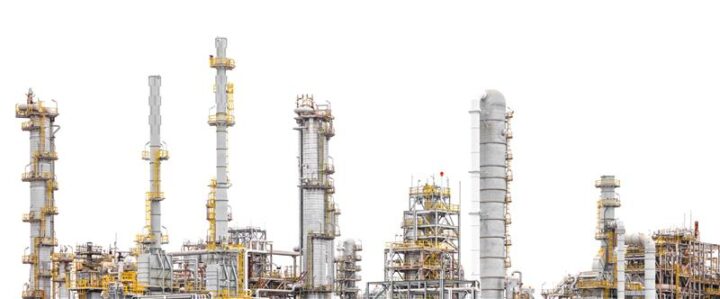
The issue began with the ex-workers of SAMIR, a Moroccan industrial and refining company that ceased production in August 2015. The dispute between the shareholders and the state led to its entry into bankruptcy proceedings on 21 March 2016 after its debts exceeded $4.4 billion at the end of 2014 from excessive borrowing in the face of declining production since the company’s privatization in 1997. It gradually turned into a social issue linked to multiple other issues and sectors, casting a shadow on the state and society at large. The dynamics of litigation resulted in it becoming a public issue on various political, judicial, economic, and social agendas, in addition to the international repercussions in the context of skyrocketing fuel prices and insufficient national stockpiles. In its February 2019 report, the Competition Council considered the absence of a national refinery to have exacerbated the energy bill and put Morocco in a state of chronic dependence on foreign oil. The International Energy Agency also described the closure of the refinery as a strategic mistake that resulted in a massive increase in the country’s energy bill under critical conditions characterized by increased supply chain risks. These national and international reports strengthened the stakeholders’ position and lent greater credibility to their rhetoric.
In their characterization of the issue, the company’s workers, organized under the Democratic Confederation of Labor, argued that the closure of the SAMIR refinery in Mohammedia did not consider the stakes of Morocco’s energy sovereignty in the midst of international shifts that threaten to worsen fuel prices. According to estimates by the company’s technical staff, the refinery has a storage capacity of two billion tons, while its refining capacity is sufficient to produce 10 million tons of petroleum products annually, enough to cover 67% of Morocco’s reserves of oil derivatives (diesel, gasoline, fuel oil, jet fuel, and asphalt) and 71 days of storage capacity for these products, which was reduced to 20 days after the refinery stopped operating. In addition, the decision to close the refinery affected the social situation by abandoning an important labor pool that had been working at the refinery and thereafter became chronically unemployed, including experienced engineers whose expertise could have been utilized to enhance the governance of the national oil supply.
In the context of the general framing of the issue, stakeholders were quick to reveal the background behind the liquidation of Morocco’s only refinery. They argued that the poor performance of SAMIR – which was used as a pretext for its closure – was not related to economic reasons as investment in this sector is very profitable and promises high added value, but rather to administrative reasons due to limited governance systems that led to the accumulation of debts. They further argued against the political decision to privatize a strategic sector that should have remained a state monopoly due to its vital position in the country’s energy security system and for a refinery management model that would transcend the goal of immediate profits to prioritize Morocco’s strategic interests.
Restarting the Refinery: Official Narrative and Counter-narratives
According to the authorities involved in resolving the issue, reopening the refinery’s production is urgently needed to address the unprecedented surge in energy prices; this is contingent on meeting the necessary conditions for restarting the refinery – especially the transfer of its assets to the state and the regulation of fuel prices, as the refinery will provide the necessary reserves of oil and its derivatives. This reactivation is expected to allow Morocco to secure at least 50% of its energy basket, which would lead to important financial savings by purchasing crude stocks in moments of low prices. According to Hassan Yamani, the coordinator of the National Front to Save the SAMIR Refinery, the refinery has a storage capacity of about two million cubic meters more than the 22 distribution companies combined, and its reactivation would enable Morocco to strengthen its strategic reserves and ensure a regular supply in the face of the turbulence in the prices of petroleum derivatives.
In their justification, stakeholders sought to deconstruct the official narrative by criticizing the government’s statements rejecting the option of bringing the refinery under state control: the government minimized the refinery’s value and questioned its competitiveness and productivity. The government also seemed to be serving the interests of the fuel lobby, which had an advantage in the refinery’s closure from two variables that helped it to manipulate the prices of energy products: the closure of the last source of public oil storage and the liberalization of fuel prices without mandating a minimum level of fair competition and protection for consumers. The government’s claim that the case was in the hands of the judiciary is an evasion of its responsibility for a sensitive issue that constitutes the cornerstone of national sovereignty in the energy field. Compare this to other countries such as Senegal, which has maintained its national refineries despite market fluctuations and international competition. The African Refining Company currently secures Senegal’s gasoline and gasoline needs and somewhat protects the country from speculation in the fuel market. Since the refinery’s shutdown, Morocco has imported all refined petroleum derivatives; the restart of the refinery is an urgent requirement to alleviate the pressure of fuel imports.
The narrative of those affected used several previous government measures as evidence to accuse them of serving the hydrocarbon lobby at the expense of the national economy. SAMIR’s refining units were shut down in August 2015, just two months before the deadline for the complete liberalization of fuel prices that came into effect in December 2015. This period also saw the freezing of the Competition Council, a supreme governing body tasked with fighting speculation and monopolies, as well as any violation of fair competition and harm to consumer rights. These indicators were seen by stakeholders as reflecting the government’s favoritism toward interest groups at the expense of Morocco’s economic interests.
Mobilization Strategy and the Stakes of the Refinery Dilemma as a Public Issue
The parties affected by the closure of SAMIR have employed various means of advocacy and mobilization to increase popular support. They have focused on the affected groups and pushed them to continue pressuring public authorities to restart the refinery in various ways.
In the Streets
Stakeholders have organized ongoing protests, with their scope and demands increasing over the last two years in light of the skyrocketing fuel prices. The local committee to follow up on the SAMIR crisis, composed of former refinery professionals and civil activists, organized a protest in front of the Court of First Instance in Mohammedia on 20 June 2022 to denounce the high fuel prices and their repercussions on daily living. On 23 April 2022, the Moroccan Social Front – which consists of dozens of political, trade union, civil, and professional organizations – organized a protest to demand the speedy resumption of the refinery’s activities in light of the serious consequences of its closure. In 2023, the local branch of the National Union for Petroleum and Gas organized a march from the company’s door to the coastal road on 21 March 2023, coinciding with the seventh anniversary of the company being placed into judicial liquidation.
Social Media
Several hashtags, including #OperateSamir and #Allofus_Samir, were used to create virtual pages and groups to mobilize for a solution. The demand to reopen the refinery also fueled a large virtual campaign calling for the departure of Prime Minister Aziz Akhannouch (#Akhannouch_Go, #dégage_akhannouch), blaming him for the skyrocketing prices of gasoline and diesel given his conflict of interest between being head of the executive branch and a majority shareholder of a leading company in the hydrocarbon sector that has a powerful position in the professional association of hydrocarbon companies. The popular campaign coincided with an opinion poll conducted by the Moroccan Center for Citizenship showing that over 95% of Moroccans are dissatisfied with the government’s handling of the fuel price hikes. This data fed the movement and impelled it to expand its scope and the actions it is organizing.
Traditional Media
Numerous articles on the topic have been published in national and international networks drawing their analysis from stakeholder data. The communication cells of the movement were keen to provide the media with data and documents showing the strength of their position in confronting the government. Several articles in international newspapers and networks highlighted that the refinery’s crisis had been primarily due to the accumulation of management errors, and warned of the need to save the refinery to strengthen the Kingdom’s storage capacities. Shutting down the Kingdom’s only refinery left the country dependent on refined oil imports and the vagaries of international oil markets; there are numerous political and economic justifications for restarting the refinery from the perspectives of experts, union activists, and civilians. Several articles on Arab media platforms, citing parliamentary sources, argued that the refinery is still capable of producing competitively, and its restart would increase the national fuel stockpile by about 60 days of consumption; this would pressure the lobbies controlling the market to reduce prices by about 2 dirhams (approximately US$0.20) per liter for gasoline. Other articles showed the importance of betting on the refinery’s high storage capacities to spare Morocco from fuel price fluctuations and limit inflation. The Arab Energy Platform issued a report in which it warned that the country’s stock of oil derivatives is only sufficient for 31 days, while the law stipulates that a minimum stock of 60 days of oil products must be provided, and argued that nationalizing the refinery could help overcome the fuel crisis.
Research in Scientific Journals and Platforms
A joint study by five researchers from the Mohammed VI Polytechnic University, the University of São Paulo in Brazil, and the New South Policy Center called “Analyzing the Economic and Environmental Impacts of Morocco’s SAMIR Refinery Shutdown: A Regional Input-Output Approach”, revealed that the economic losses resulting from the closure of the refinery are estimated at 66.57 billion dirhams (approximately US$6.6 billion), representing a loss of 4.4% of Morocco’s GDP and a loss of 1.7% value added due to the impact of the closure on an integrated industrial system of sectors in a group of Moroccan cities in the fields of trade, transportation, financial activities, real estate, and other manufacturing industries.
Lobbying Public Authorities
The National Front to Save the SAMIR Refinery, along with several civil and trade union organizations, organized several advocacy activities in their pursuit of the case through complaints to the courts. The Moroccan Association for the Protection of Public Funds appealed to the judiciary to determine the reasons leading to the shutdown of the SAMIR refinery, demanding an investigation into the suspected waste of money as the company had benefited from multiple public subsidies, and calling for the prosecution of officials involved in the bankruptcy of the company. Trade unions and civil society organizations have also been pressuring the Casablanca Commercial Court, trying to influence its decision to liquidate the refinery.
In addition, demands were submitted to the government to assume its political responsibility in a situation that requires political will; every delay in resolving it increases the economic and social cost of managing the fuel crisis. The movement also responded to government statements, such as the statement by the Minister of Energy Transition and Sustainable Development on public television who said that “restarting the refinery will not solve the fuel crisis in Morocco because it does not meet international standards in terms of refining capacity” and, “The government is in the process of developing alternative solutions in light of the new changes, as there is a need for a competitive capacity four times greater than SAMIR in terms of production capacity, technologies, and petrochemical processing.” Several politicians called for the minister’s dismissal, prompting her to retract the statement, explaining that her ministry is studying six scenarios for restarting the refinery, including selling it to foreign investors. She emphasized that she would take into account the interests of the state, workers, and residents of the city of Mohammedia, while noting that oil refining is not a priority in the government’s energy policy. The National Front to Save the SAMIR Refinery also called on the Ministry of Finance, the governor of the Bank of Morocco, and the presidency of the Moroccan Capital Market Authority to provide the conditions for renationalizing the refinery in a way that protects the country’s energy security.
In parallel, memos were sent to parliament asking the House of Representatives to form a parliamentary committee to investigate the reasons for resorting to judicial liquidation and stopping SAMIR’s production and to open an investigation leading to the prosecution of those responsible; also, individual letters were sent to all members of the House of Representatives and the House of Councilors urging them to support a legal proposal to integrate SAMIR’s assets into the state and to regulate fuel prices. These efforts resulted in some response from parliamentarians, with written and oral questions from members of parliament to the relevant ministers to demand the reopening of the refinery, given its vital role in enhancing the country’s energy sovereignty and its contribution to the public treasury in the form of millions of dirhams in fees and taxes. Members of the Democratic Confederation of Labor in the House of Councilors submitted a bill to bring the assets of SAMIR into the state’s accounts. On 8 February 2021, representatives of the Federation of the Left in the House of Representatives, Omar Belafrig and Mustapha Chnaoui, submitted a bill to address the imbalances recorded in legal stocks of petroleum to ensure Morocco’s energy security. The similarity between the title, background, and contents of the two proposals highlights the leading role of the legal committee of the Moroccan Front to Save SAMIR in providing parliamentarians with draft text expressing its vision for resolving the issue.
The House of Representatives’ Finance and Economic Development Committee published a report in February 2018 on the exploratory mission on the prices of liquid fuels sold to the public and the conditions of competition after the liberalization decision. This report sparked a wide public debate on the factors exacerbating the fuel supply crisis, with a focus on the impact of the shutdown of the SAMIR refinery, which had been the sole importer of crude oil.
Communications by Political Parties
Some parties issued statements denouncing the government’s reluctance to resolve the SAMIR issue. The Party of Authenticity and Modernity pointed out that the suspension of the refinery, in addition to its economic effects, affected thousands of workers and the social situation in the city of Mohammedia in general. The Federation of the Democratic Left considered restarting the refinery an urgent necessity to ensure the country’s energy security and protect the purchasing power of citizens, given the direct and significant impact of high fuel prices on living conditions.
The Mobilization Strategy as a Whole
The mobilization strategy is characterized by several strengths. It is diverse, leaving no stone unturned, from the media to the decision-making institutions. It is cumulative, as the gradual development of its reach reflects its coherent vision and control over its messaging mechanisms to ensure that they are in service of its demands. It is also characterized by a remarkably debate-oriented nature, as the statements and declarations of the bodies leading the movement constituted a rich material for discussion and sharing thanks to technical data and justified positions that create an impression that stakeholders understand the roots of the issue and its extensions.
On the other hand, there were weaknesses in the mobilization process, most notably the effects of union discourse, which often limited the movement’s demands to solutions for the company’s former workers, thus limiting the social scope of the issue. The limited openness to different organizations, regardless of their ideological and political backgrounds and the nature of their relations with the government, led to missed opportunities for greater outreach and impact.
Stakeholders View SAMIR’s Fate as Linked to the Fuel Issue
The various events and actions taken by the stakeholders changed how the refinery issue was characterized in terms of scale and impact, and altered how it was considered politically, while also proposing a package of alternative solutions. By monitoring all the texts and statements, the solutions recommended by the movement can be summarized at various political, legislative, administrative, and financial levels.
- Political: Restarting the refinery can contribute to solving the fuel dilemma if it goes beyond technical approaches toward an integrated political vision, based on the crystallization of a clear and stable public policy in the field of oil refining. Encouraging investments in storage is vital for a country that imports 90% of its energy needs. Renationalizing strategic sectors is compatible with economic liberalism, as many of Morocco’s partner countries are doing. Economist Mustapha Malkou cited France’s attempt to take ownership of its energy decisions by renationalizing EDF (Électricité de France S.A.), in which the state owns 84% of the capital, by buying 16% of the shares for $9.7 billion. In addition, the political approach to the issue requires reviewing and updating the national oil strategy – announced in 2004 by the king – which calls for the development of refining industries and their valorization by rehabilitating storage and refining units and linking them to petrochemical industries; an updated strategy should incorporate a renewed perspective on the requirements of energy sovereignty, based on: expanding national storage capacities; reconsidering the indexation system in light of the social effects of high fuel prices on citizens’ purchasing power and the competitiveness of enterprises; returning to the previous formula for rationing fuel prices; capping the profits of distribution companies; and introducing tax cuts and exemptions in the field of energy to ease tax pressure, especially the value-added tax.
- Legislative: In light of the consequences of the privatization of SAMIR and other strategic public enterprises, a clear legislative framework must be established to legalize the privatization option, structuring it with guarantees and conditions to protect the national economy and prevent vital economic sectors from going fully private. Based on the conclusions reached by parliamentarians and given the government’s lack of response to the submitted law proposals, the executive authority was called upon to prepare a draft law to bring the SAMIR refinery back to the state in accordance with the proposed timetable, financial measures, and managerial measures to accelerate its reopening. In the context of the structural reforms in the public enterprises sector since the promulgation of Framework Law No. 50.21, advocates called for the inclusion of SAMIR as a public enterprise among the strategic public enterprises and institutions supervised by the National Agency for the Management of State Contributions, in order to properly value its contribution to achieving financial balance and the production of national wealth.
- Managerial: Legislation and policies will remain inadequate unless urgent procedural measures are enacted to strengthen the Competition Council’s oversight role as a regulatory body specialized in monitoring market compliance with competition requirements. This requires transforming the council from the role of a preacher to a deterrent in all practices harmful to the rights of consumers and the interests of the national economy. SAMIR must also be organizationally and physically restructured, including renovations, property valuations, and equipment maintenance. In addition, the refinery’s hundreds of jobs should be restored, while also addressing the social conditions of formal workers who have been deprived of retirement and full wages despite the continued validity of their employment contracts.
- Financial: In order to implement the nationalization option, the refinery would have to be purchased by the financial arm of the state, the National Deposit and Management Fund, at a value of 21.5 billion dirhams (approximately US$2.1 billion), as determined by the Commercial Court of Casablanca, considering that 80% of the company’s assets (16 billion dirhams, or approximately US$1.6 billion) are owed to public creditors, especially the Customs Department and indirect taxes (13 billion dirhams, or approximately US$1.3 billion), which means that the actual value of restoring public ownership to the national refinery will not exceed 5 billion dirhams (approximately US$497 million) according to the National Union for Oil and Gas. Also, the possibility of opening a public subscription through the stock market to citizens and Moroccans living abroad should be considered to save the refinery from its crisis.
To ensure that the refinery contributes to controlling fuel prices, the Mohammed VI Investment Fund, as a sovereign fund tasked with supporting public investment in strategic sectors, should inject major investments to strengthen the refinery’s capabilities and reintegrate it into the national production fabric, while valuing the company’s financial assets, liquidating the previous legacy by purchasing debts and correcting its financial balance, and modifying the company’s financial governance model. The expenses required to restart the refinery at full capacity are estimated at only $200 million, which is significantly lower than the cost of building a new factory, according to some government officials, which is estimated at $5 billion. According to data from the union office of the company’s workers, the operation of the refinery will result in a significant financial return to the state treasury from the increase in refinery profits from $5 to $20 per barrel. This will enable an annual gross income of 10 billion dirhams (approximately US$994 million) and a net profit of 5 billion dirhams (approximately US$497 million), which means that the amount of income can be recovered within four years and cover the reclamation expenses in the first year of exploitation.
The proposed solutions have a lot of merit when comparing the close correlation between the decline in national energy stocks, following the decommissioning of SAMIR, and the increasing difficulties in controlling fuel prices and the government’s loosening grip on the energy market in Morocco. The proposals are mostly supported by quantitative data showing the significant financial return of the nationalization and restart options, with clear rationales behind the recommendations and anticipation of the potential risks and appropriate scenarios to address them.
On the other hand, the formulated alternatives are characterized by several features that affect their validity and their ability to build an integrated and sustainable solution. Some of the proposals are overly idealistic, especially when it comes to aligning the recommended options with ongoing political shifts at the international and national levels. The option of nationalization, which is treated as a magic wand, has become obsolete for the state in light of the new policy directions in Morocco, which are moving toward more privatization and deepening partnerships with the private sector.
Conclusion
Despite the difficulties in defining the public agenda in Morocco, those affected by the closure of the SAMIR refinery were able to make qualitative breakthroughs in the media and communication, enabling them to create significant discourse in the public sphere, thus breaking out of established discourse that focused on restarting the refinery as a way of safeguarding the economic and social rights of its chronically unemployed workforce. The effective use of social media turned the issue into a societal issue that cast a shadow over different groups and sectors, since the refinery provided a significant part of the national energy stock and had helped minimize the risks of fuel price fluctuations. The international crises that ignited the price of petroleum products were used to demonstrate the government’s political responsibility in justifying the closure decision and its delay in accelerating the solutions needed to restart operations. The campaign also succeeded in drawing public attention to the disruptive effects of privatizing vital sectors on the national economy and citizens’ pockets, while fueling the debate on Morocco’s economic sovereignty in sensitive areas such as food and energy.
On the other hand, the campaign failed in creating bridges of dialogue with government authorities, who did not respond adequately to the repeated demands made by the organizations defending the decision to restart SAMIR. The government has not reacted to the decisions of the Casablanca Commercial Court, which has issued nearly 30 rulings ordering the continuation of activity at SAMIR, the most recent of which was issued on 24 July 2023. Nor did it take the initiative to buy the company’s shares from public enterprises, after the aforementioned court issued repeated requests for proposals for the sale of the company; the last of these was on 31 January 2023, when the opening price of the sale was set at 2 billion dirhams (approximately US$199 million), after which it received 15 offers to buy the refinery from foreign investors. This was seen by stakeholders and their allies as a threat to Morocco’s energy security. On the contrary, its renationalization would constitute a strong pillar of energy policy by controlling fuel prices and opening the possibility of exporting refined products to Africa.
Regardless of the sincerity of the government’s arguments that it is bound by the duty of discretion to respect the independence of the judiciary – given that the case is still before the Commercial Court in the context of its judicial liquidation – there are ulterior motives hidden by a lack of transparency in relation to the regime’s agenda; experience has shown that the discussion of sensitive issues is not as transparent and participatory as it should be. Additionally, the core parties behind the movement are associated with trade unions and political parties belonging to the nongovernmental left, and they did not expand the circle of advocacy beyond the leftist orientations of their members. If they had, this could have altered the movement’s dynamics with other unions, the political and civil discourse for people with different sensibilities, and raised the level of trust with the official authorities in a way that might have led to the crystallization of negotiated and participatory solutions for the refinery.
The views represented in this paper are those of the author(s) and do not necessarily reflect the views of the Arab Reform Initiative, its staff, or its board.