Introduction
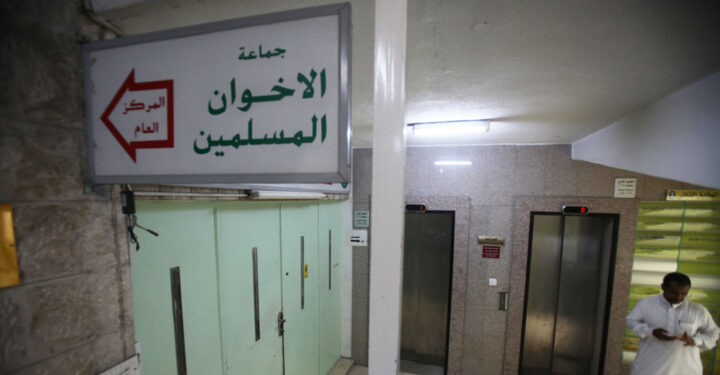
On 23 April 2025, Jordanian authorities took a decision to end the legal presence of the Muslim Brotherhood, declaring it an "illegal association," a move that marked the end of a long chapter of a complex relationship between the two parties.
This shift was not the product of a fleeting moment, but the result of an escalating series of disagreements that began with the intersection of interests and circumstantial partnerships, evolved into repeated clashes, and culminated in a complete estrangement, amid internal and regional shifts that rearranged state priorities and redefined the contours of the political and security sphere.
Since the group's inception, the Jordanian regime provided a political environment that allowed it to grow and penetrate society through proselytizing, social, and later political work. However, this coexistence was never free of latent tensions, which came to light with key regional and local developments, most notably the signing of the peace treaty with Israel in 1994, the waves of the Arab Spring, and finally the eruption of conflicts in the region after the "Al-Aqsa Flood" operation in Gaza.
The Brotherhood’s ban came after Jordan's General Intelligence Service announced in April 2025 that it had uncovered a cell of 16 people who were found in possession of advanced equipment for manufacturing rockets and missiles hidden in secret warehouses in Zarqa, northeast of the capital, Amman. Confessions broadcast on Jordanian television confirmed that three members of the group belonged to the Muslim Brotherhood, which, according to the authorities, constituted conclusive evidence of the seriousness of the situation.
In a public session held on Wednesday, 30 April, the State Security Court sentenced four of the 16 defendants to 20 years in prison and fined them after they were found guilty of possessing explosive materials, weapons, and ammunition with the intention of using them illegally and carrying out acts that would disrupt public order and endanger the safety and security of society, in violation of the provisions of the Prevention of Terrorism Law.
Taken together, these developments raise a pressing question: How has the relationship between the Jordanian state and the Brotherhood reached a point of no return? Are the recent verdicts against defendants associated with illegal activities part of a broader strategy to dismantle the remaining influence of the group? This paper seeks to deconstruct this process and analyze its deeper causes and contexts. It also opens the door to a broader reading of whether these cases constitute a new turn in Jordanian policy toward political Islam groups, in light of rising regional tensions and the Gaza war, and as Jordan's allies, such as the United States and the United Arab Emirates, take a hard line on the Muslim Brotherhood due to its ideological link to Hamas.
A Brief History: Stages of Alliance and Clash
The roots of the Muslim Brotherhood in Jordan date back to 1945, when it was officially established as a branch of the parent organization in Egypt, in a charged regional climate with the end of World War II and the rise of nationalist and Islamist movements. Since its inception, the group has adopted a reformist, proselytizing discourse that focused on religious education and social action, benefiting from a political environment provided by the Jordanian regime that allowed it to grow and penetrate society.
In the 1950s, the Brotherhood emerged as one of the regime's most prominent internal allies when it sided with the throne against the government of Suleiman al-Nabulsi, backed by President Gamal Abdel Nasser, during a failed coup attempt in 1957. The Brotherhood was rewarded for this political stance by being exempted from the ban on parties, giving it ample space for proselytizing and social work.
This presence in public life was strengthened after the resumption of the democratic process in 1989, when the group entered parliament through elections, won 22 seats, and presided over the House of Representatives for three consecutive sessions. It also participated with five ministers in the government of Mudar Badran in 1991. In the 1990s, it established its political arm, the Islamic Action Front Party (IAFP), to strengthen its political participation.
However, this historic alliance began to crack with Jordan's signing of the 1994 peace treaty with Israel, which the group strongly rejected, considering normalization with the occupation a religious and ideological red line. This rejection was manifested in the withdrawal of its parliamentarians from the session of the ratification of the treaty, followed by a boycott of the 1997 elections to protest official policies.
This political tension solidified a state of mutual suspicion between the Brotherhood and the regime, and from that moment on, a gradual process of separation began.
Amid this tense trajectory, the group's leaders continued to emphasize its peaceful and nationalist nature. In a statement made in April 2025, MP Saleh al-Armouti, head of the IAFP bloc, emphasized that "the Islamic movement in Jordan, since its establishment, has always been with the homeland, its security, and stability," stressing that it is "a preaching movement, not a political movement, and it does not carry weapons, and history testifies to its national positions." He added: "National unity must be preserved in the face of Zionist projects and American dictates, and we are in favor of holding those who offend the state accountable, but without preempting the judiciary."
From the Arab Spring to Dismantling the Community (2011-2020)
The winds of the Arab Spring put the relationship between the two parties to another, more serious test. While the Brotherhood embraced demands for broad political reforms, the regime viewed the group's moves with suspicion.
The group took the lead in organizing demonstrations and marches, especially through its political arm, the IAFP. Slogans demanded amending the constitution, expanding the powers of parliament, reducing the powers of the king, fighting corruption, and limiting the excesses of the executive branch.
The relationship took a sharp turn after 2013, with the decline of the Arab Spring and the rise of state fears of political Islam. The authorities began to view the Brotherhood as a security and political burden rather than a partner. Official accusations that the group was trying to exploit domestic crises and strengthen its influence in parallel with regional agendas increased, especially after the recent Gaza war, when the state saw that the group was deliberately questioning Jordan's official stance on the war.
Although the movement remained relatively peaceful in Jordan, compared to other countries, the Jordanian authorities realized the seriousness of the situation and feared that the country would slide into chaos, as happened in Syria or Egypt. They also watched with concern the rise of the Brotherhood to power in Egypt and Tunisia, which reinforced their fears of the same scenario repeating in Jordan.
With the failure of the revolutionary wave to reach Amman, the regime embarked on an elaborate political and legal campaign to reduce the group's influence, which consisted of withdrawing its legal cover, clamping down on its activities, and prosecuting some of its leaders, without going so far as to label it a "terrorist group" as Cairo, Abu Dhabi, and Riyadh did.
Jordan adopted a policy of legal containment, the most prominent manifestation of which was supporting the establishment of the "Muslim Brotherhood" association in 2015 by a group of dissidents, to fragment the mother group and disperse its popular base. The Court of Cassation's decision in 2020 legally terminated the group as "dissolved and lacking legal personality," forcing it to continue working under strict supervision through its political party, the IAFP.
This decision did not criminalize the group as a political organization, but it ended its legal existence, froze its properties and headquarters, and stopped its institutional and financial activity, which was most prominently manifested in the work of the Islamic Center Association, which financed all of the group's proselytizing activities. This reality forced the Brotherhood to limit its presence to its political party, which is licensed under the Parties Law, which includes strict provisions such as prohibiting association with foreign entities on pain of dissolving the party – which in practice means controlling the movement of Islamists within the legal framework.
In this context, the Brotherhood in Jordan has suffered a deep internal fracture, losing its moderate, centrist current in favor of more radical currents close to Hamas. These shifts did not go unnoticed by the Jordanian security services, which watched with concern as the Brotherhood potentially became an umbrella for clandestine activities beyond the scope of traditional political work.
The Islamists Return with Momentum on the Street After October 7
In 2022, Jordan passed amendments to the Parties and Elections Law, which allocated 41 seats to closed party lists at the national level and introduced a double vote for the voter (one vote for a national party list and one vote for a local list).
The IAFP, the Brotherhood's remaining political arm, won 31 out of 138 seats.
The Islamists in Jordan led the pro-Gaza movement and visited the home of the King Hussein Bridge shooter, Maher al-Hijazi, one day before the elections, leaving an impact on the Jordanian voters. The Islamists raised a clear slogan in their campaign symbolizing the red triangle of the Islamic Resistance Movement (Hamas). Former MP and current election winner Yanal Freihat, who received 18,000 votes in Amman, designed his election signs as an inverted triangle, while other candidates raised the slogan "Either you vote for normalization or against normalization."
As regional tensions intensified, especially after October 7 (Al-Aqsa Flood), the Jordanian state became increasingly keen to limit any possible association between the Jordanian interior and armed resistance movements, for fear of security repercussions that would threaten national stability.
In April 2025, Jordan's General Intelligence Service announced the uncovering of a 16-person cell that was found in possession of advanced equipment for manufacturing rockets and missiles hidden in secret warehouses in the city of Zarqa. Confessions broadcast on Jordanian television confirmed that three members of the group belonged to the Muslim Brotherhood, which, according to the authorities, was conclusive evidence of the seriousness of the situation.
Based on these developments, Interior Minister Mazen Al-Faraya announced that the group's activities would be permanently banned and that affiliation with it or promotion of its ideas would be criminalized under penalty of legal accountability. This came as a final step after years of attempts to contain and limit the group's activities.
With this decision, the Jordanian authorities activated the 2020 Court of Cassation decision, as explicitly announced by the Minister of Interior, meaning that the ban serves as a legal implementation of the court's decision.
Why Ban the Brotherhood Now?
Analysts and politicians may link the decision to ban the Muslim Brotherhood in Jordan to the repercussions of October 7 and the setback of the resistance axis, especially the harsh blow suffered by Hamas in Gaza at the hands of the Israeli occupation.
Senator Omar Al-Ayasra, who was close to the Islamists and worked at the Brotherhood-affiliated Yarmouk TV and then moved to the government's side in reporting its narrative, criticized the Brotherhood's "continued association with foreign discourses and interests," noting that "the axis on which the Brotherhood was betting was defeated, and October 7 destroyed the resistance project as we know it." He asked: "Do you want to destroy Amman too?"
"The decision to ban the Muslim Brotherhood in Jordan is not a targeting of the movement per se," Al-Ayasra said, but rather the result of what he described as a "real threat to Jordan's national security" by elements within the group.
Al-Ayasra emphasized that the Jordanian state did not seek escalation with the group, but rather offered it multiple opportunities for political action, most notably the political reform project that enabled them to reach parliament through party lists. He added: "The state did not close the door, but it became angry when it felt that its national security was jeopardized by the presence of elements within the group that carry a military ideology and move under internal and external directives."
He believes that "the decision came to implement the necessary security measures after discovering the qualitative shift within the group toward armed action, noting that the Jordanian state had not previously pursued the group despite a judicial decision to dissolve it, but recent developments required a radical change in dealing with it."
"The Jordanian state seeks to protect its national security in light of attempts by some parties to exploit the regional situation, especially what is happening in Gaza, to weaken the image of the state and bully it through organized social media campaigns to distort the Jordanian position."
"The historical relationship between Jordan and the Muslim Brotherhood has gone through stages of cooperation and conflict, but the current stage is witnessing a radical turn," he said, adding that "the emergence of armed cells linked to the Brotherhood represents a serious change in the rules of dealing with the group."
He noted that part of the issue is due to the escalation of internal and external discourse within the Islamist movement that disparages Arab countries and their armies, which may have contributed to creating a fertile environment for radicalization among some elements of the group.
"The Jordanian state does not seek to liquidate the Islamist movement, nor to replicate the Egyptian experience, but rather calls for the legalization of political action through a licensed party under legal supervision, away from any foreign affiliations or military rhetoric," according to Al-Ayasra.
"Jordan presented the Muslim Brotherhood with a great opportunity by passing a political reform project that enabled them to reach parliament through a party list, giving them an influential voice in the political scene. However, recent behaviors have shown that the group may be unable to deal with national challenges responsibly, requiring them to review their internal policies and literature."
Retired General Intelligence Service Brigadier General Omar al-Raddad, an expert in strategic security affairs, believes that "the internal transformations witnessed by the group, after it was infiltrated by a radical current linked to Hamas, made it a threat to national security and no longer a mere political opposition." Al-Raddad believes that "the next stage will witness a resetting of the Islamist scene by supporting more moderate currents and separating Jordanian Islamist movements from any external ties."
What Is the Future of the IAF?
As for the future of the IAF, Al-Ayasra warns that the fate of the party is at stake. "Staying on the same path will lead the party to the same fate as the banned group, especially after the Interior Minister's recent statement that no partnership between the banned group and the party will be allowed," he said.
MP Saleh Al-Armouti, head of the IAFP bloc in parliament, commented in an exclusive statement that "linking some of the names recently seized in a security case to the Muslim Brotherhood is painful and sad," stressing that the Islamic movement is part of the national fabric.
Al-Armouti emphasized that "the IAF party enjoys wide popularity and represents the Jordanian people and cannot be touched legally or politically, noting that there are attempts to settle political accounts and divide the parties, which is worrying."
Regarding the future of the IAFP, Al-Armouti expressed his confidence that the party would not be harmed, praising King Abdullah II's wise policy of supporting constitutional institutions and the completion of the parliament’s constitutional cycles.
In an April 23 press conference, IAFP Secretary General Wael Al-Sakka said that the party has carried out all its activities and tasks over the past years in accordance with the Jordanian constitution and law, noting that the party has been operating in the Jordanian political arena for more than 30 years.
"The party has nothing to hide, and it fully complies with the constitution and the law. Everyone in Jordan is subject to the law, and the party previously participated actively in the National Dialogue sessions to modernize the political system."
"The IAFP is an independent Jordanian party that has no ties to any party that threatens Jordan's security and stability," he said, adding, "The government's decision to ban the political activity of the Muslim Brotherhood does not concern the party."
Jordanian Islamists remain present in the political scene, through legal channels, as they have 31 MPs in the current parliament, which came after the 2022 political modernization plan, within an opposition bloc that does not form a majority but is able to influence public policies within the institutional framework... Will the party also survive, or will the authorities seek to target it through legal and other channels?
The views represented in this paper are those of the author(s) and do not necessarily reflect the views of the Arab Reform Initiative, its staff, or its board.