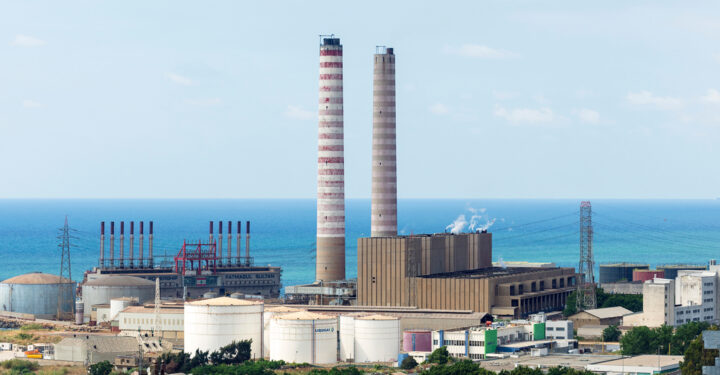
Lebanon is still waiting for its own natural gas. Since the ratification of the offshore petroleum law in 2010, the country has been struggling to find gas. Political deadlocks led to institutional instability, a collapse in the financial and banking systems in the country, and international companies’ interests in bidding for exploration and production contracts. In this policy brief, I argue Lebanon can still pursue its strategy to attract international oil companies to invest in its offshore oil and gas sector under certain conditions; in addition, it should focus more on enabling the private sector to invest in renewable energies; and it should connect the country to major regional economic and energy projects to prevent it from economic isolation and being excluded from energy connectivity projects.
Background
The Lebanese authorities signed two oil and gas exploration and development contracts in 2018 with a consortium comprised of French company Total as operator, with Italian ENI and Russian Novatek as support. In 2020, the consortium announced the launch of the first offshore exploration in Block 4, north of Beirut. Then, almost sixty days later, it announced that it had failed to discover gas. In 2023, TotalEnergies and ENI, with their new partner QatarEnergy, announced another negative exploration in Block 9, this time to the south of Beirut. The Lebanese government launched a second licensing round in April 2019 in the hope of attracting companies that would inject some new dynamism into the exploration. However, after many postponements, the government announced an unsuccessful closure of that second round in June 2023 — the only companies that had applied were the same companies already operating in Lebanon, and there were disagreements between the Ministry of Energy and the companies on timeline and financial contributions. However, this did not stop the government from announcing the launch of a third licensing round that is supposed to end in November 2025.
The only positive development, to some extent, was the announcement of a maritime border agreement between Lebanon and Israel in 2022, which paved the way for the second exploration activity in Block 9, and encouraged the Lebanese government to relaunch the process of negotiating maritime borders with Cyprus and, hopefully, in the near future, with Syria.
Since the election of the President of the Lebanese Republic, Joseph Aoun, in early 2025 and the relaunch of the oil and gas sector, the economic and political contexts in the country have not been conducive to attracting millions of dollars’ worth of investments. The 2019 uprising and what followed — from multiple crises up to the presidential vacuum and the involvement of Hezbollah in the war against Israel in October 2023, to the signing of the ceasefire agreement between Lebanon and Israel in November 2024 — were all major events that prevented any positive development in the oil and gas sector. Quite the contrary, it deepened the energy crisis, mainly in the electricity sector. The negative announcements on oil and gas discoveries were accompanied by hours of blackouts across the country, where neither Électricité du Liban (EDL) nor private generators were able to “keep the lights on”. The only glimmer of hope were private initiatives and investments in solar panels that led to a significant increase in renewable energy production and consumption in the cities and villages — the destruction of villages and housing units affected this trend in many war-torn areas of the country between 2023 and 2024.
President Joseph Aoun’s first government is expected to last till the May 2026 parliamentary elections. Each minister had to produce a plan that would work and give results within one year. The new minister of energy and water had to undoubtedly prioritize the electricity portfolio, in the hope of seeing some improvements in the sector within the year. The focus of the ministry was more on electricity than oil and gas. This led the Qatari government to propose to the Lebanese government to invest in Lebanon’s energy sector by building a power plant that runs on natural gas, supplying the country through long-term agreements. That is the sort of deal that should interest any government suffering from multiple challenges in its energy sector.
However, the Qatari offer opens, once again, the space to discuss the country’s energy strategy and its objectives and ambitions, taking into account the challenges it faces at almost all levels as well as the geopolitical shifts in the region. Would this offer slow down any efforts to increase renewables in the country? Will it force Lebanon to sign long-term gas agreements that will affect the development of other low-carbon energies? Does it still make sense to develop Lebanon’s natural gas sector?
I will answer three questions that I think are worth considering: Does gas still matter for Lebanon’s future? Will there be a clash between natural gas and renewables in the future of energy for Lebanon? Should Lebanon opt to connect its projects to the region or continue to be isolated from the region’s projects?
Gas Still Matters?
The oil and gas sector, worldwide, is under pressure because of the green transition and climate requirements. Producing countries have been pursuing decarbonization policies to maintain their shares of the market and to continue to play a pivotal role in the global economy. The continued push for investing in renewable energies, electric vehicles, and low-carbon technologies has started to have an impact on global energy demand. However, discrepancies in data over the expected decrease in future energy demand are considerable between agencies, such as the International Energy Agency (IEA) and the Organization of the Petroleum Exporting Countries (OPEC), where in a recent study, the IEA data shows that demand will reach above 260 million barrels of oil equivalent per day, while OPEC says the demand will be a bit less than 400 million barrels of oil equivalent per day. Therefore, the oil and gas demand will follow divergent trajectories through to 2050, depending on the pace of the energy transition. In addition, globally, “natural gas demand is projected to grow by 32% by 2050, surpassing 5,300 bcm [billion cubic meters]. Power generation will remain the largest driver of natural gas use” and industrial growth in emerging Asia and India.
The Middle East, in addition to Eurasia and Africa, “will be responsible for nearly 90% of global natural gas production growth by 2050”. In the near term, liquefied natural gas (LNG) trade will rise faster than overall gas demand, with a wave of new capacity mainly from the United States, as well as Qatar, pushing global liquefaction supply up by almost 50% by 2030. In the MENA, governments and national oil companies that have the capabilities are investing in natural and liquefied gas to secure a place for themselves in a future that envisions a role for gas producers. Qatar is expanding its North Field capacity to remain the world’s leading LNG exporter, well into the 2030s, while the United Arab Emirates (UAE) and Saudi Arabia are expanding their gas portfolios. In North Africa, Algeria is seeking to maintain a European supply, and Libya is using its historic ties with Italy to attract investments in new gas fields. These investments reflect both rising demand in Asia and Europe’s need to diversify away from Russian gas. For MENA producers, gas is also a strategic tool: it secures export revenues, provides domestic energy for industrial growth, and is being framed as a “transition fuel” that complements the region’s parallel push into renewables and low-carbon energies.
In the Eastern Mediterranean (EastMed), Egypt is still the biggest natural gas producer with 49.4 bcm of natural gas produced in 2024, compared to the second biggest producer in the region, Israel, with a production of around 26.8 bcm for the same year. However, Egypt’s production is in decline, unlike Israel, which is now exporting a significant part of its natural gas to Jordan and Egypt. Since summer 2024, Egypt has been increasing its imports of LNG to keep the lights on in the country, which is adding pressure to the country’s energy bill. In August 2025, Israel announced a new gas deal with Egypt, which will allow the companies operating the Leviathan field in Israel to expand their production and provide Egypt with up to 130 bcm of natural gas until 2040. Currently, Egypt imports around 10 bcm of natural gas from Israel.
Cyprus has had breakthroughs in its gas sector lately, following an announcement from US oil company Chevron that it will start production from its Aphrodite field by 2027 — the field was discovered in 2011 but faced multiple challenges that prevented its development. In addition, ENI has been preparing the ground for a final investment decision that will help it start production from the Cronos gas field in Cyprus by 2028-2029.
A more significant development that impacts Lebanon came in March 2025, when the Israeli government announced the signing of an agreement with the consortium of three companies: Azerbaijan’s national oil company SOCAR, the international oil company BP, and the Israeli private company NewMed to develop an area of offshore blocks known as Zone I, covering an area of 1,700 km². These blocks are adjacent to Lebanon’s Block 8. SOCAR is the main operator with a 33.34% share, while BP and NewMed each hold 33.33%. In the first phase, the companies will carry out seismic surveys in the allocated area. Based on geological data, if results are positive, they may move to the next stage of exploratory drilling. No information has been disclosed yet about the duration of this initial phase, which company will conduct the surveys, or the timeline for start and completion. The Israeli Ministry of Energy also announced that other companies expressed interest in entering the sector. Likely, this referred to ENI, which had won rights in Israel’s fourth licensing round for Zone G, but ENI has not announced any progress since. In October 2023, Israel launched its fifth licensing round. Since Zone I is located on the maritime border with Lebanon, Lebanese authorities must remain vigilant, closely monitor seismic survey activities that will be undertaken by the owners of the blocks, and take the necessary measures to protect Lebanon’s rights over natural resources in its Exclusive Economic Zone (EEZ). The deal signed between Israel and the above-mentioned companies might require the activation of the Lebanon-Israel Maritime Border Demarcation Agreement. The agreement, reached in October 2022 through US mediation, stipulates in Chapter III (Sections A and B) how to deal with cross-border reservoirs not tied to a specific Block.
- Section A: If natural resources extend across the boundary and one party (Lebanon or Israel) intends to develop them in a way that could affect the other, both sides must inform the United States, which will mediate a mutually acceptable development arrangement. This applies to companies as well.
- Section B: Both parties must share relevant data on cross-border resources with the United States. Washington, in turn, is expected to share the information with both sides in a timely manner.
Therefore, it is recommended that the Lebanese government insist on Washington to ensure that Israel respects this agreement, especially sections A and B of section III. In addition, it is recommended that the Lebanese government demand transparency from SOCAR and BP, making clear that Lebanon expects companies to respect the terms of the maritime border deal, especially regarding any potential shared reservoirs. Surveys must be carried out without entering Lebanon’s EEZ. Geological surveys must confirm that no violations will occur. Also, the company authorized to conduct the survey in Block 8 (8 December 2024) must urgently share its findings with Lebanon so the country is aware of any potential reserves.
Looking at the global and regional oil and gas contexts, one question still remains: should Lebanon still focus on the oil and gas sector? The answer is: yes, but. Currently, there is still no harm in aiming for oil and gas investments, but competition is fierce, and the clock is ticking.
The third licensing round is open till November 2025; this requires the Lebanese Ministry of Energy to engage in talks with companies to attract investment, particularly mid-sized companies, like Energean and SOCAR. Also, there might be value in exploring ENI’s appetite in leading as an operator in Lebanon rather than just relying on it being a non-operator partner — ENI has been more successful in its explorations in the EastMed compared to its partner TotalEnergies. Lebanon also needs investor-friendly reforms, strong institutions, and financial and economic stability to attract global companies and investments. Moreover, Lebanon needs to manage its expectations of how the discovered oil and gas could impact the country. If the country is late in developing its own gas, and the government is under pressure to provide alternative energy sources, then the discovered gas would be exported, much like the strategy in Cyprus. In theory, this is not a bad strategy, but it would depend on the cost of gas per agreements that Lebanon will have to import to meet its needs. Therefore, the companies that will be willing to invest in Lebanon’s gas development will not only be competing with neighboring producers but also competing with other projects, such as the Qatari offer within the country.
More importantly, besides the strategy concerning the companies Lebanon needs to attract, the Lebanese government needs to focus on bilateral agreements with its regional neighbors as part of its energy-diplomacy strategy, which could encourage international companies to bid for offshore blocks in Lebanon. One potential is Egypt, which needs to diversify its energy suppliers to depend less on Israel. Lebanese gas could be an option here that could compete with Israeli gas. Syria is another neighbor in dire need of gas and energy for its huge reconstruction needs. Lebanese gas could be one source that could compete with Azeri or Qatari gas because of Lebanon’s proximity to Syria. But time is key. The delays and stagnation are harming Lebanon’s opportunity to play a significant role in the EastMed energy space.
In theory, the discovery of commercially viable quantities of gas in Lebanon would give the country an opportunity to reduce its reliance on costly imports, stabilize the power sector, and potentially develop an export strategy via pipeline links. However, it is also important to stress that Lebanon could end up in a situation where it is importing gas for its power plants and exporting its gas to its neighbors.
Renewable Energy Versus Natural Gas?
Lebanon’s electricity remains heavily dependent on imported fuel oil and gasoil, with electricity generation dominated by inefficient thermal plants and frequent blackouts. In the past few years, however, the collapse of the economy and the national grid have pushed both households and businesses to turn toward informal distributed renewable energy, mainly rooftop solar photovoltaics. By 2023-2024, installed solar capacity in Lebanon had exceeded 1,000 MW, up from just a few tens of megawatts a decade earlier. Most of this growth is off-grid, driven by necessity rather than policy. Formal renewable targets exist, but progress is fragmented, with no large-scale wind or utility-scale solar projects yet operational.
Prioritizing investment in renewables over gas for electricity would offer Lebanon several benefits. Renewables, particularly solar, can be deployed quickly, reduce dependence on imported fuels, and provide households with greater energy security at predictable costs. Unlike gas-fired generation, which requires expensive infrastructure, imports, or uncertain offshore discoveries, renewable energy projects can attract concessional finance and international climate funding. This will help stabilize Lebanon’s fiscal position. Renewables also reduce exposure to volatile global gas markets and support commitments to decarbonization, aligning Lebanon with international climate goals and EU energy cooperation frameworks. While natural gas might appear as a short-term fix, renewables provide a more resilient, sustainable, and economically advantageous path for Lebanon’s electricity sector.
The short-term fix will be popular at the ballot box, but also, in the case of Lebanon, it is about ending an unbearable social and economic situation, resulting from blackouts and the environmental harm caused mainly by privately used generators. Therefore, it does make sense for the government to seek alternatives, such as natural gas, to fuel power plants. How quickly will that fix be compared to renewables? How will the natural gas reach the power plants in Lebanon? The only option today is to transport the gas via the Arab Gas Pipeline (AGP) to feed the Deir Ammar power plant in the Baddawi area, north of the country. After all, one power plant on gas is better than none, but this does not solve Lebanon’s electricity challenges. Therefore, the purchasing of natural gas is not a quicker fix than renewables. Both energies will require investment in infrastructure, and this is where the government needs to make an informed choice on where to direct available funds.
QatarEnergy is a partner in the consortium led by TotalEnergies in Block 9, south of Lebanon; thus, it is not surprising for Qatar to be interested in Lebanon’s energy sector. But more importantly, QatarEnergy has been investing billions of dollars in its LNG sector to expand its production from 77 million tons per annum (mtpa) in 2024 to 142 mtpa by the end of the decade. Therefore, it is crucial for Qatar to support its national company in finding new gas markets. At high-level talks in Doha in early 2025, Qatar’s Prime Minister and Foreign Minister, Sheikh Mohammed bin Abdulrahman Al Thani, pledged summer energy relief and outlined broader infrastructure cooperation with Lebanon. The discussions included possible support via Qatar Fund for Development (QFFD) or QatarEnergy for constructing a power plant or supplying natural gas to Lebanon. The Qatari offer made to Lebanon in the summer of 2025, included building, owning, and operating a power plant with a capacity ranging between 600 and 700 MW, which would have a dual financing structure: an equity contribution from QatarEnergy, and a semi-concessional loan from QFFD, in return for a long-term power purchase agreement with EDL.
The question becomes: what would constitute a beneficial deal for Lebanon without derailing renewable ambitions? A mutually advantageous agreement could center on a transparent, joint-venture power project with clear milestones and no hidden liabilities. Lebanon should insist that any new infrastructure — like a gas plant or LNG supply line — be paired with parallel investment in utility-scale solar or wind, ensuring that renewables remain a core part of the energy mix. Critical conditions would include an independent regulatory framework to oversee procurement, pricing, and environmental impact, as well as a commitment that imported fuel is only a temporary bridge while grid-connected renewables ramp up. Additionally, securing concessional terms on gas or power pricing could free up fiscal space to finance renewable build-out, align with Lebanon’s reform roadmap, and avoid crowding out private and donor-funded clean energy investments. This approach preserves flexibility, supports energy security, and guarantees the transition toward a resilient, low-carbon electricity future.
Connectivity or Isolation?
Located in the EastMed, Lebanon is witnessing historic political developments, which come at a time when the Middle East has been and is working on consolidating its position as an important economic player regionally and globally. The politics of economic and energy corridors has been actively pursued by the main Gulf Cooperation Council members, such as the Kingdom of Saudi Arabia (KSA), the UAE, and the EU, sponsored by the US. The most ambitious project is the India-Middle East-Europe Economic Corridor, which intends to boost the economies and connectivity initiatives of countries involved, including countries like Jordan and Israel. At the same time, Iraq has been developing its economic connectivity project, named the Development Road project, that would create corridors from Iraq to Türkiye and through to Europe. In addition, based on historic oil and gas ties between the EU and North African countries, such as Algeria and Libya, green energy connectivity projects have become a strategic pillar of the EU with MENA. The EU is supporting electricity and energy projects like the Great Sea Interconnector linking Israel, Cyprus, and Greece, and it is also supporting the GREGY Project, linking Egypt with Cyprus and Greece, which will connect electricity markets to allow renewable power exports into Europe. In addition, there is the TeraMed initiative, which calls for Mediterranean countries to work together to increase the deployment of renewable energies to one terawatt by 2030, with the aim of connecting their grids and ultimately seeking to create a harmonious energy and electricity market. On the gas side, the East Mediterranean Gas Forum is still holding, although it could not create the investment and connectivity projects it was supposed to support in the region.
Syria and Lebanon had been sidelined from regional economic projects due to their affiliation with Iran. However, since the toppling of the Bashar Assad regime and the appointment of Ahmad Al-Sharaa as Syria’s interim president, this is changing. The new leadership in Damascus has been effective in garnering support from Arab countries (mainly KSA) to remove the sanctions imposed and allow investments in Syria’s reconstruction and its economy more generally. Syria has already received energy support from Qatar, and it began receiving natural gas from Azerbaijan through Türkiye, which is an important connectivity development.
For Lebanon, the closest connectivity project to the region came in 2021 when the US supported a project to export natural gas from Egypt to Lebanon via Syria through AGP. The project was never realized for several reasons, but mainly due to sanctions imposed on Syria at the time. This meant that Egypt could be penalized for using Syrian land and infrastructure, and, crucially, the US declined to provide Egypt with any guarantees against such penalties. Syria was under Cesar Act sanctions, and there were strong objections from republicans in the US for this project that was seen as supporting the Bashar Assad regime. Currently, though political conditions have changed in Syria, the AGP project is difficult to concretize because of Egyptian gas production shortages. Egyptian authorities are importing gas to fulfill their domestic needs. One way would be to use Egyptian infrastructure to import gas dedicated to Lebanese and Syrian markets, but then there should be an expansion to AGP, which is currently filled with Israeli gas going to Jordan and Egypt. With the drastic political shifts surrounding Lebanon, it should be a priority for the Lebanese government to think of the country’s role within the region. It is not an option to isolate the country when Israel and Syria are actively positioning themselves in the region. During a state visit to Cyprus, the Cypriot government proposed to link Lebanon to Cyprus through an electricity cable, which was criticized for being infeasible. However, the value is in connectivity more than anything. The discussion should not only be based on the cost but on the value of connecting Lebanon to the region. This might not be the ideal project, but it could be a start for the government to launch discussions on potential common projects with Cyprus, Europe, and others in the region. Furthermore, Lebanon should be exploring the potential of joining interconnection initiatives with Syria, Jordan, and Egypt. More strategically, Lebanon could position itself as a future energy hub by investing in solar and wind capacity and aligning with EU-funded Mediterranean energy corridors. Lebanon can no longer afford to remain isolated.
Policy Recommendations for the Lebanese Government
- Adopt a Dual-Track Energy Strategy (Gas and Renewables)
Lebanon should treat natural gas as a transitional fuel while prioritizing renewable energy as the long-term solution. Any gas agreements must be designed as short- to medium-term bridges that do not crowd out investment in solar, wind, or regional clean energy projects. The government should insist on parallel renewable investments whenever a new gas infrastructure is built.
- Reform the Licensing Framework and Strengthen Institutions
The failure of past licensing rounds reflects weak governance, political deadlock, and unattractive fiscal terms. Lebanon must implement investor-friendly reforms, streamline licensing procedures, and strengthen the independence of regulatory bodies to attract mid-sized international companies (e.g., Energean, SOCAR). Lebanon must enforce transparency measures to ensure that corrupt practices are prevented.
- Ensure Transparency and Safeguards in Gas Deals
Any new agreements – whether for imported gas, power plants, or LNG infrastructure – must include: transparency clauses on pricing, timelines, and liabilities; independent oversight to ensure environmental and fiscal safeguards; and explicit provisions that gas supply is temporary, to avoid locking Lebanon into long-term fossil fuel dependence that undermines renewable growth.
- Scale Up Distributed Renewables Projects
The boom in rooftop solar panels shows that citizens and businesses are ready to lead the energy transition. The government should support these efforts, enable financing (via concessional loans, donor-backed guarantees, and public-private partnerships) for households and SMEs.
- Launch Utility-Scale Solar and Wind Projects
These utilities should have concessional climate finance, have the support of EU cooperation frameworks, and provide an adaptable electricity grid to integrate these renewables. Thus, these measures will reduce reliance on expensive private generators.
- Leverage Energy Diplomacy and Regional Connectivity
Lebanon should reposition itself within regional energy and economic corridors, rather than remain isolated. This includes reviving negotiations with Cyprus and Syria on maritime and electricity connectivity; exploring interconnection projects (with Cyprus, Jordan, Syria, and Egypt) to integrate into EastMed and EU-backed energy corridors; using energy diplomacy to position Lebanese gas as an alternative source for neighbors like Egypt and Syria; and exploring renewable export opportunities under initiatives like the TeraMed initiative.
Conclusion
Lebanon’s energy future hinges on a clear strategy that takes into consideration domestic and regional political and energy shifts. Through a clear energy-diplomacy objective, Lebanon can still attract dynamic companies that are willing to take risks and develop the natural gas sector and find the markets regionally and beyond. It can provide incentives through transparency and competitiveness to private and credible investors to develop the renewable energy sector. Finally, Lebanon should pursue the politics of openness and seek to find a role in the new regional setup that is built on connectivism and economic and energy corridors. All these steps require vision and ambition to recreate Lebanon and leave memories of Switzerland of the East in the past, where they belong.
The views represented in this paper are those of the author(s) and do not necessarily reflect the views of the Arab Reform Initiative, its staff, or its board.