This interview, conducted in May 2025, is part of a series examining the electricity sector reform in Lebanon in light of the plans for postwar reconstruction.
Lebanon has long suffered from a chronic electricity crisis, with losses reaching $40 billion since 1990 (1) — yet the country still lacks a functioning electricity sector able to provide reliable electricity services to its denizens. With a new and long-awaited presidency and a new government coming in the wake of a brutal war, promises for reconstruction efforts have emerged, raising hopes in public sector reforms, including the electricity sector. This optimism is reinforced by the fact that international donors are increasingly tying any financial support to the implementation of concrete administrative and financial reforms.
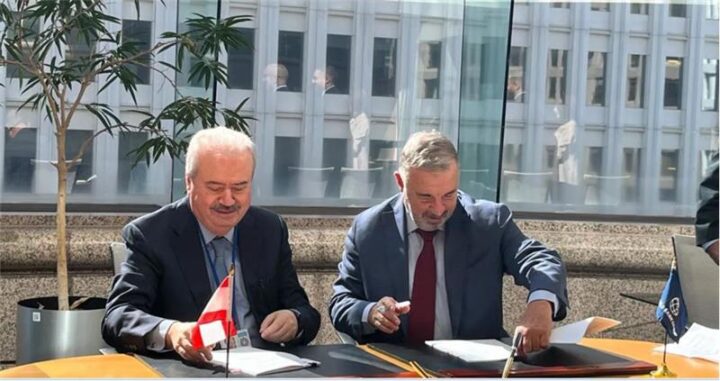
On April 24th 2025, the Lebanese government – through finance minister Yassine Jaber – signed a $250 million financing agreement with the World Bank to implement ‘Lebanon Renewable Energy and System Reinforcement’ project. The project will be implemented through Electricité du Liban (EDL) and the Litani River Authority (LRA). According to official reports by EDL, the World Bank will provide financing to help scale up renewable energy in the electricity supply mix, strengthen the electricity transmission network and its management, improve EDL’s operating efficiency, and rehabilitate critical assets at hydropower plants.
Considering this major step, the Arab Reform Initiative sought to understand what this agreement means for Lebanon’s electricity sector and whether it feeds into the broader direction of electricity sector reform that the new Ministry of Energy and Water is pursuing. The conversation also explores the risks and barriers that may undermine the project’s implementation.
Programme Assistant, Batoul Noureddine, has interviewed Dr. Sorina Mortada, a senior energy consultant, to gain insights into the loan’s potential to achieve the reforms needed and the impact desired. Dr. Mortada is a senior energy consultant and professor at the Lebanese University with a track record in designing and implementing national energy policies, action plans and laws. She has also collaborated with international donors, government agencies, and private sector partners to integrate innovative energy solutions into policy frameworks.
The $250 million World Bank loan is widely reported to support electricity sector reforms, including the creation of a National Control Centre (NCC).
Question: From a technical point of view, is the National Control Centre alone sufficient in improving Lebanon’s electricity grid control and monitoring system?
The National Control Centre (NCC) is a critical physical facility fundamental for grid operations, but can do little on its own. Its effectiveness depends on the complementary Supervisory Control and Data Acquisition (SCADA) system that feeds into it. The $250 million loan provided by the World Bank covers both the NCC and the complementary SCADA system.
The National Control Centre reads all the data from the SCADA system connected to smart meters across the entire Lebanese territories. In this way, the SCADA systems offer real-time monitoring for the supply and demand to optimize the production and operate the most cost-effective resources.
Question: Do you think the money allocated to the SCADA system meets the sector’s needs?
Right now, we’re essentially starting from scratch. And as long as we are able to kickstart the system, then why not?
There will be sensors and meters on the substations and transmission lines to support data collection. Control software, communication links, servers — all of these together will allow real-time monitoring, grid stability, integration of renewable energy, and resource optimization.
These are all foundational tools that Lebanon does not have at the moment. The SCADA system will provide data on how much EDL is generating and will pave the way for data-driven grid management. If you ask for data from EDL today, it’s simply not available – there is no system to monitor or produce it.
Question: Can data from the SCADA system be made publicly accessible? And who are the main stakeholders interested in this kind of data?
Speaking of international practices, not all data is meant to be public, because you have national security at stake. However, you can make a part of the data public, much like what the Litani river authority (LRA) does. As of now, they publish monthly production figures for all the hydro plants – and this is the kind of information that every citizen should have – to know what their government is doing for them.
If you visit the LRA website today, you’ll find monthly generation data, and in some cases even daily figures if production was exceptional. This is a form of transparency that is very much needed.
In Lebanon, we also have the “Right to Access Information” Law, which gives every citizen the right to request public information. However, it’s still up to the relevant public authority to assess and decide whether to release that data.
Now, regarding the NCC and SCADA system, the main components that citizens care about are improving the billing, reducing the technical losses, and increasing transparency. This helps build public trust and engagement by enabling consumers to read their meters and track their electricity usage.
Building such an advanced system also contributes to restoring trust in public institutions. As discussed earlier, the loan also supports the development of advanced metering infrastructure for EDL, including advanced meter data management and the development of a customer information system for billing, invoicing, and collection. It also includes a consumer portal to communicate with citizens and an Enterprise Resource Platform (ERP) to improve financial management, asset tracking, supply chain, resource planning, and data migration. All of these are critical for modernizing the sector – and they require qualified people to operate and manage the system. So, capacity building and staffing are also a part of this project.
Question: Given that EDL’s role is expected to shrink when the electricity market is liberalized, do you think this loan reinforces EDL’s monopoly and pushes back against the liberalization of the market, especially given that EDL is the entity receiving the loan?
This is an important question, but no, this support doesn’t contradict the market reform direction that the Ministry of Energy and Water (MoEW) is pursuing.
Lebanon has two strong legal foundations for electricity sector reform: Law 462 ratified in 2002 and law 318 issued recently. Both refer to the privatization of the sector and market liberalization. Empowering EDL is strengthening a public institution. This will improve electricity collection and billing, as well as the grid infrastructure including transmission lines. Hence, this will lay the ground for a more functional and modernized sector. Even after privatization, the transmission system will continue to be managed by a privatized, publicly owned company.
Also, it’s important to note that the SCADA system and advanced metering infrastructure will enhance grid control. All those assets will remain under public ownership and serve the entire electricity system where NCC will synchronize grid inputs from all sources: from EDL, from private generators, and even from abroad. For example, if we need to buy electricity from Jordan, it will inform the system when there are power deficits and therefore when we should do that. If we need to use renewable energy, it will indicate which renewable generators, e.g. the solar farms from Ras Baalbek are producing sufficiently and will signal to switch off or reduce the operation of a conventional power plant to optimize use. So, the loan is not merely supporting EDL but also building a national infrastructure that will support a competitive and viable electricity market. It is empowering the sector, financially, technically, and even in terms of human resources.
And when the network is privatized in the future, operators will need permits to produce and distribute electricity. They will have to pay to use the national network and the public assets where these payments will be collected by the public sector.
So, the loan is favorable for the Lebanese government and to the public sector overall – including EDL and the LRA, which is also a part of this network. Even if privatization happens, private distributors will be using those assets and paying for their usage. Yes, a distributor can invest in their own infrastructure, but they won’t operate as a fully autonomous private business. The distributor is not fully autonomous, they will still be regulated and inspected by the Electricity Regulatory Authority (ERA), the governing authority whose jurisdiction they will fall under.
Question: What are the foreseen risks of this loan and how can we overcome them?
What is alarming about this loan is that the World Bank will not release the $90 million dollars allocated for 150 MW solar farms unless an Electricity Regulatory Authority (ERA) is established.
The message from the World Bank is clear: “We are supporting you, but you need to implement reforms.”
ERA will issue permits and licenses based on financial, technical, environmental, and other criteria. Previously, the Council of Ministers granted 11 permits to private investors to produce electricity from Solar PV farms, based on the law No. 129/2019 that amended article 7 of Law 462/2002 stating: “on a temporary basis and for a maximum period of three years, permits and licences for electricity generation are granted by a decision of the CoM upon the proposal of the Ministers of Energy and Water and of Finance until the members of the ERA have been appointed and perform their duties.”
So, one risk is that the $90 million are tied to the establishment of an ERA. There are additional risks too. First is the institutional weakness of the three key implementing bodies: MoEW, EDL, and LRA. Second is the slow public sector hiring for the project management team – that is requested by the World Bank as one of six conditions that should be fulfilled within 180 days. If these conditions are not met, the loan won’t be disbursed. If the loan is secured, repayment will begin as scheduled even if the project is delayed or hasn’t yielded any financial returns. So, the Lebanese government must have a clear mitigation plan to meet these conditions and avoid wasting the opportunity this loan presents.
Among the 6 conditions is the development of a project operation manual that should be co-developed by the MoEW, EDL and LRA. The project management team should therefore include EDL and LRA. Also, the Lebanese government - as the entity receiving the loan and held accountable for it - needs to establish a financing agreement with EDL and LRA. EDL is also required to perform environmental and social screening for the solar PV that are to be installed to ensure their compliance with World Bank requirements. Moreover, an environmental and social audit report should be conducted for the hydro-electric stations. These 6 conditions should be fully met within 180 days from the day the loan was signed. If any of these 6 conditions are not fully completed within 180 days, the loan cannot enter into force and could be canceled.
Another risk I foresee is the implementation period. The closing date of this loan is the end of December 2030. Over these five years, delays can occur at any stage – especially with the numerous external risks Lebanon continues to face. Five years is a long implementation period for a sector that needs fast and effective action.
Of course, the loan is very important by tying funds directly to reforms. For the first time, the money coming to Lebanon is conditional to real regulatory reforms. In the past, the Lebanese government would promise reforms without committing to them. Now, however, the world bank requires the establishment of an ERA before the $90M are disbursed for the solar PV farm, which I consider an unprecedented step.
This pushes away the sector from centralization because the moment ERA is set up, the laws 462 and 318 can be enforced, which are currently unimplemented (particularly due to the absence of an ERA).
Let us hope that the project will be implemented in line with the loan’s conditions, although there are some obstacles that raise concerns. At the end of the day this is the public sector, and it depends how fast it can move. Past experiences have not been very positive. However, the MoEW with the Ministry of State for Administrative Reform have opened the call for nominations for 5 ERA positions. In my opinion, there should not be any further delays in appointing those 5 people to form the board. For the ERA to function properly, it will need at least two years to create the structure, prepare the ToR of the needed staff, develop the internal and financial rules and regulations. The later we start any part of the project’s implementation, the more we risk repaying without real returns.
Question: In your view, how can we — as a policy think tank, as civil society actors, and as engaged citizens — effectively ensure transparency and accountability in the use of the World Bank loan for the electricity sector?
The usual approach is raising our voices and asking the critical question: Where did the money go? But to be honest what we can do is, rather than approaching them as citizens demanding accountability, I think there are more constructive ways to engage. For example, we can approach the MoEW or EDL and ask, what support do you need? This shifts the tone from accusation to collaboration. Instead of positioning ourselves as inspectors, we can offer help from our respective areas of expertise—be it technical, legal, or policy-related. It’s a way to stay engaged and hold institutions accountable, without immediately framing it in a negative way.
The views represented in this paper are those of the author(s) and do not necessarily reflect the views of the Arab Reform Initiative, its staff, or its board.