Introduction
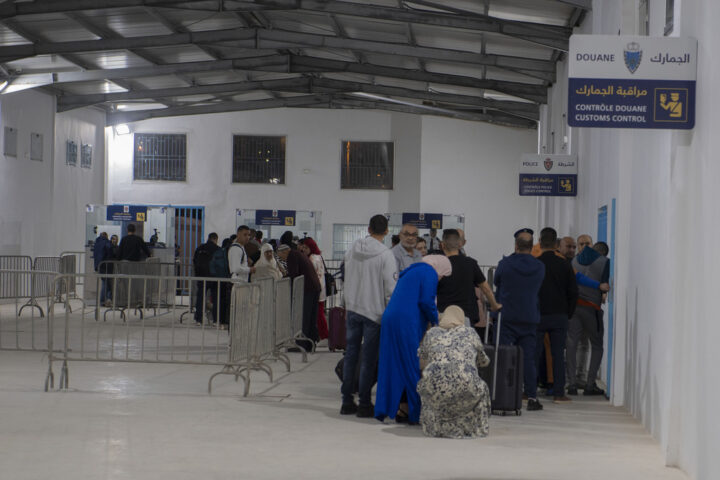
Indicators of structural unemployment among small traders and informal sector workers in the city of Fnideq have significantly worsened since the closure of the Ceuta border crossing between Morocco and Spain to subsistence smuggling activities, which was the main source of livelihood for more than 50% of the local population before the December 2019 closure. Nearly 60 years of official tolerance for this activity has led to its importance as an economic activity and as a central part of the city of Fnideq. Fnideq has become Morocco’s national capital of subsistence smuggling, contributing to the economic prosperity of the entire northern region and providing thousands of jobs.
A pragmatic approach will be used to analyze this issue, focusing on the discursive performance of actors and stakeholders. This paper will identify the paths through the public sphere that arguments take as they are constructed to justify a given position and the promote certain narratives and viewpoints, using various spaces of influence in public opinion such as traditional media, social media, and framing and activation spaces. We will also review actors’ attempts to build discursive alliances that support their arguments – further correcting, adding to, and refining them – thus enabling them to pass through three arenas of politics: the public forum, the policy atrium, and the narrower policy arenas. Narratives evolve as they move through these spaces: starting with the public space; passing through the policy field, where specialists and experts intervene in diagnosing issues and proposing alternatives; and moving to the narrow arena of policy struggle, where official and popular political frameworks play a crucial role in formulating demands and choosing solutions based on multiple considerations, including political and economic dimensions that take into account the cost-benefit analyses in the development of public policies.
This approach in analyzing the issue allows us to take note of the founding and accompanying contexts surrounding the government’s statements regarding decision to fight livelihood smuggling in support of its management of the issue on the ground alongside a rhetorical performance attempting to justify the measures adopted and respond to discourse rejecting the decision. Public rejection of the closure decision has been escalating, despite subsequent alternative measures to provide job opportunities for the unemployed former workers in this unstructured sector. This paper reviews the government’s reactions to the discourse of parties affected by livelihood smuggling, including any adjustments made to its policies and the discourses promoting them using a communicative approach that sought to market the solutions and demonstrate their effectiveness while deconstructing counternarratives questioning the sovereign nature of the government’s narrative.
Based on this, we ask: What were the arguments used in the official narrative to justify the decision to close the Ceuta Gate crossing to smuggled goods? How did they perform rhetorically with stakeholders promoting a narrative that denied the participatory nature and social cost considerations in the government’s strategy for confronting the phenomenon of livelihood smuggling in the city of Fnideq? To answer these questions, we will divide the paper into three sections: First, we will highlight the authority’s argument for the closure of livelihood smuggling. Second, we will discuss the reactions that this has provoked within the framework of objective alliances between the authority and stakeholders’ fronts. Finally, we will conclude with the discursive battlefield, which is dedicated to tracing the path taken by the attempts to solve this issue, from the public sphere to the political sphere and the narrow arena of political struggle. The analysis relies on statements and communications on official government websites; international, national, and local newspapers; and on social media platforms.
Rhetorical Alliances: The Boundaries Between the Popular and the Official
The public authorities treated the closure of the Ceuta crossing to smuggling operations as a sovereign measure that fell within government efforts to build a more equitable playing field. The government was seeking to restore political and economic relations with Spain in the context of intensifying geopolitical competition for economic leadership in the Western Mediterranean region, and also saw the closure as a necessary measure to protect the national economy, which was losing about $500 million dollars annually from lost customs duties. The authorities were also motivated to close regional pockets undermining the competitiveness of Moroccan goods: a decision that was accompanied by a wide public debate about the smuggling trade.
In addition to the political and security arguments that formed the basis of the official position, other arguments of a social and humanitarian nature were also used, claiming to mitigate the direct effects of the closure on the daily lives of citizens. The official media characterized livelihood smuggling with negative descriptions that highlighted the miserable appearance of the phenomenon of tahammalat. The share of those who engage in subsistence smuggling is limited to four days a week for no more than 600 dirhams (about US$60) amid the dangers of stampedes, overcrowding, and the specter of injury or death, as annual deaths of women smugglers are recorded due to stampedes at the access gates to the Ceuta Gate crossing.
The Authorities’ Alliance
The official discourse focused on justifying the decision to prevent the smuggling of goods between Morocco and Spain on the basis of security grounds. This discourse further served as a basis for the development of a new policy in the management of border cities and bolstered the positions of several local civil and political organizations whose objectives overlapped with the authorities’ discourse.
The central focus of the official discourse came from statements by government representatives on the subject. On 12 February 2019, Prime Minister Saadeddine Othmani affirmed in the House of Councilors that the customs measures contained in the finance law are not aimed at restricting traders but rather at combating smuggling. On 1 September 2020, on the sidelines of a meeting with political party representatives at the Commission for the Promotion of Women’s Representation, the Minister of the Interior announced the end of the era of subsistence smuggling, claiming it harms the local and national economy and the image of Moroccan women and explaining that the government was looking for appropriate alternatives to integrate those affected. The General Directorate of Customs and Indirect Taxes, in a statement published on the website of Channel 1 (SNRTnews) on 12 May 2022, said that all necessary measures had been taken to definitively cut off various types of smuggling after Morocco and Spain reached an agreement on the reopening of the Ceuta crossing for travelers. Minister of Economy and Finance Nadia Fattah, speaking at the plenary session of the House of Representatives on 6 June 2022, said that the integration of former livelihood smugglers into formal economic activities would be a model for the exit from the informal economy in other regions.
At the local level, the administrative representatives of the Ministry of the Interior called on various parties to rally around the government’s proposal, especially the prefecture of M’diq–Fnideq in the governorate of Tangier–Tetouan–al-Hoceima. They organized a series of meetings with various economic and social actors; further, they urged civil society groups or actors closely affiliated with the affected population to engage with the implementation of the alternative solutions included in the sectoral plans for after the end of the smuggling and the integrated program for economic and social development of the M’diq–Fnideq prefecture. In support of the official discourse, local elected councils mobilized to enhance its credibility in the public opinion. In its 30 March 2021 communiqué, the Tangier–Tetouan–al-Hoceima regional council announced the imminent creation of 1,000 enterprises expected to create 5,000 jobs, including employment for some 2,000 women formerly engaged in subsistence smuggling. The president of the Chamber of Commerce, Industry and Services of the Tangier–Tetouan–al-Hoceima region also stated that the economic activity zone in Fnideq would enable the revitalization of the city’s commercial character.
At the same time, several civic groups took a more moderate stance, expressing solidarity with the victims of subsistence smuggling on the one hand and the importance of the geostrategic gains of the closure on the other. Following the government spokesperson’s press conference on the issue, the Northern Observatory for Human Rights issued a statement on 6 December 2019, supporting the government’s decision to ban subsistence smuggling because it was no longer merely for subsistence and had instead become a thorn in the side of the Moroccan economy; the statement argued that stopping smuggling activity would deprive Spain of up to $700 million annually and strengthen Morocco’s economic sovereignty. However, the government’s delay in coming up with alternatives for the smugglers made the Observatory modify its positions; its president made a statement to Al Jazeera in February 2021 in which he warned of the growing social cost of preventing livelihood smuggling without alternatives to alleviate its economic impact.
Other local bodies in the city of Fnideq have also expressed support for the government’s arguments, given that the smuggling of subsistence items is linked to other phenomena that affect economic, social, and security conditions, such as the unregulated commercial sector that negatively affects organized trade. The smuggling of goods is also an outlet for the smuggling of drugs and migrants, in addition to feeding other phenomena that have disruptive repercussions on the Kingdom’s political and economic security, such as terrorist networks and human trafficking. The Women’s Labor Union organized a symbolic trial to feminize poverty through the model of women porters, where testimonies of women suffering from inhumane working conditions in this informal sector were presented. The Free Woman Association in Tetouan made a documentary about the effects of livelihood smuggling on the health and dignity of women who work as porters (called femmes-mulets) of smuggled goods through the Ceuta Gate crossing.
Stakeholder Front
Alliances around similar objectives have crystallized between diverse societal groups, resulting in intensified discourses deconstructing the official narrative and criticizing the sovereign arguments that attempt to justify the decision to close the means of livelihood smuggling.
- Human rights organizations: The Moroccan League for Human Rights criticized the sudden and abrupt nature of the closure decision, considering that it could have relied on a participatory and gradual approach to mitigate its negative effects in order to provide suitable alternatives for those affected, especially since the elimination of this economic activity coincided with the COVID-19 pandemic. This exacerbated the social crisis, and any attempt to improve the situation required transitional reforms and compensatory measures to ensure that social needs were taken into account, instead of resorting to security solutions. The statement of the executive office of the Moroccan Organization for Human Rights dated 8 February 2021 called on the government to accelerate the pace of development projects that would provide alternatives to livelihood smuggling in order to absorb the waves of unemployed women and youth who found themselves without any source of livelihood for a year and a half.
- Local associations: Several local associations criticized the government’s comparison with Spain as invalid. The government in Madrid allocated a budget of more than 200 million euros to fund the Ceuta Resiste program, launched by the local Ceuta government to address the repercussions of the Moroccan decision to cut off the trade in smuggled items. This decision especially affected the livelihoods of Seventh Day Adventists in Ceuta, as livelihood smuggling formed part of the backbone of their economy. Spain supported multiple projects to support poor families and affected businesses. In contrast, the Moroccan authorities have not allocated any resources and proactive plans to address the issue.
- Representatives of traders and professionals: The associations representing merchants in Fnideq – such as the Caesarea Ben Omar Merchants Association and the Caesarea al-Massira Association – called for preserving the commercial identity that characterizes the city of Fnideq, saying that trade should be made a mainstay of the local economy and an element of revitalization for other noncommercial activities, especially domestic tourism. They called for real alternatives after the cessation of livelihood smuggling, such as granting privileges and preferential measures to small traders previously associated with the smuggling economy (such as exemption from some fees and taxes and supporting young entrepreneurs wishing to establish microenterprises and self-employment activities). They also called for the restoration of the privilege of Fnideq citizens to enter Ceuta without a visa in order to facilitate import and export procedures for those wishing to carry out commercial trade activities.
Rhetorical Outposts: Pathways to Solve the Issue of Livelihood Smuggling
The Public Forum
Demonstrations
Various parties have been working to strengthen their narratives and arguments through a variety of events. In response to the slowness and disproportionality of government alternatives to the scale of the damage and demands, protests by local residents escalated. Hundreds of people took to the streets to demand the reopening of the Ceuta crossing and representatives of the protesters threatened to organize massive marches to the Ceuta crossing to storm it. Many unemployed young people expressed their intention to organize mass migration caravans to Spain. The tightening of the security cordon led to some unrest at night rallies that resulted in violent incidents on the night of 5 February 2021. In response to the arrests of protesters, the regional branch of the Moroccan Association for Human Rights (North Office) issued a statement on 7 February 2021, arguing that protests were a way for those affected to make their voices heard, and that repression and arrests threatened to exacerbate the security situation. In a statement dated 6 February 2021, the Association for the Defense of Human Rights called on the president and the Ministry of the Interior to change the method of dealing with the issues of Fnideq; they called for development plans and the appointment of competent, reliable officials to restore economic activity in the city. They also sent a letter to local authorities demanding the release of detainees and requesting an open dialogue with civil society representatives on urgent measures to stop migration and the deteriorating livelihoods in the border city. These actions motivated the governor of the Tangier–Tetuan–al-Hoceima region to take action to contain the region’s anger and discontent, pushing him to hold three meetings in the M’diq-Fnideq town hall with participants from political parties, locally elected heads, representatives of civil society, local activists, the General Federation of Moroccan Businesses (CGEM), and other economic actors. In addition, committees tasked with addressing the unemployment problem and integrating smugglers into structured economic activities were accelerated, with Moroccan authorities pledging to take measures for economic revival in Fnideq and neighboring cities.
As government solutions were limited to Fnideq when addressing the repercussions of the closure, residents of the surrounding areas – such as the cities of M’diq, Martil, and Tetoua, or nearby villages such as Belyounech – expressed their sense of injustice and exclusion even though they were also affected by the decision to ban livelihood smuggling. Calls for organized protests escalated in areas where the closure had disrupted the economic situation of the region’s residents. Citizens of Belyounech were particularly affected, as the closure had frozen movement between Ceuta and the village, cutting off communication between Moroccan families living on both sides of the border.
Press
The government made sure to accompany the main bulletin on state television with a series of reports on the appropriateness of the closure decision, justifying its political and developmental benefits. Articles in local newspapers and international networks conveyed the official point of view, focusing on the Moroccan economy’s losses from smuggled goods, which exceeded 7 billion dirhams (about US$697 million) annually, and offering possible ways to move from a smuggling economy to a productive economy. These articles praised the alternative development projects included in the integrated program for the economic development of the urban axis of M’diq–Fnideq.
Meanwhile, the stakeholder rhetoric focused on those affected by the closure of smuggling crossings, which had caused the unemployment of more than 380,000 people in northern Morocco. It conveyed the concerns of vulnerable groups who had previously made a living from border trade, especially youth and women. Supporters used specific examples, such as the experience of women smugglers before and after their inclusion in alternative activities: these women had been earning 150 dirhams (about US$15) as an average daily income. After the closure, they were employed as cleaners, and their income fell to 1,000 dirhams (about US$100) per month.
Social media
The closure of livelihood smuggling in northern Morocco sparked an intense interaction by social media users. Most of the posts by Facebook influencers focused on dismantling the government’s argument, arguing that before deciding to close border crossings, the State should develop reasonable and acceptable solutions for citizens. On the other hand, other posts thematically aligned with the official argument, focusing on the human cost of the smuggling phenomenon, especially with regard to the exploitation of hundreds of poor and destitute women in the transportation of smuggled goods. The city’s youth also organized online advocacy campaigns on Facebook, with the hashtags like #wewantasolution and #timeforaccountability. Following this, social media sites in Fnideq were flooded with calls to speed up the process of finding viable economic alternatives for those affected by the decision to close the Ceuta border crossing.
On the other hand, some Facebook pages supporting the government’s vision published statements and reports questioning the intentions of the protesters, describing them as tools in the hands of smuggling mafias that use the region’s youth as human shields in their conflict with the public authorities. Some pages – such as the Shouf Tetouan page and the Sons of the North page – also argued that the demonstrations in Fnideq were infiltrated by Spanish intelligence, which was using devious methods to motivate Moroccans to protest against the decision to prevent smuggling activities, as this would harm the Kingdom’s economy and benefit the Spanish economy.
Policy Atrium
Several documents were issued by government authorities and advocates for those affected, including documented data on the repercussions of the issue and the justification of the solution by experts and specialists.
Official institutions
The Economic, Social and Environmental Council claimed smuggling had transformed from a subsistence activity into an organized and structured movement, requiring public authorities to quickly provide appropriate answers to address the depth of the issue and its structural causes. The council urged authorities to create job opportunities for people who would become unemployed, whether as traders, subsistence smugglers, or those who had worked to otherwise promote smuggling. It also advocated for involving civil society in the development, implementation, monitoring, and evaluation of development strategies, and strengthening civil society’s role assisting the newly unemployed people to identify their skills and qualifications in order to integrate them into the new development dynamic.
The Agency for Economic and Social Development of the Municipalities and Regions of the North pledged to support the government’s solutions to smuggling, expressing its intention to contribute to funding projects that would improve employability and stimulate entrepreneurship for vulnerable groups, especially women and youth. Other organizations that have contributed to offering official alternatives to the smuggled goods economy include the National Agency for the Promotion of Employment and Skills and the Social Development Agency.
Local experts
A segment of the local intellectual elite started to formulate a plan for a new economic project for Fnideq, instead of waiting for ready-made projects proposed centrally. In this context, academic and civil activists established “Thinking for Fnideq , which was founded with the idea that the closure decision was a superficial treatment of the smuggling issue that failed to address the structural reasons behind the smuggling trade: mainly, the poor distribution of development opportunities and the absence of sufficient economic activities to absorb the growing demand for employment in the region. To develop a coherent vision on the roots of the issue and ways to solve it, it organized a national seminar in December 2020, called “The City of Fnideq and the Stakes of Building a New Economic Project for the Border City”, with the participation of specialists from the region, from within Morocco, and from the diaspora. Figures and data were presented about the living situation in Fnideq in light of the closure of about 600 shops in and the end of the source of livelihood for about 9,000 people engaged in subsistence smuggling and 3,600 legal workers. Participants in the seminar also agreed on the need to establish a new economic identity for the city of Fnideq in order to overcome its difficult socioeconomic situation; they presented a package of proposals to restore trade between Fnideq and Ceuta and considered radical and structured economic alternatives consistent with a commercial economic identity that would be organically linked to the Tanger Med port.
University researchers
A study conducted by research students at the Faculty of Arts and Humanities at Abdel Malek Saadi University in Tetouan confirmed that the real beneficiaries of the smuggling trade were the organized smuggling lobbies, given the limited incomes of porters and small traders, many of whom were forced to take advances or make late rent payments, given the insufficient compensation they received for their “forced labor”. The study came up with a set of recommendations to integrate these workers by focusing on revitalizing the economies for local products and traditional industry; diversify opportunities for vocational integration by supporting start-ups and income-generating projects; and give vulnerable groups priority in the reforms being implemented, especially direct cash transfers.
The Narrow Policy Arena
The issue has entered a critical arena in which the formula for its adaptation and approaches to solving it will be determined by deliberation and political decision-making at the central and local levels.
Municipalities
Some elected council officials in Fnideq and surrounding cities, such as M’diq and Martil, have expressed different positions in seminars or in the media. Some of them have supported Morocco’s official narrative, saying the State’s decision to stop livelihood smuggling was expected given its negative impact on the national economy and the state treasury, and that Spain was the main beneficiary of its financial windfall that revitalized the budget of the Ceuta enclave. Some of them adopted a centrist discourse by emphasizing that the alternative to smuggling lies in accelerating the development of the economic activity zone in Fnideq, and that overcoming the difficult transitional phase requires intervention from the central state to establish a legal and stable economic system. Mariam Zamouri, coordinator of the Regional Authority for Equality, Equal Opportunities, and the Gender Approach in the prefecture of M’diq–Fnideq, said that she monitored the high rates of crime, divorce, and violence against women in the region, which according to field studies had increased by 30% due to the pressure of the economic crisis and the repercussions of the COVID-19 pandemic.
Political parties
Several political parties also expressed their positions on the closure of the livelihood smuggling outlets, such as the Socialist Union, the Party of Progress and Socialism, and the United Socialist Party, which issued a joint statement calling for the opening of the border crossing between the two cities under specific conditions, and for accelerating the construction of the programs to integrate the most affected groups into the formal economy while reducing taxes and fees that burdened traders. The local branch of the Justice and Development Party (PJD) also issued a statement calling for the launch of new development projects to create an alternative economic dynamic in the region, especially in light of the growing clandestine migration in the area. During the same period, the political bureau of the Party of Progress and Socialism sent a memorandum to the prime minister, holding him responsible for the urgent development of appropriate socioeconomic alternatives for the thousands of families whose only source of livelihood was smuggling. In the same vein, the statement of the central committee of the Social Democratic Vanguard Party on 8 February 2021 called for the creation of local development plans as an alternative to subsistence smuggling, rather than wielding the sword of prosecution against the population.
Government
In the face of the ongoing protests, several ministers – especially Interior Minister Abdelouafi Lefthit – emphasized that the elimination of smuggling through the Ceuta crossing was an irreversible decision, because this activity has always been an embarrassment for Morocco given the inhumane conditions in which the mainly female smugglers work and the heavy losses to the economy caused by the loss of taxes and customs on smuggled goods. The government, in coordination with public institutions and local appointed and elected bodies, developed a package of programs to overcome the city’s stagnation, such as the Integrated Development Program for the Prefecture of M’diq–Fnideq, which included a series of projects to compensate for smuggling activities with a budget of more than $45 million. The programs supporting disadvantaged women included 450 projects to integrate the women engaged in livelihood smuggling into the formal economy. This was in addition to other projects for creating alternatives to the unstructured economy, such as the creation of industrial, professional, and commercial activity zones, and spaces equipped for traditional artisans and fishermen; and diverse solutions to create job opportunities, including financing by the National Human Development Initiative for income-generating projects; national recovery projects for temporary employment; support for direct employment by financing labor costs for small and medium enterprises; and supporting young entrepreneurs.
Parliament
The House of Representatives organized several events on the subject, including a temporary exploratory mission by the Foreign Affairs and National Defense Committee to examine the situation at the Ceuta border crossing, where the data and proposals obtained were compiled in a synthesis report. The report was the subject of a year-long discussion in the presence of the relevant ministers starting the first week of January 2020. The report included data on the inhumane livelihood smuggling activities, with some 3,500 women carrying Spanish goods in huge bags on their backs in a situation that degraded human dignity and harmed Morocco’s reputation, in addition to 200 underage children working at the Ceuta crossing. The report also pointed out that women that had been engaged in livelihood smuggling at the Ceuta crossing were now jobless and without income, along with traders and facilities that used to be part of the smuggling operation. The report also included recommendations to the government on ways to deal with the issue, balancing the various political, economic, and social dimensions.
Representatives of the M’diq–Fnideq municipality in the House of Representatives took varied positions, such as Abdelnour al-Hasnaoui, who argued that livelihood smuggling prevented the crystallization of the commercial and political identity of Fnideq, and had a significant impact on its social structure as it contributed to dysfunctional demographic growth and the construction of informal neighborhoods. In contrast, parliamentarian Mohamed Garouk criticized the decision to close the Ceuta crossing because it provided thousands of jobs for residents of Fnideq and neighboring areas; this position was echoed by parliamentarian Khadija Zayani, who wondered about the fate of thousands of smugglers The closure of the Ceuta crossing, which resulted in huge losses and stopped the city’s dynamism, also affected legal workers on labor contracts in Ceuta, and led to the closure of a large number of shops, cafes, and restaurants.
Other parliamentarians from outside the northern regions also expressed their support for those affected. In a written question to the Minister of the Interior, Mustafa al-Shenawi, a member of parliament with the Democratic Left Federation, denounced the excessive securitization instead of a democratic and developmental approach in dealing with the protesters. During the weekly session of oral questions in the House of Representatives on 6 June 2022, parliamentarian Noha al-Moussawi called on the government to keep livelihood smuggling between Ceuta and Fnideq within reasonable limits acceptable to both the Moroccan and Spanish sides. The Party of Progress and Socialism group in the House of Representatives also sent a request to the head of the Productive Sectors Committee to carry out a temporary mission to visit the economic activity zone in Fnideq to assess its economic and social impacts after its full operationalization.
Conclusion
Tracking the public authorities’ rhetorical performances in dealing with the crisis of closing the livelihood smuggling crossings shows their keenness for the sovereign narrative to dominate the public debate; this narrative considers the decision a necessary measure to protect the nation from various threats characterized by increasing tensions with Spain and the exacerbation of several phenomena that have long affected political and social security in northern Morocco, including: irregular migration, human trafficking, drug and illicit-substance smuggling, and money laundering. They argue that smuggling has negative consequences on the national economy, in light of its large scale and impact.
In contrast, and in their efforts to deconstruct official narratives, stakeholder discursive alliances focused on the suddenness and nonparticipatory nature of the government measures, which lacked any coordination or engagement with affected parties. The discourses of those affected and their supporters and sympathizers also focused on promoting the social cost of the government’s policy, which favored political and monetary calculations over social considerations. They consider the closure decision as the death of a city that had developed a commercial identity inherently linked in its social and economic fabric to livelihood smuggling, which had become a self-contained economy providing thousands of jobs and revitalizing other sectors.
Public authorities tried to modify their discourse on the issue by taking greater account of the social cost; paying more attention to adapting government alternatives to the specificities of the region; and focusing on the most affected social groups, such as women and youth, in programs aimed at providing job opportunities and vocational and social integration of former border-trade workers. The official discourse also sought to infuse the sovereign narrative with sociological dimensions by providing quantitative data showing the suffering of women smugglers and their meagre incomes compared to the large smugglers who used vulnerable groups as human shields, transporting goods in a form of forced labor.
The views represented in this paper are those of the author(s) and do not necessarily reflect the views of the Arab Reform Initiative, its staff, or its board.