Lebanon’s energy crisis did not arrive suddenly. It accumulated, layer upon layer, over decades of political paralysis and deliberate neglect. Since the end of the civil war in 1990, the electricity sector was never rebuilt on sound foundations. Électricité du Liban has remained crushed under debt, dependent on costly imported fuel, while tariffs frozen for decades cover barely a fraction of actual production costs. By conservative estimates, the Lebanese state has spent over forty billion dollars on this sector since the 1990s, yet citizens have rarely received more than a few hours of electricity a day.
The economic collapse of 2019 and the devastating Beirut port explosion of 2020 exposed the full depth of state failure. Private generators became a parallel economy, extracting what little remained from household budgets and entrenching inequality across the country. The subsequent military escalation between Israel and Hezbollah cast a long shadow over energy infrastructure in southern Lebanon and Beirut’s southern suburbs, deepening damage, compounding instability, and raising fundamental questions about the viability of any centralized energy system in the face of conflict and emergency.
Yet the heart of this crisis is not a shortage of resources. It is a shortage of political will, compounded by pervasive corruption and the chronic failure to implement energy policy. Reform after reform has been stillborn or derailed. Public funds have evaporated into webs of corrupt contracts and patronage. It has become clear that no single actor, however committed, can shift this equation alone.
This is why coordination is not optional. It is essential. The duplication of efforts between civil society organizations, researchers, municipalities, and experts wastes scarce capacity and dilutes impact. NOUR Coalition exists not as yet another institution, but as a platform for collective knowledge and unified advocacy: one that produces knowledge, avoids duplication of efforts, and builds blueprints helping state institutions recover, reconstruct, and sustain energy solutions.
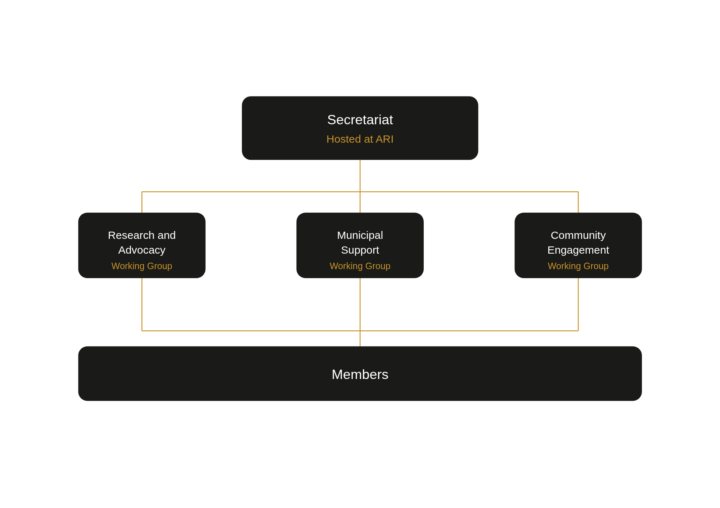
Structure of the Coalition:
Members of the Coalition
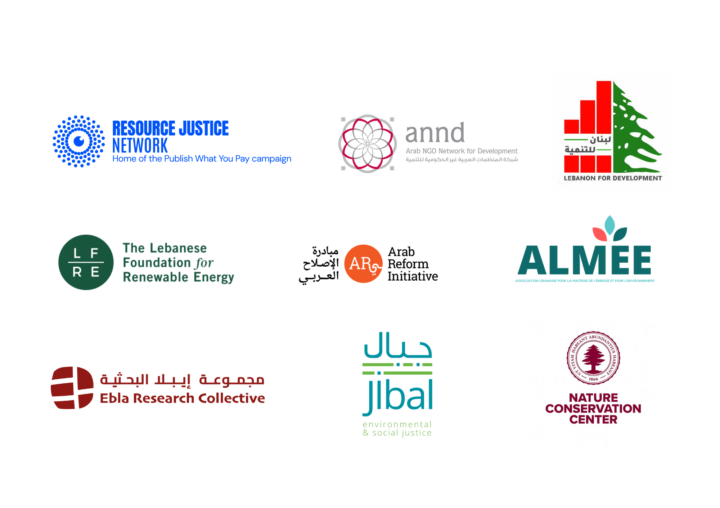
The organisations listed here are among the founding members of NOUR Coalition, the institutions that believed in this work before it had a name, and committed to it before it had a structure. They represent a deliberate cross-section of Lebanon's energy ecosystem: researchers, advocates, academic centres, civil society networks, and local development actors united by a shared conviction that reform is possible and that it requires collective effort.
NOUR is built to grow. As the coalition matures and its work gains ground, we hope to welcome new members, municipalities, professional associations, community organisations, and institutions from across Lebanon's regions who share our values and want to contribute to a just and sustainable energy future.
The more voices at the table, the stronger the blueprint we build together.
| Acronym |
Full Name |
| ALMEE |
Association Libanaise pour la Maitrise de l'Energie et pour l'Environnement |
| ANND |
Arab NGO Network for Development |
| Ebla |
Ebla Research Collective |
| Jibal |
Jibal |
| LFD |
Lebanon for Development |
| LFRE |
Lebanese Foundation for Renewable Energy |
| LCEC |
Lebanese Center for Energy Conservation |
| LAU CPA |
Lebanese American University — Center of Policy Action |
| AUB NCC |
American University of Beirut — National Conservation Center |
| Resource Justice Network |
Resource Justice Network |