As the IMF–World Bank Spring Meetings convene in Washington, D.C. on April 11th, the Arab Reform Initiative’s Social Protection Program returns to the Civil Society Policy Forum with a timely and urgent agenda shaped by a region in crisis. Against the backdrop of escalating violence, including the devastating air strikes on Beirut just this week, and widening regional war, the program will center its engagement on the political economy of reconstruction, macroeconomic reforms, and social justice.
Within this context, ARI will contribute to ongoing debates on the design and implementation of reconstruction processes in conflict-affected settings, the future of social protection systems in changing times, and the role of international financial institutions (IFIs) in shaping macroeconomic policy in ways that do not compromise social policy and equality.
Across its engagements, ARI will challenge the growing tendency to pre-structure recovery processes through externally defined “readiness” criteria that risk sidelining local priorities and reinforcing unequal outcomes. ARI aims to advocate against persistent narratives that frame universal social protection as fiscally unattainable, highlighting emerging evidence that positions social security as both viable and essential to equitable development and reconstruction.
A central thread running through ARI’s participation is the need to better align policy advice with lived realities of people. Despite growing recognition, including within IFIs, of the limitations of austerity and the importance of inclusive, context-specific reforms, these insights remain inconsistently reflected in practice. ARI’s interventions will therefore emphasize the importance of grounding reform plans in political and social realities, ensuring that stabilization efforts do not come at the expense of rights, social justice, and long-term resilience.
Through our presence at the CSPF alongside our partners, as well as bilateral meetings and closed-door discussions, ARI aims to bring evidence-based, regionally grounded perspectives into global policy debates at a time when the stakes for just and sustainable recovery in the Arab region could not be higher. ARI will also be discussing the IFIs’ discourse and CSO engagement process in order to ensure our efforts are materialized in a productive and effective manner.
To view the full schedule, click here.
CSPF Session: “Authorized to Rebuild? Who Governs Reconstruction in Conflict-Affected States in 2026?”
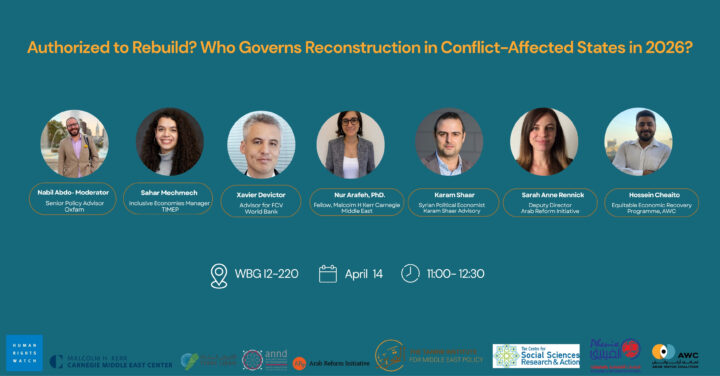
Session Abstract: Globally, post-war reconstruction is increasingly governed before rebuilding even begins. Upstream sequencing now links security stabilization, fiscal reform, and “readiness” benchmarks into a single reconstruction logic shaping how economies are rebuilt and who benefits. As IFIs redesign Fragility, Conflict, and Violence strategies and donors coordinate upcoming recovery frameworks, this panel asks: who sets these social and economic rules for reconstruction? Drawing on regional and global experiences, speakers examine civil society proposals for more equitable recovery pathways.
For more about this event, click here.
You can now watch the recording.
CSPF Session: “From "Unaffordability" to Rights: Claiming Fiscal Space for Universal Social Security”
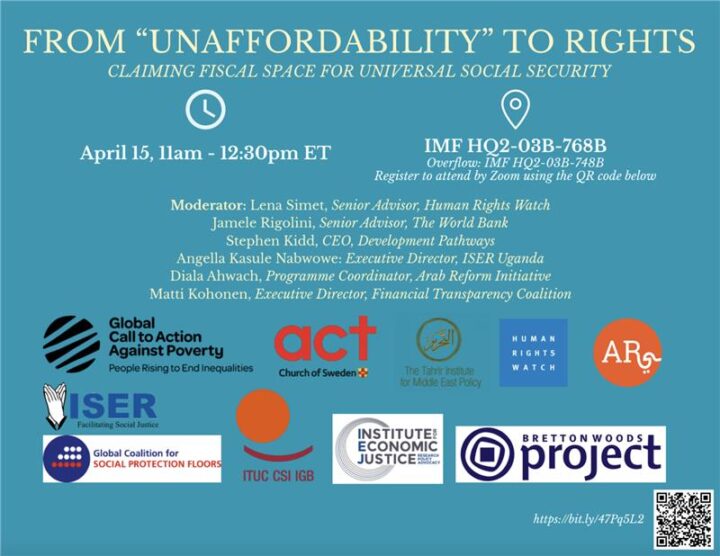
Session Abstract: For years, universal social security has been portrayed as fiscally unaffordable. However, new research and regional case studies challenge this assumption. This session will draw on Matthew Greenslade's book *Beyond the World Bank* and the report *Beyond the Unaffordability Myth* by Development Pathways and the Act Church of Sweden to reassess the fiscal sustainability of universal programs. The panel will also consider evidence from pension reforms in Africa and an analysis of development discourse in the Arab region. Together, these perspectives will examine how narratives shape fiscal choices and whether "affordability" is ultimately a political question.
For more about this event, click here.
You can now watch the recording.
CSPF Session: “The IMF Review of Conditionality: Putting the IMF’s Money Where Its Research Is”
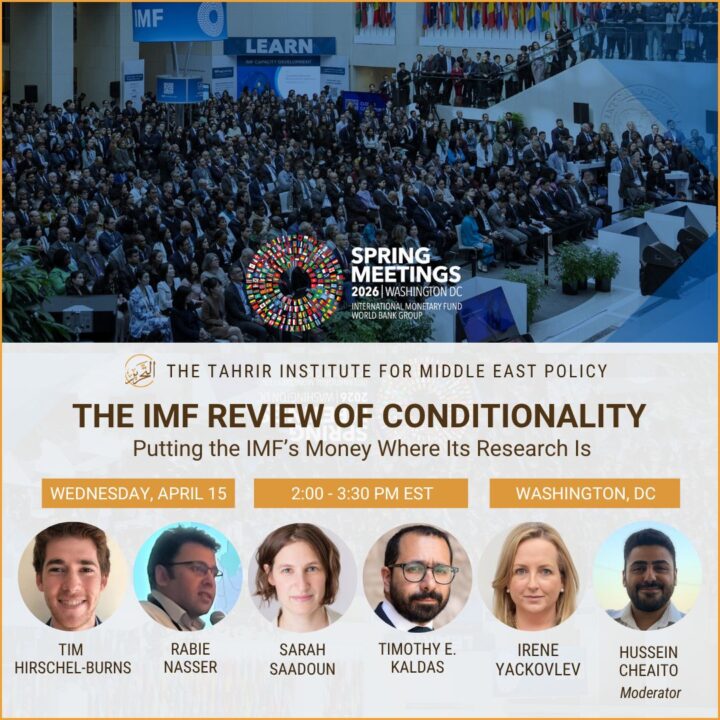
Session Abstract: IMF publications regularly note austerity’s counterproductive impact on growth and macroeconomic stabilization, while also acknowledging the benefits of progressive fiscal policies and the need to integrate political-economy analysis, distributional impact assessments, and country-specific policies into programs. However, these findings are rarely reflected in practice.
As a result, overly optimistic growth and debt sustainability targets are frequently missed, reforms are derailed, and macroeconomic stabilization remains elusive. This session draws on country case studies and independent research to explore how more expansionary, context-sensitive reforms, grounded in political and economic realities, can enable the IMF to operationalize its own research through the Review of Conditionality.
For more about this event, click here.
You can now watch the recording.
Side Event: “Economic Sustainability, Distribution and the IMF’s Fiscal Policy: Implications for the Comprehensive Surveillance Review”
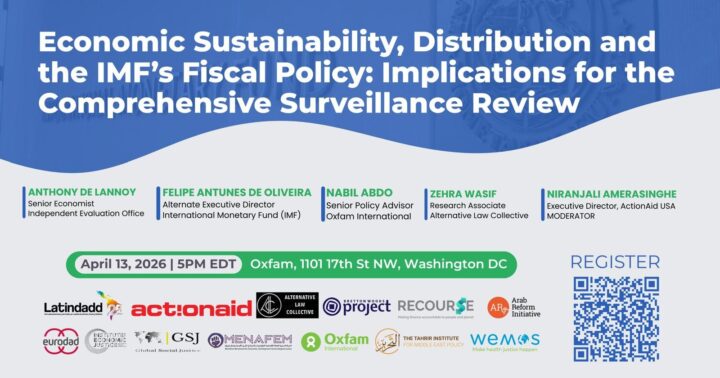
Session Abstract: The IEO’s recently released evaluation of the Fund’s fiscal policy advice offers a valuable analysis of a key tension within the Fund’s multilateral and bilateral surveillance—balancing short to medium-term fiscal priorities against long-term economic sustainability. The 2021 CSR formally adopted economic sustainability as a priority of the Fund’s surveillance and essential to macroeconomic stability. However, short to medium-term fiscal priorities, such as fiscal tightening and debt sustainability, have often taken precedence over longer-term considerations of macroeconomic stability and economic sustainability, especially in low-income countries. This session provides an opportunity for representatives from CSOs, the Fund and the IEO to discuss the significance of economic sustainability in fiscal policy and its implications for the ongoing CSR. It will also focus on how the Fund can provide clearer, more targeted fiscal policy advice to help countries transition from stabilization and consolidation in the short to medium term towards building fiscal space that supports their long-term development goals.
For more about this event, click here.
Closed Roundtable Discussion: "Between Policy and Participation: IMF-WBG Discourse and CSO Engagement"*
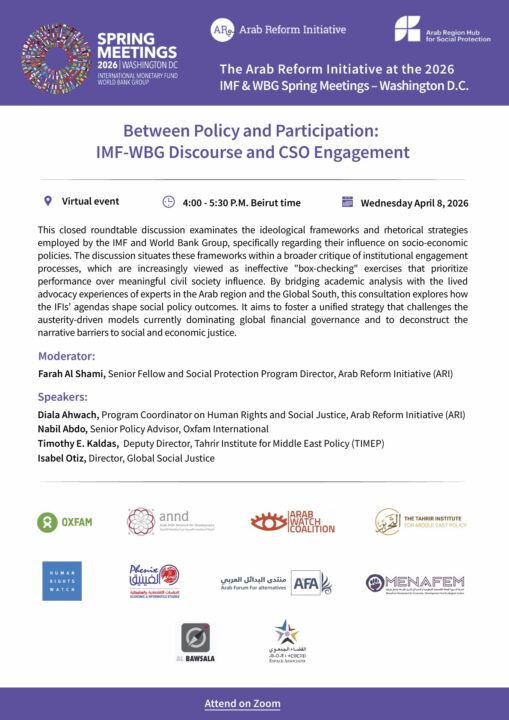
*Due to recent escalations in Lebanon, this event has been postponed until further notice.
Session Abstract: This closed roundtable discussion examines the ideological frameworks and rhetorical strategies employed by the IMF and World Bank Group, specifically regarding their influence on socio-economic policies. The discussion situates these frameworks within a broader critique of institutional engagement processes, which are increasingly viewed as ineffective "box-checking" exercises that prioritize performance over meaningful civil society influence. By bridging academic analysis with the lived advocacy experiences of experts in the Arab region and the Global South, this consultation explores how the IFIs' agendas shape social policy outcomes. It aims to foster a unified strategy that challenges the austerity-driven models currently dominating global financial governance and to deconstruct the narrative barriers to social and economic justice.