Electricity, Protests, and Energy Citizenship in Lebanon

Click here to read the full report.

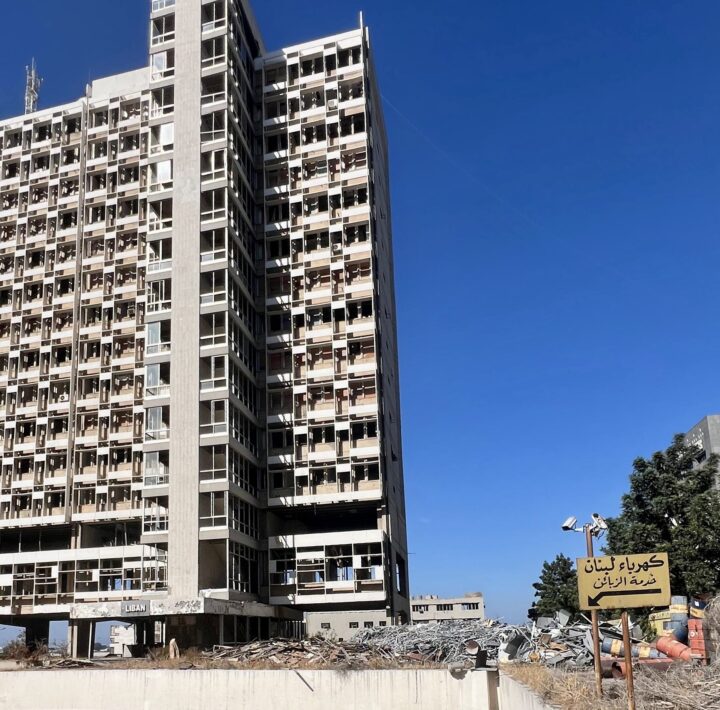
EDL headquarters in Mar Mikhael, Beirut. 2025 Yasmina Al Amine

Introduction

Across the world, energy projects are increasingly becoming sites of contestation. Communities have long resisted fossil-fuel extraction on the grounds of health, environmental harm, and threats to livelihoods,1Leah Temper et al., “Mapping the Frontiers and Front Lines of Global Environmental Justice: The EJAtlas”, Journal of Political Ecology 22, no. 1 (2015) pp. 255–278, https://doi.org/10.2458/v22i1.21108; Kirsten Jenkins et al., “Humanizing Sociotechnical Transitions through Energy Justice: An Ethical Framework for Global Transformative Change”, Energy Policy 117 (2018), pp. 66–74, https://doi.org/10.1016/j.enpol.2018.02.036 and similar dynamics are now unfolding around renewable energy projects.2Benjamin K. Sovacool et al., “New Frontiers and Conceptual Frameworks for Energy Justice”, Energy Policy 105 (2017) pp. 677–691, https://doi.org/10.1016/j.enpol.2017.03.005 While such mobilizations are often dismissed as cases of Not in My Backyard (NIMBY) resistance,3Rolf Wüstenhagen et al., “Social Acceptance of Renewable Energy Innovation: An Introduction to the Concept”, Energy Policy 35, no. 5 (2007) pp. 2683–2691, https://doi.org/10.1016/j.enpol.2006.12.001 residents have organized around broader demands for affordable and reliable electricity, asserting energy as a right rather than a commodity.4Carmen G. Gonzalez, “Environmental Justice, Human Rights, and the Global South”, Santa Clara Journal of International Law 13, no. 1 (2015) pp. 151–195, https://tinyurl.com/bddatu4t

In Nigeria, for example, grassroots movements have repeatedly protested tariff hikes and privatization policies.5John Agbonifo, “Fuel Subsidy Protests in Nigeria: The Promise and Mirage of Empowerment”, The Extractive Industries and Society 16 (2023) https://doi.org/10.1016/j.exis.2023.101333 Organizations such as the Soweto Electricity Crisis Committee in South Africa mobilized against disconnections from the grid and unequal service provision,6(Naidoo and Veriava, 2012)  Prishani Naidoo  and Ahmed Veriava, “From Local to Global (and Back Again?): Anti-Commodification Struggles of the Soweto Electricity Crisis Committee”, in Electric Capitalism: Recolonising Africa on the Power Grid, David A. McDonald (ed.), 2012,  pp. 321–337, Routledge. linking these struggles to the enduring legacy of apartheid-era spatial and infrastructural inequality. Civil-society groups and trade unions in Tunisia have contested foreign-led renewable and green-hydrogen mega projects, arguing that they reproduce extractive patterns of dispossession and dependency.7Yasmina El Amine, “Just Transition Green Bridge: Tunisian Case Study” Arab Reform Initiative, 27 March 2025, https://tinyurl.com/y89wasc2

These struggles can be read as expressions of energy citizenship,8Senja Laakso et al., “Practices and Acts of Energy Citizenship”, Journal of Environmental Policy & Planning 25, no. 6 (2023) pp. 690–702, https://doi.org/10.1080/1523908X.2023.2251915 [Laakso et al., “Practices and Acts of Energy Citizenship”] where communities position themselves as political actors by asserting their rights, shaping collective energy futures, and contesting the terms under which energy systems are governed. These cases highlight the wider structural and inherently political nature of energy-related movements, which are never simply about project siting or local inconveniences, but about rights, livelihoods, and justice.9Neal Healy and John Barry, “Politicizing Energy Justice and Energy System Transitions: Fossil Fuel Divestment and a ‘Just Transition’”, Energy Policy 108 (2017) pp. 451–459, https://doi.org/10.1016/j.enpol.2017.06.014; Kirsten Jenkins et al., “Energy Justice: A Conceptual Review”, Energy Research & Social Science 11 (2016),  pp.174–182, https://doi.org/10.1016/j.erss.2015.10.004

Precarious electricity access has plagued Lebanon for many decades.10Dana Abi Ghanem, “Energy, the City and Everyday Life: Living with Power Outages in Post-War Lebanon”, Energy Research & Social Science 36 (2018) pp. 36–43, https://doi.org/10.1016/j.erss.2017.11.012 Yet despite the depth and persistence of the crisis, the country has struggled to generate sustained mobilization centered explicitly on electricity. Energy demands have instead surfaced at the margins of broader protest waves, where they remained fragmented or were reabsorbed into sectarian and political logics.11Éric Verdeil, “Beirut: Metropolis of Darkness and the Politics of Urban Electricity Grids”, in Energy, Power and Protest on the Urban Grid: Geographies of the Electric City, Andrés Luque-Ayala and Jonathan Silver (eds.), 2016, pp. 155–175, Routledge. [Verdeil, “Beirut”] The protest waves of 201512Samar Khalil, “Impacting Policies: Waste Management and Advocacy in Lebanon”, Arab Reform Initiative, 16 June 2022, https://tinyurl.com/3buumb49 and 201913Jeffrey G. Karam and Rima Majed (eds.), The Lebanon Uprising of 2019: Voices from the Revolution, 2023, Bloomsbury Publishing. foregrounded the collapse of public services, but electricity remained folded into broader demands in the former and did not emerge as a distinct site of sustained collective organizing in the latter.

At the same time, the historic gradual erosion of state provision in Lebanon normalized the reliance on private solutions, most notably diesel generators since the civil war,14Majzoub et al., “Cut Off from Life Itself”: Lebanon’s Failure on the Right to Electricity, Human Rights Watch, 2023, https://tinyurl.com/3su482ab [Majzoub et al., “Cut Off from Life Itself”] and more recently an expanding but uneven and disorganized solar market.15Julia Choucair Vizoso and Yara El Murr, Privatizing the Sun: The Dark Side of Lebanon’s “Solar Revolution”, The Public Source, 11 October 2022, https://thepublicsource.org/lebanon-solar-privatization [Choucair Vizoso and El Murr, Privatizing the Sun] These shifts help account for the limited emergence of collective mobilization, as coping with electricity shortages has increasingly taken place through individual and household-level entrepreneurial adaptation. What remains unclear is how these different responses to electricity shortages have been politically articulated, and why a consolidated movement around electricity has struggled to crystalize. In parallel, community-level renewable energy initiatives have mushroomed across various regions of the country since the 2019 financial crisis,16Thomas Schellen, “The Race to Solar”, Executive Magazine, 12 November 2021, https://tinyurl.com/3e59ptzt becoming lifelines for many communities. This prompts questions about whether these initiatives foster participation and collective agency or reinforce fragmentation and self-reliance.

As these patterns converge, they suggest that engaging with energy in Lebanon is changing in ways that remain insufficiently examined. This paper traces how people in Lebanon articulate claims to electricity across different mobilization arenas. Approaching these dynamics through the lens of energy citizenship, the paper first examines protests and grievances around electricity provision, where communities and workers have contested rationing, precarious work, corruption, and the structural neglect of the sector. It then turns to community-based renewable initiatives, which point to an evolution in energy citizenship as individuals actively shape and govern their own energy futures.17Marianne Ryghaug et al., “Creating Energy Citizenship through Material Participation”, Social Studies of Science 48, no. 2 (2018) pp. 283–303, https://doi.org/10.1177/0306312718770286 [Ryghaug et al., “Creating Energy Citizenship”]; Matthew J. Burke and Jennie C. Stephens, “Energy Democracy: Goals and Policy Instruments for Sociotechnical Transitions”, Energy Research & Social Science 33 (2017) pp. 35–48, https://doi.org/10.1016/j.erss.2017.09.024 [Burke and Stephens, “Energy Democracy”] Finally, it examines energy cooperatives as a potential vehicle for more democratic and decentralized energy provision, analyzing their legal foundations, governance, and regulatory constraints, and assessing the conditions under which they might offer a collective alternative to individualized and market-driven forms of energy access.

Overall, these dynamics reveal a tension that has received limited attention in existing debates on energy and governance in Lebanon. Electricity is central to everyday life and to wider struggles over public provision, yet mobilization around energy has remained intermittent, scattered, and difficult to sustain as a coherent field of collective action. Electricity-related struggles are thus often treated as crisis-driven disruptions or secondary expressions of broader political conflicts, rather than as a domain of mobilization shaped by its own actors, histories, and constraints. This gap becomes more pronounced with the expansion of decentralized energy initiatives, which lack clear regulatory frameworks or social safeguards and leave questions of affordability, inclusion, and accountability to ad hoc negotiations. Analyzing these forms of action together is therefore essential for understanding how energy citizenship is being redefined and how the burdens and exclusions of an increasingly decentralized energy landscape are unevenly distributed.

To map electricity-related mobilization in Lebanon over the past decades and examine the different forms of engagement that have emerged around energy provision and reform, this study employs a qualitative approach that combines secondary-source analysis, protest data analysis, and expert interviews. The research draws on the Civil Society Knowledge Centre’s Collective Action Database to trace patterns of electricity-related protests, strikes, and campaigns. Because the database covers only the decade between 2012 and 2022, content analysis from national newspapers and media outlets complements this catalogue, capturing mobilizations and public debates from 2006 until February 2025.

In parallel, eight in-depth expert interviews were conducted with practitioners, legal experts, researchers, and policy actors working on renewable energy, governance, cooperatives, and social movements in Lebanon (see Appendix A). These interviews focused on the emergence of decentralized renewable initiatives and the growing interest in energy cooperatives, examining how they could reconfigure governance, participation, accountability, and notions of energy citizenship in the context of a collapsing public electricity system. Combined, these methods allow for a longitudinal and multi-scalar reading of electricity-related mobilization in Lebanon, situating it within broader socio-political and socio-technical transformations. The interviewees also inform the paper’s policy discussion by identifying constraints and entry points grounded in local practice for participatory, inclusive, and justice-oriented approaches to energy governance.

Endnotes

Endnotes
1 Leah Temper et al., “Mapping the Frontiers and Front Lines of Global Environmental Justice: The EJAtlas”, Journal of Political Ecology 22, no. 1 (2015) pp. 255–278, https://doi.org/10.2458/v22i1.21108; Kirsten Jenkins et al., “Humanizing Sociotechnical Transitions through Energy Justice: An Ethical Framework for Global Transformative Change”, Energy Policy 117 (2018), pp. 66–74, https://doi.org/10.1016/j.enpol.2018.02.036
2 Benjamin K. Sovacool et al., “New Frontiers and Conceptual Frameworks for Energy Justice”, Energy Policy 105 (2017) pp. 677–691, https://doi.org/10.1016/j.enpol.2017.03.005
3 Rolf Wüstenhagen et al., “Social Acceptance of Renewable Energy Innovation: An Introduction to the Concept”, Energy Policy 35, no. 5 (2007) pp. 2683–2691, https://doi.org/10.1016/j.enpol.2006.12.001
4 Carmen G. Gonzalez, “Environmental Justice, Human Rights, and the Global South”, Santa Clara Journal of International Law 13, no. 1 (2015) pp. 151–195, https://tinyurl.com/bddatu4t
5 John Agbonifo, “Fuel Subsidy Protests in Nigeria: The Promise and Mirage of Empowerment”, The Extractive Industries and Society 16 (2023) https://doi.org/10.1016/j.exis.2023.101333
6 (Naidoo and Veriava, 2012)  Prishani Naidoo  and Ahmed Veriava, “From Local to Global (and Back Again?): Anti-Commodification Struggles of the Soweto Electricity Crisis Committee”, in Electric Capitalism: Recolonising Africa on the Power Grid, David A. McDonald (ed.), 2012,  pp. 321–337, Routledge.
7 Yasmina El Amine, “Just Transition Green Bridge: Tunisian Case Study” Arab Reform Initiative, 27 March 2025, https://tinyurl.com/y89wasc2
8 Senja Laakso et al., “Practices and Acts of Energy Citizenship”, Journal of Environmental Policy & Planning 25, no. 6 (2023) pp. 690–702, https://doi.org/10.1080/1523908X.2023.2251915 [Laakso et al., “Practices and Acts of Energy Citizenship”]
9 Neal Healy and John Barry, “Politicizing Energy Justice and Energy System Transitions: Fossil Fuel Divestment and a ‘Just Transition’”, Energy Policy 108 (2017) pp. 451–459, https://doi.org/10.1016/j.enpol.2017.06.014; Kirsten Jenkins et al., “Energy Justice: A Conceptual Review”, Energy Research & Social Science 11 (2016),  pp.174–182, https://doi.org/10.1016/j.erss.2015.10.004
10 Dana Abi Ghanem, “Energy, the City and Everyday Life: Living with Power Outages in Post-War Lebanon”, Energy Research & Social Science 36 (2018) pp. 36–43, https://doi.org/10.1016/j.erss.2017.11.012
11 Éric Verdeil, “Beirut: Metropolis of Darkness and the Politics of Urban Electricity Grids”, in Energy, Power and Protest on the Urban Grid: Geographies of the Electric City, Andrés Luque-Ayala and Jonathan Silver (eds.), 2016, pp. 155–175, Routledge. [Verdeil, “Beirut”]
12 Samar Khalil, “Impacting Policies: Waste Management and Advocacy in Lebanon”, Arab Reform Initiative, 16 June 2022, https://tinyurl.com/3buumb49
13 Jeffrey G. Karam and Rima Majed (eds.), The Lebanon Uprising of 2019: Voices from the Revolution, 2023, Bloomsbury Publishing.
14 Majzoub et al., “Cut Off from Life Itself”: Lebanon’s Failure on the Right to Electricity, Human Rights Watch, 2023, https://tinyurl.com/3su482ab [Majzoub et al., “Cut Off from Life Itself”]
15 Julia Choucair Vizoso and Yara El Murr, Privatizing the Sun: The Dark Side of Lebanon’s “Solar Revolution”, The Public Source, 11 October 2022, https://thepublicsource.org/lebanon-solar-privatization [Choucair Vizoso and El Murr, Privatizing the Sun]
16 Thomas Schellen, “The Race to Solar”, Executive Magazine, 12 November 2021, https://tinyurl.com/3e59ptzt
17 Marianne Ryghaug et al., “Creating Energy Citizenship through Material Participation”, Social Studies of Science 48, no. 2 (2018) pp. 283–303, https://doi.org/10.1177/0306312718770286 [Ryghaug et al., “Creating Energy Citizenship”]; Matthew J. Burke and Jennie C. Stephens, “Energy Democracy: Goals and Policy Instruments for Sociotechnical Transitions”, Energy Research & Social Science 33 (2017) pp. 35–48, https://doi.org/10.1016/j.erss.2017.09.024 [Burke and Stephens, “Energy Democracy”]

The views represented in this paper are those of the author(s) and do not necessarily reflect the views of the Arab Reform Initiative, its staff, or its board.